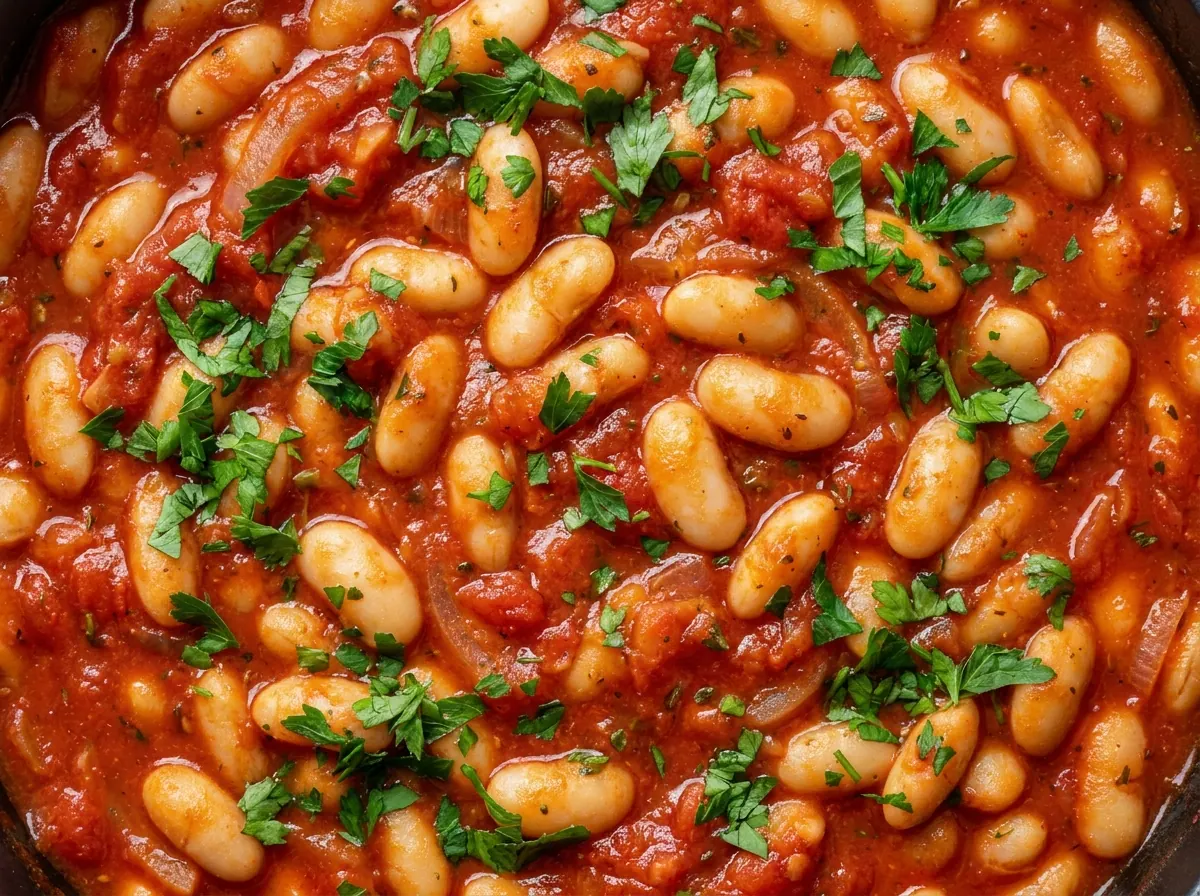
White bean stew is a traditional Levantine dish rooted in Lebanese and Syrian tables, prepared with beans, meat, and tomatoes and served with rice or bread. It is a long-day dish cooked over gentle heat until the flavours of the meat dissolve into the tomato broth and the beans absorb it.
Its nutritional value comes from the complementary protein of the beans and the meat, alongside soluble fibre and high folate. The white beans are the main carbohydrate component, and their low glycaemic index makes the dish well-balanced.
Preparation Steps
Soak the beans
Soak the white beans in cold water overnight, then rinse and drain.
Par-cook the beans
Boil the beans in fresh water over medium heat until half-cooked, then drain and set aside.
Brown the meat
In a pot, heat the olive oil and brown the meat cubes on all sides until golden, then remove.
Add onion and spices
In the same pot add the onion and stir until softened and golden, then add the garlic, mixed spices, dried coriander, and black pepper.
Build the sauce
Add the tomato paste and stir for 1 minute, then add the chopped tomatoes and cook until the sauce thickens slightly.
Slow simmer
Return the meat and add the beans and water or broth, cover the pot, and leave over gentle heat for 45 to 60 minutes until the meat is cooked through and the beans are completely tender.
Adjust and thicken
Adjust the salt and spices, and continue cooking until the broth reaches a firm stew consistency.
Serve
Serve hot with rice or Arabic bread.
Blood Sugar Impact
The glycemic index (GI) measures how quickly a food raises blood sugar, while the glycemic load (GL) measures how much a full serving raises it. Together they give the complete picture.
Glycemic Index
GI
29Low
Low0–55Medium56–69High70+
A low value (≤55) means a gradual rise in blood sugar — the most suitable range for diabetes and insulin resistance.
Glycemic Load
GL
14Medium
Low0–10Medium11–19High20+
Glycemic load reflects the impact of the full serving. To lower it: take half a serving, or pair the recipe with a source of protein and fiber.
Nutritional Information
Per ServingMakes 4 servings · one serving is about 540 g of raw ingredients
Calories599 kcal30%of Daily Value*
Protein35 g70%of Daily Value*
Carbohydrates62 g23%of Daily Value*
Fat24 g31%of Daily Value*
Fiber15 g54%of Daily Value*
Sodium69 mg3%of Daily Value*
Potassium2102 mg45%of Daily Value*
Phosphorus434 mg35%of Daily Value*
* Percent Daily Values are based on a 2,000-calorie diet per FDA food-label reference values — your daily needs may be higher or lower. Values are derived from the recipe's ingredients via the USDA database.
Troubleshooting
The most common problems when preparing White Bean and Tomato Stew, and how to fix them:
The beans stayed hard despite long cooking
Usually they were not soaked overnight, or the salt and tomatoes were added too early. The acid in the tomatoes slows the softening of the bean skin, so add them after the beans have softened to half-cooked in plain water. Overnight soaking also shortens cooking time and evens out the cooking. If still firm: continue gentle simmering with added lukewarm water until completely tender.
The broth is watery and has not thickened
Too much water or the lid was left on at the end. Remove the lid in the last quarter of cooking and let the broth evaporate over gentle heat until it reaches a firm stew consistency. You can also mash a few spoonfuls of beans with the back of a spoon and stir them back in; their starch thickens the broth naturally.
The meat is dry and tough
Cooked over high heat or not long enough. Meat cubes need gentle, long cooking for the fibres to break down and become tender. Brown them first to seal the surface then cook covered over gentle heat. If still tough after an hour: add a little hot broth and continue simmering; patience is the secret to tender meat.
Flat taste with no depth
Insufficient browning of the onion or not enough tomato paste. Browning the onion until golden builds the flavour base, and cooking the tomato paste for a minute on the heat concentrates the taste. Also check the salt as it is added at the end not the beginning. A pinch of extra dried coriander restores the warm, aromatic character of the dish.
The beans caused bloating and gas
This is common with legumes due to their indigestible sugars. Overnight soaking with a water change, and the par-boil in fresh water then draining, reduce them noticeably. Cooking until the beans are completely soft also helps. Start with smaller portions if your stomach is sensitive to legumes.
The skins are floating loose from the beans
Vigorous repeated boiling separates the skin from the bean interior. Cook the stew over gentle heat, not a violent boil, and stir carefully with a wooden spoon. If many skins appear on the surface: remove them with a small strainer as they do not affect flavour, only appearance.
Storage and Make-Ahead
Refrigerator (4 degrees C)
3-4 days in a sealed container. The flavour improves the next day as the spices meld. Refrigerate within 2 hours of cooking per USDA guidelines to prevent bacterial growth.
Freezer (-18 degrees C)
Freezes well for up to 3 months. Portion into individual servings, leaving space for expansion. Bean stews are among the best dishes for freezing.
Advance preparation
Bean soaking: overnight before cooking, or a large batch soaked and drained can be stored in the freezer. The base sauce: the onion-tomato base can be prepared a day ahead and kept refrigerated.
Reheating
Heat gently with 2 tablespoons of water or broth to replace what evaporated, stirring carefully. Thaw frozen portions in the refrigerator overnight before reheating. Do not leave at room temperature for more than 2 hours.
Tested Ingredient Substitutions
Original Ingredient
Tested Substitute
Ratio
Flavor Difference
Soaked dried beans
Drained canned white beans
About 2 cans (approx. 500 g drained)
Much faster; add in the last 15 minutes only so they do not fall apart.
Lamb or beef
Omit the meat for a vegetarian version
Add an extra half cup of beans instead
Lighter, plant protein only; needs vegetable broth for depth.
Fresh peeled tomatoes
Canned chopped tomatoes
Same weight (approx. 400 g)
Available year-round, slightly sharper acidity, darker colour.
Add the acid late: delay the tomatoes and salt until the beans are tender in plain water. Early acid keeps the skin tough no matter how long you cook them, and early salt tightens the beans. This single rule alone transforms the stew from firm beans to a creamy, cohesive texture.
Add This Recipe to Your Plan
The EEINA app saves your favorite recipes, calculates them from their real ingredients, and shows your daily numbers toward your goal. Try it free now.
Yes. GI 29 is low and GL 14 is low, and the soluble fibre in the beans slows sugar absorption. A moderate serving with a green salad is a balanced choice.
Can it be made without meat?
Yes, omit the meat, increase the beans, and use vegetable broth for depth. It becomes a vegetarian version rich in plant protein and fibre.
Can canned beans be used instead of dried?
Yes and they save a lot of time. Drain and rinse them and add in only the last 15 minutes so they do not fall apart.
What should it be served with?
Traditionally with white rice or Arabic bread. To reduce the glycaemic load, serve with brown rice or a salad instead of bread.
Sources: USDA · University of Sydney · Gulf GSO · Our methodology · Updated on