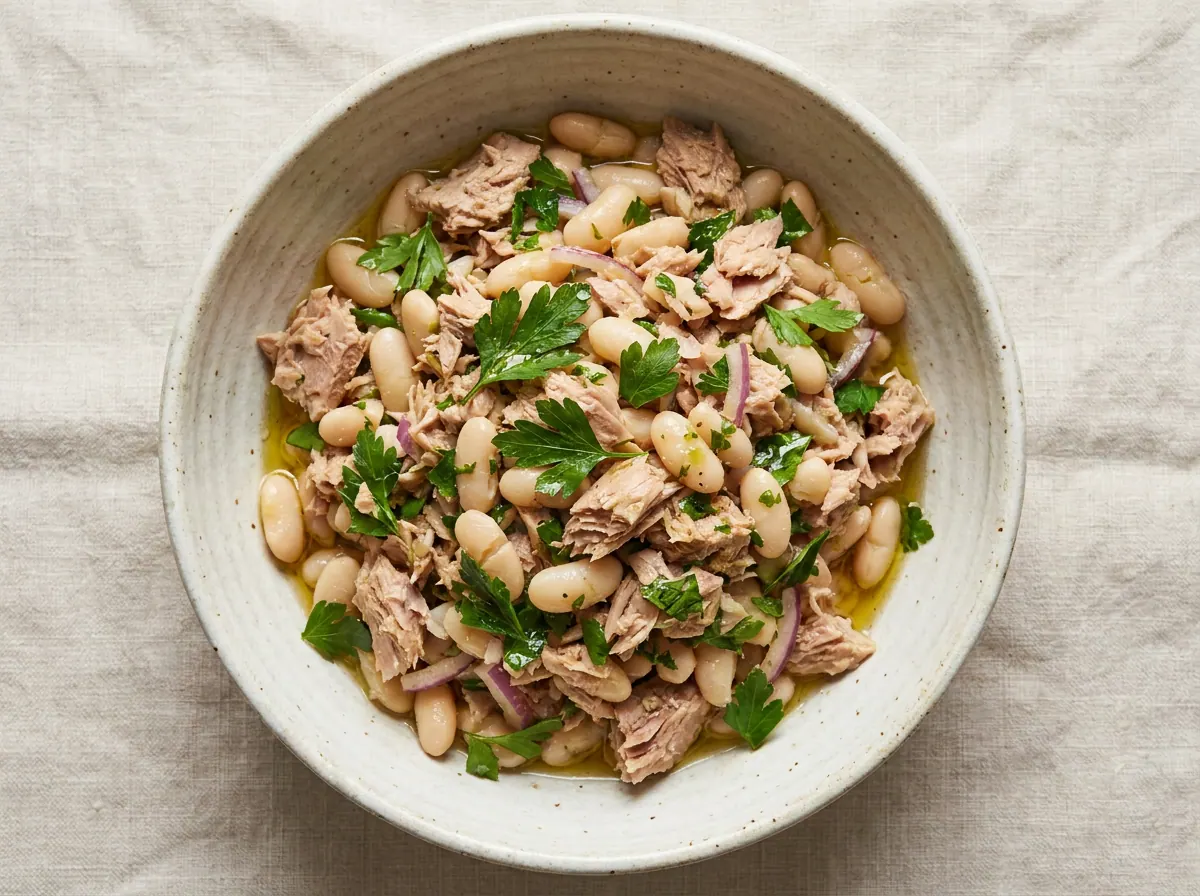
Tuna and white bean salad is a classic Mediterranean dish known in Italy as tonno e fagioli. The concept is simple: high-protein tuna meets creamy cannellini beans, bound together by a dressing of extra-virgin olive oil and lemon juice.
What makes it special is that it is a complete meal with no cooking on the stove — it brings together animal and plant protein, fibre, and healthy fats in a single bowl. This combination slows the rise in blood sugar and extends satiety, making it a practical quick lunch for busy days.
Preparation Steps
Flake the tuna
Drain the tuna thoroughly and flake it into a large bowl with a fork.
Prepare the beans
Drain and rinse the white beans under cold running water to remove excess canning liquid, then add them to the tuna.
Add the vegetables
Add the finely diced red onion and fresh parsley.
Make the dressing
In a small bowl, whisk together the lemon juice, olive oil, salt, and pepper to make the dressing.
Combine
Pour the dressing over the salad and fold gently until everything is combined without mashing the beans.
Rest and serve
Taste and adjust the lemon or salt, then leave to rest for 10 minutes so the flavours can meld before serving cold.
Blood Sugar Impact
The glycemic index (GI) measures how quickly a food raises blood sugar, while the glycemic load (GL) measures how much a full serving raises it. Together they give the complete picture.
Glycemic Index
GI
29Low
Low0–55Medium56–69High70+
A low value (≤55) means a gradual rise in blood sugar — the most suitable range for diabetes and insulin resistance.
Glycemic Load
GL
7Low
Low0–10Medium11–19High20+
Glycemic load reflects the impact of the full serving. To lower it: take half a serving, or pair the recipe with a source of protein and fiber.
Nutritional Information
Per ServingMakes 2 servings · one serving is about 280 g of raw ingredients
Calories297 kcal15%of Daily Value*
Protein32 g64%of Daily Value*
Carbohydrates33 g12%of Daily Value*
Fat4 g5%of Daily Value*
Fiber8 g29%of Daily Value*
Sodium634 mg28%of Daily Value*
* Percent Daily Values are based on a 2,000-calorie diet per FDA food-label reference values — your daily needs may be higher or lower. Values are derived from the recipe's ingredients via the USDA database.
Troubleshooting
The most common problems when preparing Tuna and White Bean Salad, and how to fix them:
Salad is watery and liquid pools at the bottom
The tuna was not drained well, or the beans were added with canning liquid. Press the tuna firmly with the back of a fork in the strainer until no water drips, and rinse the beans in a sieve under cold water then let them drain for 2 minutes before adding. Add the dressing gradually — you may not need the full amount.
Beans have turned to mush and the salad is paste-like
The mixing was too vigorous or done with a sharp-edged spoon. Fold gently with a wide rubber spatula using a bottom-to-top lifting motion, not a mashing motion. Add the beans in the final step just before the dressing so they are handled as little as possible.
Red onion tastes too sharp and pungent
Raw onion can be overpowering for some palates. Soak the diced onion in the cold lemon juice for 5 minutes before mixing — the acid tames the sharpness and mellows the aroma while keeping the crunch. Or substitute spring onion, which is naturally milder.
Flavour is bland with not enough acidity
Too little lemon juice or salt, or the salad was served before it rested. Add fresh lemon juice gradually and taste after each addition, and a pinch of salt wakes everything up. Then leave the salad in the fridge for 10 minutes so the beans absorb the dressing.
Salad is dry after storing in the fridge
The beans absorb the dressing over time. Before serving the next day, refresh with a teaspoon of olive oil and a squeeze of lemon juice and fold gently — it will come back together, soft and cohesive.
Storage and Make-Ahead
Refrigerator (4°C)
Mixed salad: 1 to 2 days maximum in an airtight container. Texture is best on day one, but safe within the two days. Kept separate: tuna, beans, and vegetables each in their own container keep for three days and can be combined at serving time.
Freezer (-18°C)
Not suitable. Freezing ruins the texture of the beans — they become watery and crumbly — and the raw parsley wilts after thawing. This dish is best made fresh and eaten within two days.
Meal prep
Beans and tuna: drain, rinse, and store in a container in the fridge up to a day ahead. Onion and parsley: chop up to two hours ahead and store in the fridge. Dressing: whisk in a jar and store — shake before using. Final toss: no more than 10 minutes before serving.
Serving
A cold dish — do not heat. Remove from the fridge 5 minutes before serving so the excess chill fades and the flavours can come through. Do not leave at room temperature for more than two hours in line with food safety guidelines.
Tested Ingredient Substitutions
Original Ingredient
Tested Substitute
Ratio
Flavor Difference
Canned tuna
Shredded poached chicken breast
Approximately same weight
Fish-free, similar protein content, milder flavour without the marine omega-3
Canned tuna
Cooked chickpeas, drained
Same weight
Fully plant-based, higher in fibre, nutritional values change
White beans
Cooked chickpeas
Same quantity
Slightly firmer texture, nuttier flavour, also low GI
Red onion
Chopped spring onion
Same quantity
Milder and less pungent, lighter colour
Parsley
Fresh basil or mint
Same quantity
A different aromatic note — leans toward a summery Mediterranean character
How Much Does It Make? Scaling Guide
Number of servings
Drained tuna
White beans
Lemon
Olive oil
1 (individual)
~60 g
~120 g
1 tbsp
1 tbsp
2 (base)
~120 g
~240 g
2 tbsp
2 tbsp
4 (family)
~240 g
~480 g
4 tbsp
4 tbsp
6 (entertaining)
~360 g
~720 g
6 tbsp
6 tbsp
EEINA Nutrition Tip
The beans are the blood-sugar hero here: rinsing canned beans well reduces sodium significantly, and their soluble fibre is what keeps this dish's glycemic index low. Leave the salad to rest for 10 minutes before eating — resting improves both flavour and texture.
Add This Recipe to Your Plan
The EEINA app saves your favorite recipes, calculates them from their real ingredients, and shows your daily numbers toward your goal. Try it free now.
Yes — it is ideal. GI 31 is low and the glycemic load is only 7, with 8 g fibre and 32 g protein slowing blood-sugar rise and extending satiety.
Can I use tuna in oil instead of water?
Tuna in water is lighter in calories and better suited to these nutritional figures. If you use tuna in oil, drain it very well and reduce the olive oil you add to compensate for the difference in fat.
How long does it keep in the fridge?
One to two days in an airtight container. Texture is best on day one. For a larger batch, store the components separately and mix at serving time.
Can I make a vegetarian version?
Yes — replace the tuna with cooked chickpeas of the same weight. It becomes higher in fibre and the nutritional values change, but it stays low GI and delicious.
Sources: USDA · University of Sydney · Gulf GSO · Our methodology · Updated on