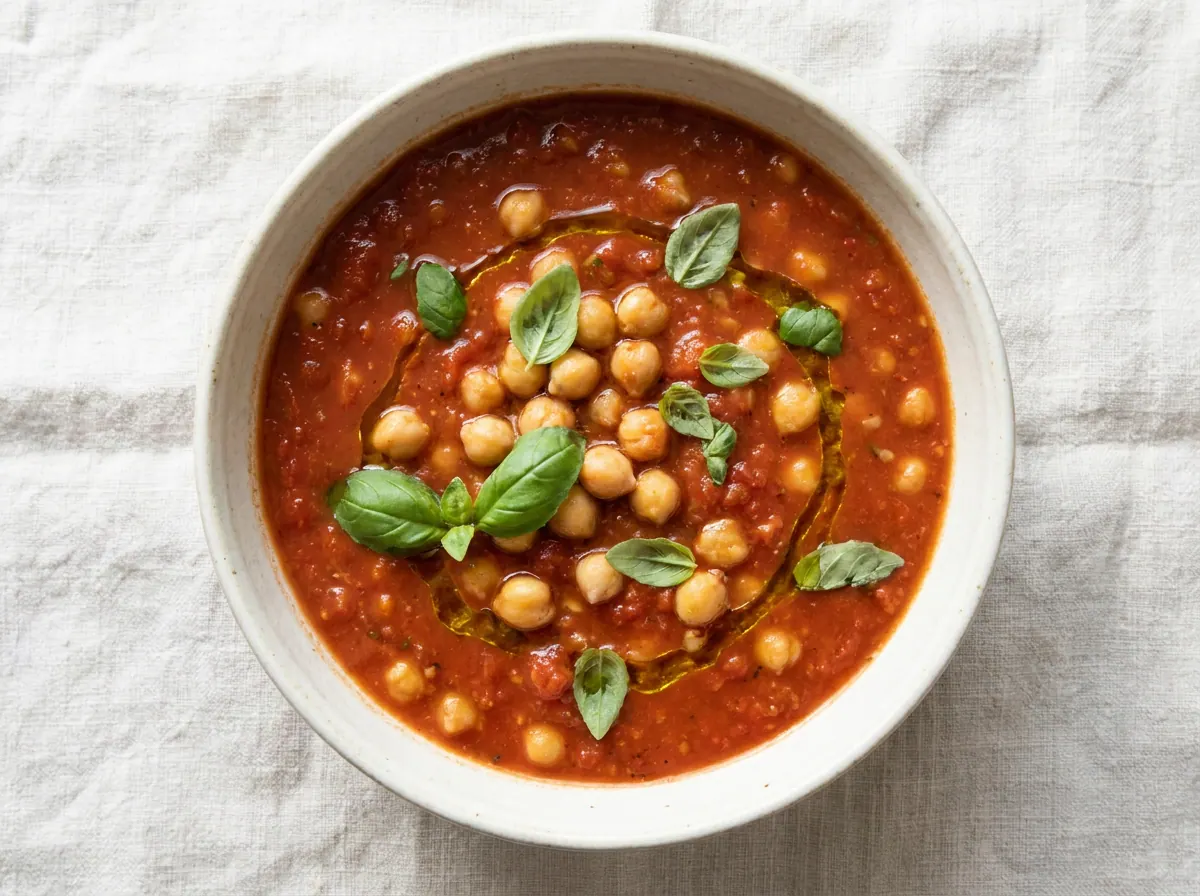
A warm, plant-based soup of tomatoes and chickpeas, GI 19 — low, rich in fiber, plant protein, and lycopene. Ideal for people with diabetes and heart health.
Tomato and chickpea soup is a simple Mediterranean dish that brings two humble ingredients together into a warm, satisfying meal. The tomatoes provide acidity and color, and the chickpeas provide texture and plant protein — the two complement each other in a single bowl that is light on the stomach and rich in value.
The secret to its depth is cooking the tomatoes over gentle heat before adding the broth: heat together with olive oil raises the bioavailability of lycopene, an antioxidant whose absorption increases with cooking and fat — not with raw tomatoes [4]. The chickpeas add fiber that slows sugar absorption and prolongs satiety, so the dish stays low on the glycemic index despite its warmth and fullness.
Preparation Steps
Sauté the onion
Heat the olive oil in a pot over medium heat. Add the chopped onion and stir until wilted and translucent (about 5 minutes).
Add the garlic and cumin
Add the crushed garlic and cumin and stir for one minute until fragrant — do not let the garlic burn.
Cook the tomatoes
Add the grated tomatoes and let them cook over low heat for 8 to 10 minutes until thickened and slightly darkened — this slow cooking increases the bioavailability of lycopene.
Add the chickpeas and broth
Add the cooked chickpeas and vegetable broth. Raise the heat until it begins to boil, then lower to a gentle simmer for 15 minutes.
Adjust the consistency
For a creamy texture, blend half the quantity with a hand blender and return to the pot, leaving the other half as whole chickpeas for texture.
Season and add herbs
Season with salt and pepper, then turn off the heat and add the chopped basil or cilantro.
Serve
Serve warm with a drizzle of olive oil and a squeeze of lemon. Add wholemeal bread on the side if desired.
Blood Sugar Impact
The glycemic index (GI) measures how quickly a food raises blood sugar, while the glycemic load (GL) measures how much a full serving raises it. Together they give the complete picture.
Glycemic Index
GI
19Low
Low0–55Medium56–69High70+
A low value (≤55) means a gradual rise in blood sugar — the most suitable range for diabetes and insulin resistance.
Glycemic Load
GL
4Low
Low0–10Medium11–19High20+
Glycemic load reflects the impact of the full serving. To lower it: take half a serving, or pair the recipe with a source of protein and fiber.
Nutritional Information
Per ServingMakes 4 servings · one serving is about 470 g of raw ingredients
Calories205 kcal10%of Daily Value*
Protein7 g14%of Daily Value*
Carbohydrates27 g10%of Daily Value*
Fat9 g12%of Daily Value*
Fiber6 g21%of Daily Value*
Sodium1082 mg47%of Daily Value*
Potassium534 mg11%of Daily Value*
Phosphorus120 mg10%of Daily Value*
* Percent Daily Values are based on a 2,000-calorie diet per FDA food-label reference values — your daily needs may be higher or lower. Values are derived from the recipe's ingredients via the USDA database.
Troubleshooting
The most common problems when preparing Tomato Chickpea Soup, and how to fix them:
Soup is too sour
The tomatoes used were unripe, or they were not cooked long enough before adding the broth. The acidity of tomatoes mellows with slow cooking that breaks down their sharpness and brings out their sweetness. For a quick fix: add a small pinch of sautéed mashed onion or a quarter teaspoon of concentrated tomato paste, which is sweeter than fresh tomatoes. Do not add sugar unless absolutely necessary and only in the tiniest amount.
Consistency is too thin and watery
Too much broth, or the tomatoes were not cooked until thickened. To fix: blend a third of the chickpeas in the soup with a hand blender — chickpea starch thickens the consistency naturally without flour. Or leave the pot uncovered over low heat for an extra ten minutes to let some liquid evaporate.
Consistency is thick like paste
Most of the chickpeas were blended, or too much liquid evaporated. To fix: gradually add a quarter cup of hot water or warm broth while stirring until you reach the desired consistency. Always keep half the chickpeas whole to give the soup texture rather than becoming a puree.
Garlic tastes sharp and bitter
It burned over high heat — garlic is sensitive and turns bitter within seconds. The rule: add garlic after the onion over medium heat for just one minute until fragrant but not colored. If it burned, it is best to start over as bitterness spreads through the whole dish.
Chickpeas remained hard in the soup
Undercooked chickpeas were used. Chickpeas do not cook through in just fifteen minutes of soup boiling alone — they must be pre-cooked until tender or use canned ready-to-eat chickpeas. If they are still hard: let the soup simmer gently for an additional twenty minutes — properly cooked chickpeas should press flat easily between two fingers.
Basil blackened and wilted after adding
Added while the heat was still on, cooking it. Fresh herbs are added immediately after turning off the heat to preserve their color and aroma. If wilted: garnish the bowl with fresh basil leaves at serving to restore the visual freshness and fragrance.
Storage and Make-Ahead
Refrigerator (4°C)
Cooked soup: three to four days in an airtight container. The flavor improves the next day as the spices meld. Add fresh herbs when reheating, not before storing, to preserve their color and aroma.
Freezer (-18°C)
Suitable for freezing for up to three months in an airtight container, leaving space for expansion. The blended soup freezes better than the chunky version which may soften slightly.
Meal prep
The base: prepare the full soup and let it cool — it improves with resting. Separate components: chop the onion, garlic, and grate the tomatoes a day ahead and store in the refrigerator. Herbs: chop and add only at the moment of serving.
Reheating
Heat gently on the stovetop while stirring. Add a splash of water or broth if the consistency has thickened. Do not leave out of the refrigerator for more than two hours following food safety guidelines [1].
Tested Ingredient Substitutions
Original Ingredient
Tested Substitute
Ratio
Flavor Difference
Chickpeas
Split red lentils
same quantity
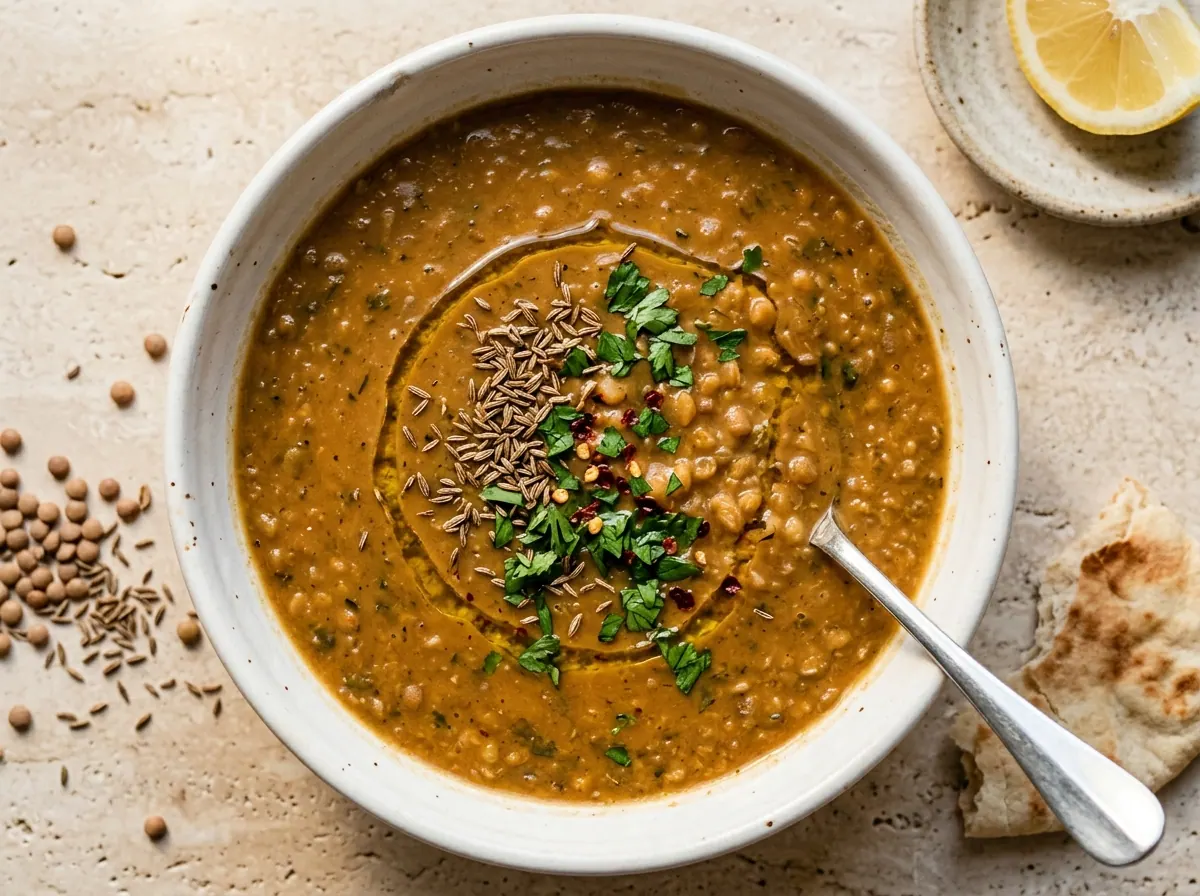
Smoother consistency, faster to cook, gentler earthy flavor
Cilantro is sharper; parsley is fresher — both suit the dish
Vegetable broth
Water and a low-sodium stock cube
same quantity
Simpler; watch the salt as cubes are higher in sodium
Cumin
Sweet paprika or dried thyme
same quantity
Paprika gives color and warmth; thyme adds a Mediterranean touch
How Much Does It Make? Scaling Guide
Number of servings
Boiled chickpeas
Tomatoes
Broth
Olive oil
2 (individual × 2)
0.75 cup
350 g
1.5 cups
1 tbsp
4 (base)
1.5 cups
700 g
3 cups
2 tbsp
8 (large family)
3 cups
1400 g
6 cups
4 tbsp
12 (entertaining)
4.5 cups
2100 g
9 cups
6 tbsp
EEINA Nutrition Tip
Fat is the key to lycopene: add the olive oil with the tomatoes — not only after cooking — because lycopene is a fat-soluble antioxidant, and cooking it with olive oil raises the body's absorption compared to raw tomatoes [4].
Add This Recipe to Your Plan
The EEINA app saves your favorite recipes, calculates them from their real ingredients, and shows your daily numbers toward your goal. Try it free now.
Very suitable · its GI is 30 — low — and its glycemic load is 6, with the chickpea fiber slowing sugar absorption. Pair it with wholemeal bread instead of white to keep the meal low.
Can I use canned chickpeas?
Yes — drained and rinsed canned chickpeas save time and give excellent results. Rinsing reduces the sodium added in the canning liquid.
How do I make it a complete meal?
Serve with wholemeal bread and a green salad, or add a tablespoon of Greek yogurt for extra protein. The chickpeas already provide good plant protein.
Should I blend it fully or leave it chunky?
Your choice. Partial blending (half the quantity) gives the best balance between creamy consistency and texture — which we recommend.
Sources: USDA · University of Sydney · Gulf GSO · Our methodology · Updated on