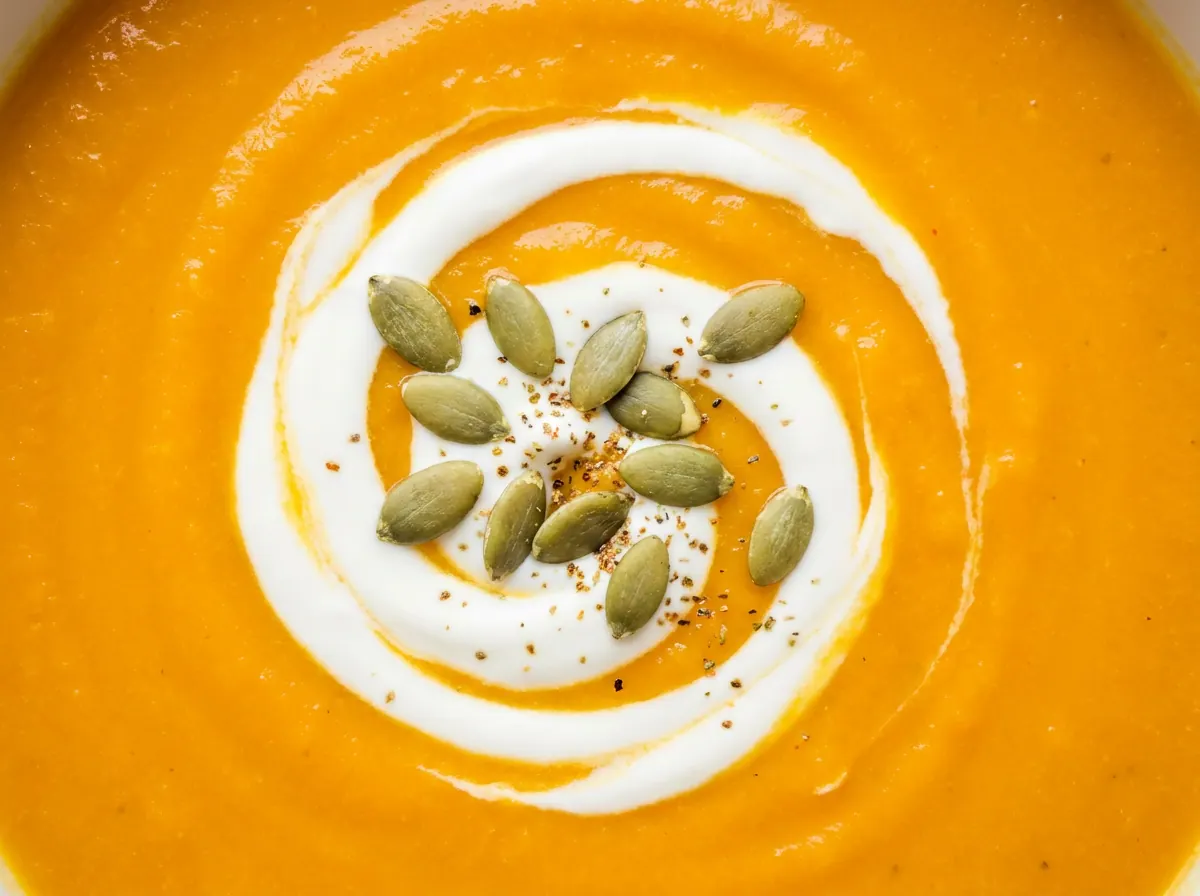
Blended pumpkin soup with onion, ginger, and garlic in a light broth — creamy smooth without any cream. GI 44 and low glycaemic load of 6, rich in vitamin A and potassium, and low in calories.
Blended pumpkin soup is a classic dish worldwide and a fixture of the Arabic and Gulf kitchen in one settled form: pumpkin, onion, and ginger in a broth, then blended smooth. Ginger and garlic give it warmth that balances the natural sweetness of the pumpkin without needing cream or sugar.
Its nutritional strength is that most of its bulk is pumpkin, which is very low in energy density: boiled pumpkin is only about 20 to 26 calories per 100 grams, so most of the calories in a serving come from the tablespoon of olive oil. The result is a warm, satisfying soup with a low glycaemic load — suitable as a light meal or a starter before the main course.
Preparation Steps
Soften the onion
Heat the olive oil in a pot over medium heat, add the chopped onion, and stir until it wilts and turns translucent.
Add the aromatics
Add the garlic, grated ginger, and cumin, and stir for one minute until fragrant.
Toast the pumpkin
Add the pumpkin cubes and stir with the other ingredients for two minutes so they absorb the flavours.
Simmer
Pour in the broth until it covers the pumpkin, raise the heat to a boil then lower it and leave to simmer until the pumpkin is completely tender.
Blend until smooth
Remove the pot from the heat and blend the soup with an immersion blender (or in batches in a standing blender) until creamy smooth.
Adjust consistency and season
Return the soup to the heat, adjust the consistency with a little broth if needed, then season with salt and black pepper.
Serve
Serve hot, garnished with a pinch of cumin or toasted pumpkin seeds without adding cream, to keep the calorie count low.
Blood Sugar Impact
The glycemic index (GI) measures how quickly a food raises blood sugar, while the glycemic load (GL) measures how much a full serving raises it. Together they give the complete picture.
Glycemic Index
GI
44Low
Low0–55Medium56–69High70+
A low value (≤55) means a gradual rise in blood sugar — the most suitable range for diabetes and insulin resistance.
Glycemic Load
GL
7Low
Low0–10Medium11–19High20+
Glycemic load reflects the impact of the full serving. To lower it: take half a serving, or pair the recipe with a source of protein and fiber.
Nutritional Information
Per ServingMakes 4 servings · one serving is about 455 g of raw ingredients
Calories105 kcal5%of Daily Value*
Protein3 g6%of Daily Value*
Carbohydrates18 g7%of Daily Value*
Fat4 g5%of Daily Value*
Fiber2 g7%of Daily Value*
Sodium1102 mg48%of Daily Value*
* Percent Daily Values are based on a 2,000-calorie diet per FDA food-label reference values — your daily needs may be higher or lower. Values are derived from the recipe's ingredients via the USDA database.
Troubleshooting
The most common problems when preparing Pumpkin Soup with Ginger, and how to fix them:
Soup is too thin and watery
Too much broth compared with the pumpkin, or not enough evaporation during simmering. For an immediate fix: return it to low heat uncovered for ten minutes to concentrate; or add a quarter cup of extra cooked pumpkin and blend it in. Next time: start with broth that barely covers the pumpkin — add more only when adjusting at the end if needed.
Soup is heavy and doughy
The pumpkin absorbed the broth and the consistency concentrated after blending. Add hot broth two tablespoons at a time over low heat, stirring, until you reach a creamy consistency that flows from the spoon without being watery. Avoid adding cold water all at once — it breaks the consistency and dulls the flavour.
Ginger flavour is overpowering and sharp
Too much ginger was added raw, or it was not cooked long enough. One tablespoon grated is enough for four servings, and it should be sautéed with the onion for a minute before adding the broth to soften its sharpness. If it is still overpowering: add half a cup of extra cooked pumpkin and a little broth to balance it, or a squeeze of lemon juice to cut the heat.
Pumpkin stayed hard after simmering
Pumpkin cubes were too large or the heat was too low. Cut the pumpkin into equal 2–3 cm cubes so they cook evenly, and maintain a steady gentle boil — not merely warm. Test doneness with a fork: it should pierce easily before blending. If still firm, add hot broth and give it another five minutes.
Flavour is flat despite the spices
Salt was added too early or the broth was low in flavour. Pumpkin soup needs salt at the end after the consistency has concentrated for the flavour to emerge, with a pinch of black pepper to bring out its sweetness. For extra depth: a few drops of lemon juice or a pinch of toasted cumin added just before serving.
Soup colour is pale, not a bright orange
The variety used has light flesh, or the soup was diluted too much with broth. Choose a deep-coloured pumpkin (such as kabocha or butternut squash) and reduce the broth slightly to concentrate the colour. A pinch of cumin or toasted pumpkin seeds on the surface adds a nice visual contrast at serving time.
Storage and Make-Ahead
Refrigerator (4°C)
The blended soup keeps for three to four days in an airtight container when chilled. Chill within two hours of cooking per food safety guidelines [1].
Freezer (−18°C)
Pumpkin soup freezes well for up to three months as it contains no cream that might separate on thawing. Portion into single-serve containers, leaving headspace for expansion.
Meal prep
Cut the pumpkin and onion and store them in the refrigerator a full day before cooking. Grated ginger can be stored in the freezer and used directly without thawing.
Reheating
Reheat over low heat, stirring continuously until smooth, and add a splash of broth if it has thickened in the refrigerator. Do not leave it outside the refrigerator for more than two hours after serving.
Tested Ingredient Substitutions
Original Ingredient
Tested Substitute
Ratio
Flavor Difference
Pumpkin (winter squash)
Butternut squash
Same weight
Sweeter and smoother, brighter colour
Fresh ginger
Half a teaspoon ground ginger
Half the quantity
Less sharp and less fresh — add with the spices
Vegetable broth
Water with a low-sodium stock cube
Same quantity
Simpler flavour — watch the saltiness of the cube
Olive oil
Neutral vegetable oil
Same quantity
More neutral flavour — reduces the bitterness of olive oil for those who prefer that
Cumin
A pinch of cinnamon or nutmeg
A light pinch
A warm, sweet direction that brings out the sweetness of the pumpkin
How Much Does It Make? Scaling Guide
Number of servings
Squash
Broth
Onion
Ginger
2 (individual × 2)
350 g
2 cups
0.5
0.5 tbsp
4 (base)
700 g
4 cups
Piece
1 tbsp
6 (small gathering)
1.5 kg
6 cups
1.5
1.5 tbsp
8 (large family)
1400 g
8 cups
2
2 tbsp
EEINA Nutrition Tip
Vitamin A: pumpkin is one of the richest vegetables in beta-carotene, which the body converts to vitamin A — important for vision, immunity, and skin. Fibre and potassium: fibre slows carbohydrate absorption and increases satiety, and potassium helps regulate blood pressure in favour of heart health.
Add This Recipe to Your Plan
The EEINA app saves your favorite recipes, calculates them from their real ingredients, and shows your daily numbers toward your goal. Try it free now.
Is pumpkin soup suitable for people with diabetes?
Yes — its glycaemic load is low (6) despite the pumpkin's moderate glycaemic index, because the available carbohydrates per serving are small. Serve it with a protein source for additional balance.
Which type of pumpkin should I use?
Both winter squash and butternut squash give excellent results. Choose a deeply coloured flesh for a bright orange soup that is also richer in vitamin A.
How do I make it creamy without cream?
Thorough blending of the well-cooked pumpkin is the secret to the creamy texture. Balancing the ratio of broth to pumpkin is enough; for a touch of extra richness you can add a spoonful of low-fat yogurt at serving time.
Can it be frozen?
Yes, for up to three months — being free of cream makes it ideal for freezing. Portion it into single-serve containers and reheat gently over low heat.