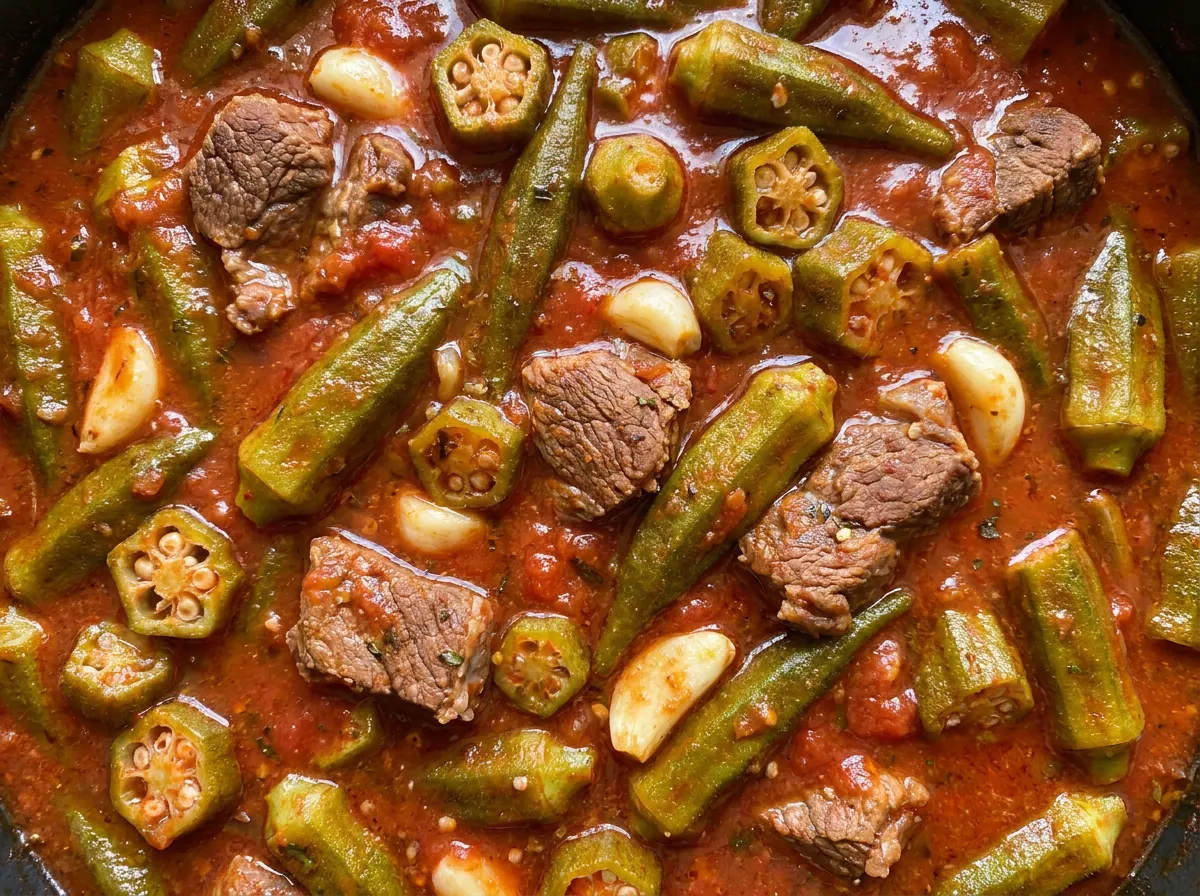
A stew of okra and lean beef with tomato, garlic, and cilantro in the Levantine style. The dish itself (without rice) is low in available carbohydrates and rich in soluble fiber, GI 16.
Okra with meat is a venerable Levantine stew, documented by the region's kitchens as a traditional dish of okra, lean beef, tomato, and garlic, simmered over low heat and served with rice. Its spirit lies in its simplicity: a single vegetable as the star of the dish, meat that gives it depth, and the acidity of tomato and lemon to balance okra's natural stickiness.
Okra itself is a nutritional treasure. It is the main source of carbohydrates in this dish, its glycemic index is low, and it carries soluble (mucilaginous) fiber that slows sugar absorption, alongside vitamin C, folate, and magnesium. This makes the stew on its own a gentle choice for blood sugar, provided you pay attention to what is served with it.
Preparation Steps
Boil the meat
Boil the meat cubes in water with an onion, bay leaf, and cardamom over low heat until tender (about an hour), skimming off the foam that rises, and keep the broth.
Sauté the onion and garlic
Chop the onion, heat the olive oil, and sauté it until it wilts, then add the crushed garlic and stir for a minute until fragrant.
Sauté the okra
Add the okra and stir it gently for a few minutes to lightly sauté it so its stickiness lessens, avoiding vigorous stirring so it does not break apart.
Add the tomato
Add the grated tomatoes and tomato paste and stir until the mixture is uniform and some of the tomato water has evaporated.
Add the meat and season
Return the boiled meat to the pot with two to three cups of its broth, season with salt and pepper, bring to a boil, then lower the heat.
Simmer gently
Cover the pot and leave it over low heat for twenty-five to thirty minutes until the okra is cooked and the sauce thickens a little.
Add the cilantro and lemon
A few minutes before serving, add the chopped cilantro and lemon juice to balance the acidity and set the color.
Serve
Serve it hot, traditionally eaten with white rice. For a lighter effect on blood sugar, serve it with brown rice or bulgur, or on its own as a rich stew.
Blood Sugar Impact
The glycemic index (GI) measures how quickly a food raises blood sugar, while the glycemic load (GL) measures how much a full serving raises it. Together they give the complete picture.
Glycemic Index
GI
16Low
Low0–55Medium56–69High70+
A low value (≤55) means a gradual rise in blood sugar — the most suitable range for diabetes and insulin resistance.
Glycemic Load
GL
2Low
Low0–10Medium11–19High20+
Glycemic load reflects the impact of the full serving. To lower it: take half a serving, or pair the recipe with a source of protein and fiber.
Nutritional Information
Per ServingMakes 4 servings · one serving is about 385 g of raw ingredients
Calories358 kcal18%of Daily Value*
Protein23 g46%of Daily Value*
Carbohydrates18 g7%of Daily Value*
Fat22 g28%of Daily Value*
Fiber6 g21%of Daily Value*
Sodium472 mg21%of Daily Value*
Potassium1092 mg23%of Daily Value*
Phosphorus360 mg29%of Daily Value*
* Percent Daily Values are based on a 2,000-calorie diet per FDA food-label reference values — your daily needs may be higher or lower. Values are derived from the recipe's ingredients via the USDA database.
Troubleshooting
The most common problems when preparing Levantine-Style Okra and Beef Stew, and how to fix them:
The okra came out slimy and rubbery
The okra was not sautéed before the liquid was added, or it was stirred too much while boiling. Stickiness is natural in okra and is reduced by sautéing it in oil for a few minutes first before adding the tomato and broth. The acidity from the tomato and lemon juice reduces it further, so the lemon is added near the end. Avoid vigorous stirring during boiling.
The okra fell apart and turned mushy in the pot
The stirring was vigorous, or the cooking time was too long. Okra cooks in twenty-five to thirty minutes over low heat only. Stir the pot by shaking it rather than stirring with a spoon as much as possible, and stop the heat once the pieces are tender and still intact.
The meat stayed tough despite long cooking
The boiling was over high heat, or the cut is not suitable for boiling. Shank and leg meat need a long, gentle boil (about an hour) so the connective tissues dissolve and it becomes tender. If it stays tough, return it to its broth over low heat, covered, until cooked before joining it with the okra.
The sauce is watery and did not thicken
There is more broth than needed, or the pot stayed covered the whole time. Uncover the lid for the last ten minutes and let the sauce simmer gently until the excess evaporates and it thickens. A tablespoon of tomato paste helps the consistency, so do not omit it.
The taste is bland with not enough acidity
The tomato alone is not enough, or the lemon juice was forgotten. Add the juice of half a lemon near the end, as it balances the richness and lifts the okra's flavor. Fresh cilantro a few minutes before serving adds an aroma that complements the acidity.
The frozen okra released too much water
It was added while still frozen without draining. There is no need to fully thaw it first, but drain it of meltwater and sauté it directly in the hot pot to drive off the moisture before adding the tomato, so it does not dilute the sauce.
Storage and Make-Ahead
Refrigerator (4°C)
The stew keeps in an airtight container for three to four days. Its flavor improves the next day as the spices penetrate. Cool it within two hours of cooking per the USDA rule to avoid the temperature danger zone.
Freezer (-18°C)
It freezes well for up to three months in an airtight container. The okra may soften a little after thawing, but the flavor remains. Thaw it in the fridge overnight.
Make ahead
Boiling the meat: it is boiled a day ahead and kept with its broth in the fridge. Trimming the okra: its ends are trimmed and it is kept in a bag in the fridge for two days, or frozen ready to use. Cilantro and lemon: add them fresh when reheating before serving, not before.
Reheating
Heat it over low heat with a splash of water or broth until it simmers gently, and stir by shaking the pot rather than with a spoon so the okra does not break apart. Add the cilantro and lemon juice after reheating.
Tested Ingredient Substitutions
Original Ingredient
Tested Substitute
Ratio
Flavor Difference
Lean beef
Skinless chicken breasts or thighs
Same weight
Leaner, shorter boiling time, milder flavor
Fresh okra
Drained frozen okra
Same weight
Practical year-round, needs sautéing to drive off the water
Olive oil
Neutral vegetable oil
Same amount
More neutral flavor, less monounsaturated fat remains
Fresh cilantro
Chopped parsley
Same amount
Lighter aroma, suitable for those who do not like cilantro
Fresh tomatoes
Canned crushed tomatoes
About 400 g
Thicker consistency, make sure they are free of added sugar
How Much Does It Make? Scaling Guide
Number of servings
Okra
Beef
Tomatoes
Garlic
2 (light)
250 g
200 g
2
3 cloves
4 (base)
500 g
400 g
4
5–6 cloves
6 (family)
750 g
600 g
6
8 cloves
8 (entertaining)
1 kg
800 g
8
10 cloves
EEINA Nutrition Tip
The stew is gentle, and the rice is the difference: okra with meat on its own is low in glycemic load and rich in fiber and protein. When served over white rice, the meal's effect on blood sugar rises because of the rice, not the okra. For anyone watching their sugar: serve it with a small portion of brown rice or bulgur, or eat it on its own as a filling stew.
Add This Recipe to Your Plan
The EEINA app saves your favorite recipes, calculates them from their real ingredients, and shows your daily numbers toward your goal. Try it free now.
Sauté it in oil for a few minutes before adding the liquid, add the acidity of tomato and lemon juice, and avoid vigorous stirring during boiling.
Is it suitable for people with diabetes?
The stew on its own without rice is low in glycemic load (GL 3) and rich in fiber and protein, so it is a gentle choice. The attention should go to what is served with it, as white rice raises the meal's effect.
Is frozen okra as good as fresh?
Yes, and it is practical year-round. Drain it of meltwater and sauté it directly in the hot pot so it does not dilute the sauce.
What meat should I cook it with?
Boiling cuts like shank or leg give the best tenderness after a long, gentle boil. Chicken is a lighter, quicker-cooking alternative.