
Why Young Children Refuse Healthy Food
Before blaming yourself or your child, know that refusing new foods is a normal developmental behavior, peaking between ages 2 and 6. Scientists call this "food neophobia," and it's not a parenting flaw but a phase most children go through.
A child doesn't refuse vegetables to annoy you; their brain is wired to be cautious of any food they haven't tried before. Your role isn't to break this caution by force, but to dissolve it through repeated familiarity.
Bitter Taste Genes: Why Your Child Hates Broccoli Specifically
There's a gene called TAS2R38 that controls tongue sensitivity to bitter compounds found in broccoli, cauliflower, and arugula. Children who inherit the highly sensitive version perceive bitterness much more intensely than you do from the same dish. So, when your child spits out broccoli, they might be completely honest: it genuinely tastes bitter to them.
This doesn't mean giving up, but changing tactics: bitterness can be reduced by proper cooking, adding a little healthy fat (like olive oil), or roasting, which brings out the natural sweetness in vegetables.
Three Facts to Reassure You
Sweet Preference is Innate
Children are born preferring sweet and salty tastes and rejecting bitter ones. This is an ancient protective evolution, not a bad habit you taught them.
Aversion is a Phase, Not a Trait
Most children gradually outgrow the peak of aversion. Your calm persistence in offering is what shortens this phase.
Repetition Breeds Acceptance
Repeated exposure without pressure turns unfamiliar food into familiar. Most parents give up after three, but science says keep going.
How Much Does Your Child Need by Age
Child nutrition isn't just a scaled-down version of adult nutrition. Quantities are smaller, but the relative need per kilogram of body weight is higher, especially for protein, calcium, and iron. This table is a quick reference according to WHO and the Saudi Ministry of Health:
| Age | Calories/Day | Protein | Calcium |
|---|---|---|---|
| 1 to 3 Years | 1000 to 1400 | 13g | 700mg |
| 4 to 8 Years | 1200 to 2000 | 19g | 1000mg |
| 9 to 13 Years | 1600 to 2600 | 34g | 1300mg |
| 14 to 18 Years | 1800 to 3200 | 46 to 52g | 1300mg |
Added Sugar: The Hidden Trap
The most dangerous threat to a child's diet isn't what you cook, but what enters unnoticed. The World Health Organization and the American Heart Association recommend less than 25 grams of added sugar daily for children, and zero for those under two. The problem is, one juice box can consume the entire day's allowance.
Approximate values vary by brand. Recommended daily limit: 25 grams. Source: SFDA labels & WHO/AHA recommendations.
The Ten-Attempt Rule & Dividing Responsibility
The most famous reliable nutritional parenting model is "Division of Responsibility" by nutritionist Ellyn Satter. Its idea is simple and liberating: everyone has their role, and the conflict ends when everyone sticks to their boundaries.
Parent's Role
You decide the type of food offered, the mealtime, and where it's served at the table. This is solely your responsibility, and it's non-negotiable.
Child's Role
The child decides whether to eat and how much of what you've offered. Trust their hunger and fullness cues; they are smarter than you think.
How to Make Your Child Love Vegetables
Now that we understand the science, here's the application. These are proven techniques that increase the likelihood of acceptance without battles:
- Blend them into sauces they love — Grated carrots and onions melt into pasta sauce, introducing fiber without resistance.
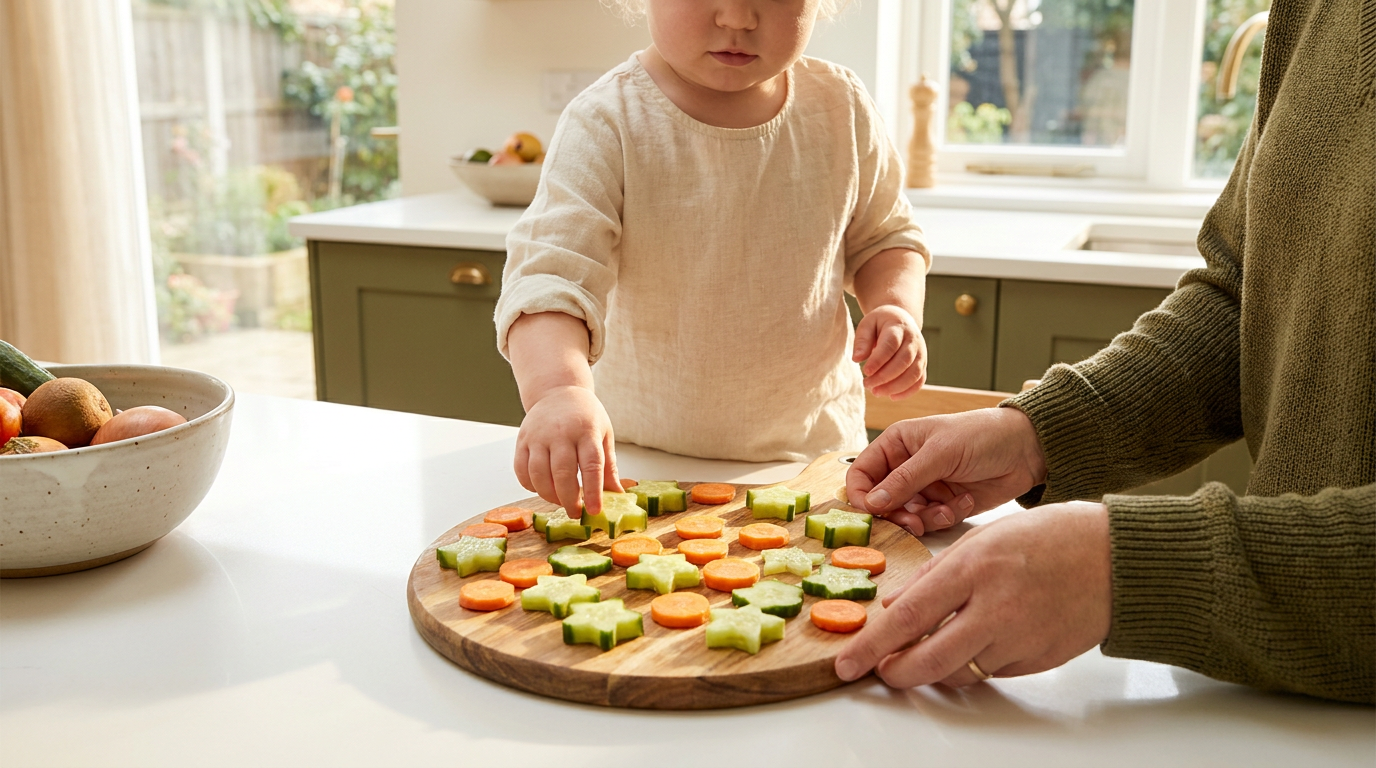
- Cut them into fun shapes — Star and heart-shaped cutters change a child's relationship with their plate.
- Involve them in cooking — Children proudly eat what their own hands have made.
- Serve with a dip — Carrots with hummus, or cucumber with labneh, makes vegetables a vehicle, not a chore.
- Offer before extreme hunger — Present vegetables at the start of the meal when they are more receptive to trying new things, not exhausted.
- Roast them with a little olive oil — Roasting brings out natural sweetness and reduces the bitterness they perceive.
- Be the role model — When they see you eating vegetables with enjoyment, they learn it's normal food, not a punishment.
The Balanced School Lunch
The failing model: a cheese sandwich, cookies, and juice. Carbohydrates without protein mean energy that crashes after two hours, leaving the child hungry and unable to concentrate. The successful formula combines four elements:
- A sandwich with grilled chicken, cucumber, and arugula on whole wheat bread for protein and fiber.
- A small container of Greek yogurt providing about 10 grams of protein and calcium.
- An apple or pear, sliced for easy eating.
- A handful of almonds (if no allergies) for healthy fats that prolong satiety.
- A container of water instead of juice; water is the best school beverage.
The Saudi Bento Box
The Japanese visual division works wonders with children: a compartmentalized lunchbox looks fun and varied, and makes it easy to ensure balance at a glance. Choose a five-compartment box and fill it like this:
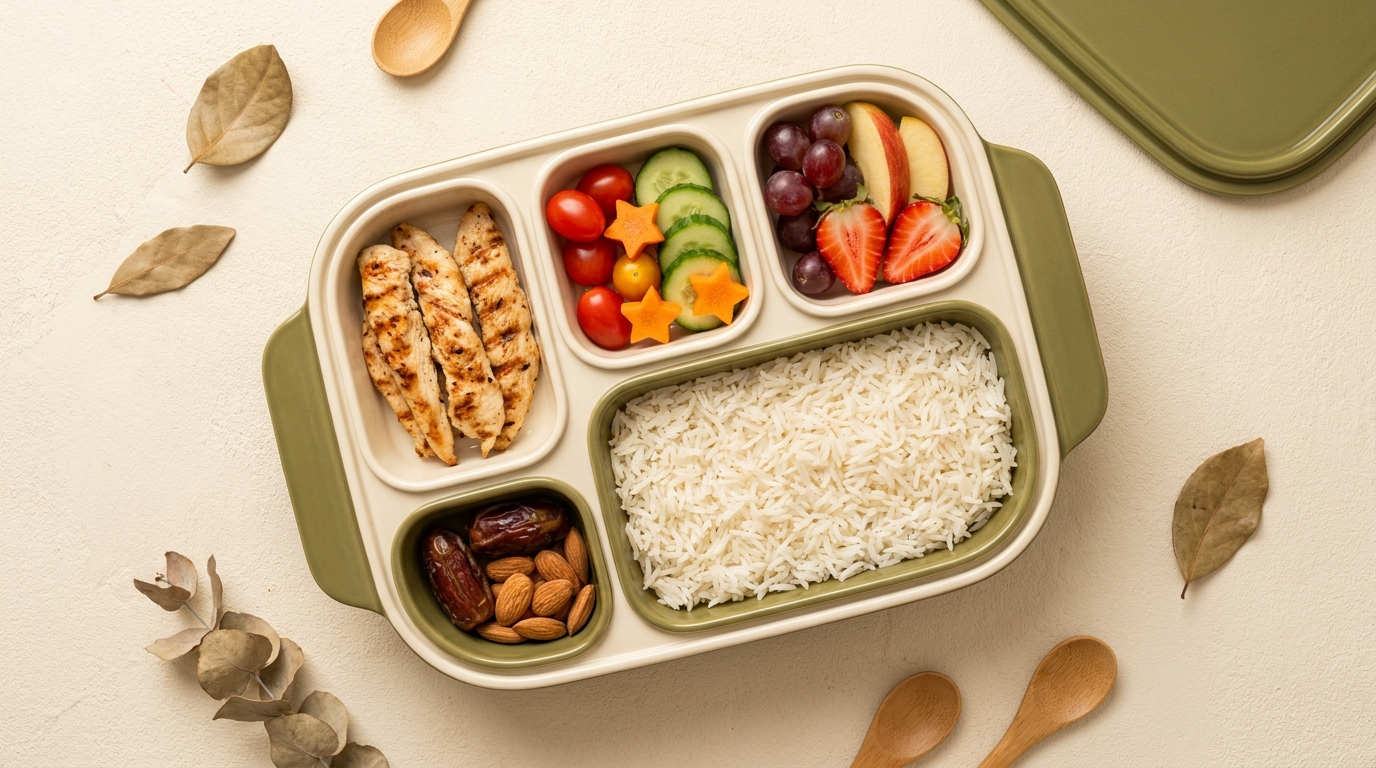
Protein Compartment
Grilled chicken, hard-boiled eggs, cheese, or hummus. This is what prolongs satiety and builds a growing body.
Carbohydrate Compartment
Whole wheat bread, basmati rice, or baked potatoes. Complex carbohydrates that don't spike blood sugar rapidly.
Vegetable Compartment
Carrots, cucumbers, and cherry tomatoes. Color variety brings different vitamins and appeals to the eye.
Fruit Compartment
Banana, grapes, or strawberries. Sweetness that satisfies sugar cravings without added sugar.
Snack Compartment
Dates stuffed with tahini and walnuts, or a handful of pecans. An authentic Saudi touch combining energy and minerals.
Tip: Prepare the box the night before and involve your child in choosing two compartments. Their participation in the choice increases the likelihood they will eat what they selected.
Smart Healthy Snacks Between Meals
Snacks are an opportunity, not an enemy. The secret is for each snack to contain protein or fiber that curbs hunger without spiking sugar:
- Dates stuffed with tahini and walnuts, three dates are sufficient.
- Greek yogurt with berries and a teaspoon of honey.
- Baby carrots with hummus.
- Apple slices with peanut butter (if no allergies).
- Homemade popcorn with a little oil and a sprinkle of cinnamon instead of heavy butter.
- Oat and date balls rolled by hand, with no added sugar.
Allergies & Early Introduction
Food allergies are a legitimate concern, but science has flipped the old rule on its head. We used to advise delaying allergenic foods; today, the evidence says the opposite: early, structured introduction prevents allergies.
Saudi Legislation: Eleven Allergens
The Saudi Food and Drug Authority (SFDA) requires the identification of eleven allergens on all food products: cereals containing gluten, crustaceans, eggs, fish, peanuts, soybeans, milk, nuts, celery, mustard, and sesame. Always read the label before introducing a new product to your child.
The most common in Saudi children are: milk, then eggs, then nuts. Most children outgrow milk and egg allergies as they grow, while peanut and nut allergies tend to persist.
The LEAP study, published in the NEJM in 2015, demonstrated that introducing peanuts early, between 4 and 11 months, to infants at high risk reduced the incidence of peanut allergy by about 80% compared to delayed introduction. This finding changed global guidelines in 2017.
Eating in Front of Screens vs. The Family Table
A child eating while watching a screen doesn't register fullness. Studies link eating during screen time to a 20-30% increase in intake because a distracted mind disrupts satiety signals.
Make family mealtime screen-free a firm rule, especially for children under ten. The shared table isn't just for food; it's a classroom where children learn eating habits by imitation and connect with their family.
The Saudi Context: Dates, Laban, and Heritage Foods
Our Saudi table holds nutritional treasures for children, provided we return them to their rightful place instead of processed products. This isn't a call to invent "modified" recipes, but to return to what our grandmothers knew:
- Dates are a natural sweetener with fiber, potassium, and iron. One or two dates with milk are a smart alternative to processed sweets.
- Laban and yogurt are sources of calcium, protein, and beneficial bacteria, better than sweetened flavored drinks.
- Oats and lentils are the basis of filling, inexpensive meals rich in fiber and plant-based protein.
- Eggs provide complete protein and choline that supports brain development, and are a quick, beloved breakfast meal.
Seven Myths About Child Nutrition
"A child must finish their plate."
"Refusing vegetables means bad parenting."
"Juice is healthy because it's fruit."
"Delaying nuts and eggs prevents allergies."
"An active child isn't affected by sugar."
"Sweets are an appropriate reward."
"Supplements replace good food."
A Five-Day Plan for Lunchboxes
A practical model ready for a school week, each day combining protein, carbohydrates, vegetables, fruit, and a Saudi touch. Substitute ingredients based on your child's taste and availability:
Chicken & Colorful Rice
Ample protein and steady energy to last until the end of the school day.
Whole Wheat Sandwich
Almonds are optional and should be omitted if there are nut allergies.
Eggs & Baked Potatoes
Choline in eggs supports brain development and focus.
Hummus & Vegetables
A vegetarian day rich in fiber and plant-based protein.
Fish & Rice
Omega-3 from fish supports the brain and mood.
Frequently Asked Questions
- Usually not. Aversion is a normal phase. Continue quiet offerings 10 to 15 times, and temporarily offer fiber from fruits and legumes. Consult a doctor only if growth stops or signs of deficiency appear.
- No. You decide what and when, and they decide how much. Forcing disrupts their fullness mechanism and turns the table into a battleground. Trust their cues.
- Current guidelines encourage early introduction, between 4 and 6 months when starting solids, in small, gradual amounts. If your child has severe eczema or an egg allergy, consult a doctor first.
- Less than 25 grams, about six teaspoons, for children over two years old. And zero added sugar for those under two, according to the American Heart Association.
- Distraction by screens impairs the sense of fullness, leading to about 20-30% more food intake. Make family meals screen-free a firm rule, especially for those under ten.
- A child with a varied diet rarely needs supplements, except for Vitamin D, which is often deficient in Saudi Arabia due to limited sun exposure. Consult a pediatrician before any supplement and do not determine the dosage yourself.
Seven Points to Remember
- Refusal is biological, not defiance. Food neophobia is a normal phase that passes with patience.
- Repetition wins. Offer new food 10 to 15 times before giving up.
- Divide responsibility. You decide what and when; they decide how much.
- Added sugar is the trap. Less than 25 grams daily, and zero under age two.
- Introduce allergens early. Delaying increases allergies, it doesn't prevent them.
- No screens at the table. Distracted eating increases intake by a third.
- Return to our table. Dates, laban, eggs, and lentils are treasures that beat processed foods.
Start Your Next Step with EEINA
Family Plan for All Ages
Saudi meals for adults and children, with support for eleven allergen types. One kitchen, one meal.
View the Plan →Kid-Friendly Recipes
School lunch ideas, healthy snacks, and dishes children love.
Browse →EEINA App
Family meal planning, smart shopping lists, and tracking dietary diversity.
Download →
Sources
- American Academy of Pediatrics · Bright Futures Nutrition Guidelines 2023.
- WHO · Guideline: Sugars intake for adults and children 2015.
- American Heart Association · Added Sugars and Children 2017 (Less than 25g daily, 0g under age 2).
- WHO Child Growth Standards · Energy and Protein Requirements by Age.
- Saudi Ministry of Health · Nutritional Guidelines for Children 2022.
- Mennella JA et al. · Genetic and environmental determinants of bitter perception (TAS2R38). Pediatrics.
- Satter E · The Division of Responsibility in Feeding · Ellyn Satter Institute.
- Du Toit G et al. · LEAP Study · Randomized Trial of Peanut Consumption in Infants at Risk. NEJM 2015.
- NIAID · Addendum Guidelines for Prevention of Peanut Allergy 2017.
- SFDA · Food Allergen Labelling Regulations (Eleven Allergens) 2023.


Your Child's Table
Starts with a Calm Plan
A family plan from EEINA offers Saudi meals for all ages, with support for eleven allergen types according to SFDA.
Free · No Registration Required · Personalized for Your Family