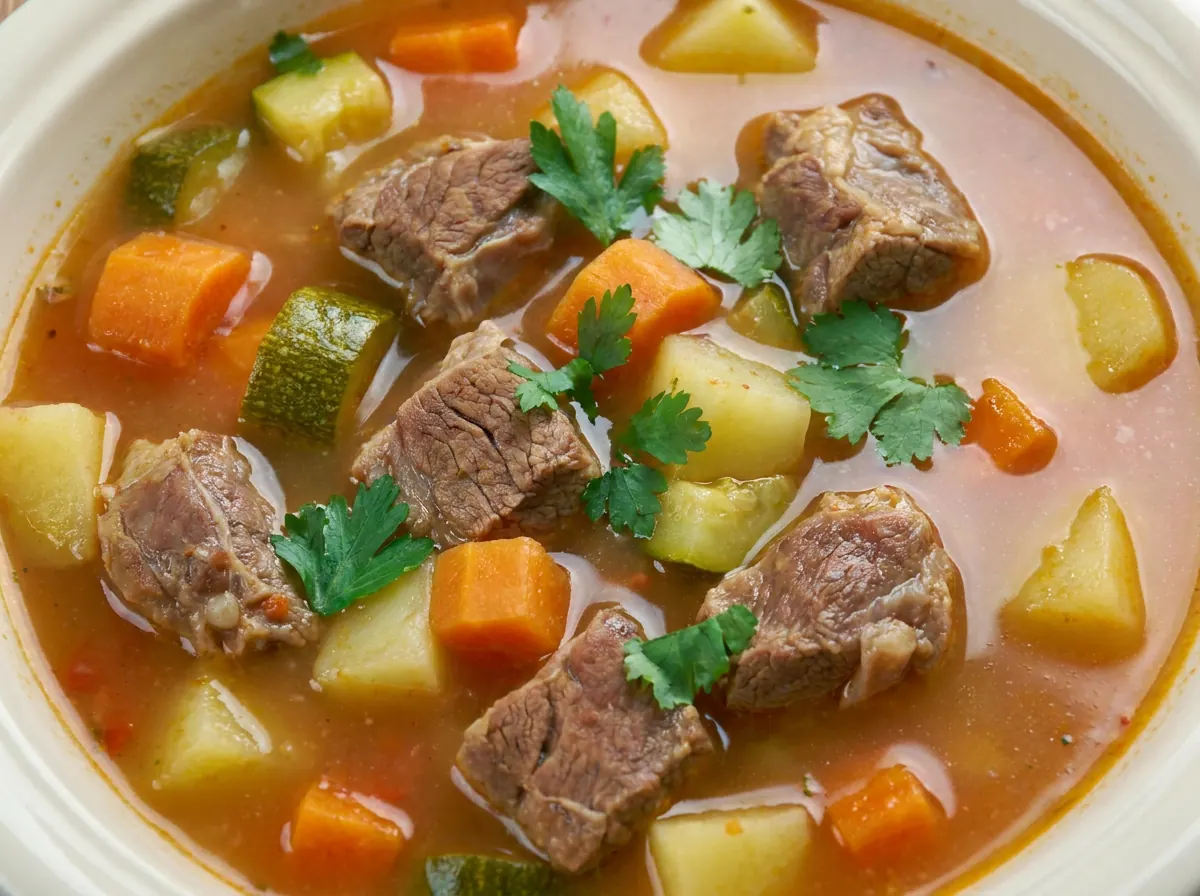
Meat salona with vegetables, a traditional Gulf stew in tomato broth with meat and seasonal vegetables. A medium-GI dish, GI 52, 359 calories per serving, rich in protein and vitamin A.
Salona is an inherited stew dish on Gulf tables, from the Emirates, Kuwait, Qatar, and Bahrain to the eastern part of Saudi Arabia. Its origin is simply Bedouin: a tomato broth that brings the meat and the season's vegetables together in a single pot, and it is served daily and in Ramadan and on occasions, generation after generation.
Its secret is in balance, not abundance. The lean meat gives protein and satiety, the zucchini, carrot, and tomato add fiber and vitamin A, and the dried lime gives a Gulf acidity that sets the dish apart from any other stew. A moderate portion of potatoes keeps the calories low without the dish losing its warmth.
Preparation Steps
Season the meat and heat the oil
Season the meat cubes with part of the spices and the salt and leave them a little. Heat the oil in a wide pot.
Sauté the onion and garlic
Add the onion and stir it until it softens and turns golden, then add the garlic for a minute until it becomes fragrant.
Brown the meat
Add the meat and stir it over medium to high heat until it changes color and browns a little on all sides.
Add the tomatoes and spices
Add the grated tomatoes, the tomato paste, the rest of the spices, and the pierced dried lime, and stir for three to four minutes until the sauce thickens a little.
Cook the meat over low heat
Add the water or stock to cover the meat, cover the pot, and leave it over low heat for forty-five to sixty minutes until the meat is tender, or twenty-five minutes in a pressure cooker.
Add the vegetables in order
Add the carrots and potatoes first and cook for ten minutes, then add the zucchini and cook for ten to fifteen more minutes until the vegetables are done without falling apart.
Adjust the salt and consistency
Adjust the salt and consistency; the broth should be medium-thick, not heavy. Lift out the dried lime before serving if you wish.
Serve
Serve it hot with white rice or thin flatbread. To lower the glycemic load, serve it with brown rice or a smaller amount of rice and more vegetables.
Blood Sugar Impact
The glycemic index (GI) measures how quickly a food raises blood sugar, while the glycemic load (GL) measures how much a full serving raises it. Together they give the complete picture.
Glycemic Index
GI
52Low
Low0–55Medium56–69High70+
A low value (≤55) means a gradual rise in blood sugar — the most suitable range for diabetes and insulin resistance.
Glycemic Load
GL
8Low
Low0–10Medium11–19High20+
Glycemic load reflects the impact of the full serving. To lower it: take half a serving, or pair the recipe with a source of protein and fiber.
Nutritional Information
Per ServingMakes 5 servings · one serving is about 555 g of raw ingredients
Calories359 kcal18%of Daily Value*
Protein20 g40%of Daily Value*
Carbohydrates20 g7%of Daily Value*
Fat22 g28%of Daily Value*
Fiber4 g14%of Daily Value*
Sodium398 mg17%of Daily Value*
Potassium886 mg19%of Daily Value*
Phosphorus252 mg20%of Daily Value*
* Percent Daily Values are based on a 2,000-calorie diet per FDA food-label reference values — your daily needs may be higher or lower. Values are derived from the recipe's ingredients via the USDA database.
Troubleshooting
The most common problems when preparing Meat Salona Stew with Vegetables, and how to fix them:
The meat stayed tough after an hour of cooking
You raised the heat or did not give the meat enough time. The stew needs low heat and a gentle simmer, not a rolling boil, as a violent boil contracts the meat fibers. Return the pot to a very low heat with a lid and add a little hot water, and leave it fifteen to twenty more minutes until tender. A pressure cooker shortens that to twenty-five minutes.
The potatoes fell apart and the vegetables dissolved in the broth
You added all the vegetables early with the meat. The vegetables need a much shorter time. Add the carrots and potatoes in the last twenty minutes, and the zucchini in the last ten to fifteen minutes, as it is the quickest to cook. Cut the potatoes into medium cubes, not small, so they hold together.
The broth is watery and thin with no body
Too much water, or we did not let it thicken. Lift the lid in the last ten minutes and let the broth simmer gently so some liquid evaporates. Tomato paste gives body and color, so add an extra spoon if needed. Avoid starch, as salona's broth is natural from the tomato.
The taste is flat with no Gulf depth
The dried lime is missing or was not pierced. The dried lime (black lime) is what sets the Gulf stew apart, and it must be pierced with a knife or fork before adding so its sour, bitter flavor seeps into the broth. Add one or two with the tomato, and lift them out before serving so the bitter taste does not dominate.
The color is faint, not an appetizing red
The tomato was not sautéed enough or the paste is too little. Stir the grated tomato and the paste with the meat for three to four minutes before adding the water so the color deepens and loses the raw smell. The turmeric in the spice blend also deepens the golden color.
The taste is more bitter than needed
You left the dried lime in too long or used more than two. The dried lime releases its bitterness the longer it stays in the broth. For next time: one is enough for five servings, and lift it out after half an hour. For an immediate fix: lift out the dried lime at once and add a small pinch of sugar to balance the bitterness.
Storage and Make-Ahead
Fridge (4°)
Cooked salona: three days in an airtight container. Its flavor improves the next day as the spices meld. Reheating: over low heat with a splash of hot water to restore the broth's consistency.
Freezer (-18°)
Freezes for two months without the potatoes, as the potatoes become spongy after thawing. Freeze the meat and broth, and add fresh potatoes when reheating.
Make ahead
The meat and broth: cooked a day ahead and kept in the fridge. Cutting the vegetables: hours ahead, kept covered in the fridge. Finishing: add the vegetables and finish cooking half an hour before serving.
Serving
Served hot as soon as it is done with white rice or thin flatbread. Do not leave it out of the fridge for more than two hours per the USDA food safety rule.
Tested Ingredient Substitutions
Original Ingredient
Tested Substitute
Ratio
Flavor Difference
Lamb
Chicken breast or lean veal
same weight
Less fat and calories, lighter flavor
Potatoes
Pumpkin or turnip cubes
same amount
Fewer carbs and lower glycemic load, a light sweetness
Zucchini
Eggplant or green beans
same amount
A firmer texture, a deeper flavor for the cold season
Dried lime (black lime)
Fresh lemon juice with grated zest
juice of one lemon and a pinch of zest
Clearer acidity and less bitterness, added near the end
Oil or ghee
Olive oil
half the amount
Healthier fats for the heart, reduces the calories
How Much Does It Make? Scaling Guide
Number of servings
Lamb or veal
Potatoes
Zucchini and carrots
Water or broth
2 (individual × 2)
200 g
1 small
Piece of each
0.5 liter
5 (base)
500 g
2
2 of each
~1 liter
8 (large family)
800 g
3
3 of each
1.5 liters
12 (entertaining)
1.25 kg
5
4–5 of each
2 liters
EEINA Nutrition Tip
Order makes the difference: add the vegetables in batches according to their firmness, the carrots and potatoes first then the zucchini. This preserves the texture and prevents falling apart, and keeps each vegetable its color and value. For those watching their blood sugar, reduce the potatoes and increase the zucchini and carrot to lower the carbs without losing the dish's fullness.
Add This Recipe to Your Plan
The EEINA app saves your favorite recipes, calculates them from their real ingredients, and shows your daily numbers toward your goal. Try it free now.
What is the difference between salona and maraq (broth)?
Salona is a stew of vegetables and meat in a medium-thick tomato broth, usually served alongside rice or bread. It differs from one home to another in the type of vegetables, but its base is the tomato broth and the dried lime.
Is it suitable for diabetics?
In moderation, as it is a medium-GI dish at 55 with a low glycemic load per serving. Watch the amount of potatoes and serve it with less or brown rice and more vegetables.
Can it be made without meat?
Yes, it is made with chickpeas or white beans instead of meat with a vegetable broth. It stays delicious, but the protein comes from the legumes instead of the meat.
What is the substitute for dried lime if it is unavailable?
Fresh lemon juice with a little grated zest added near the end of cooking. The acidity is clearer and less bitter than the dried lime.
Sources: USDA · University of Sydney · Gulf GSO · Our methodology · Updated on