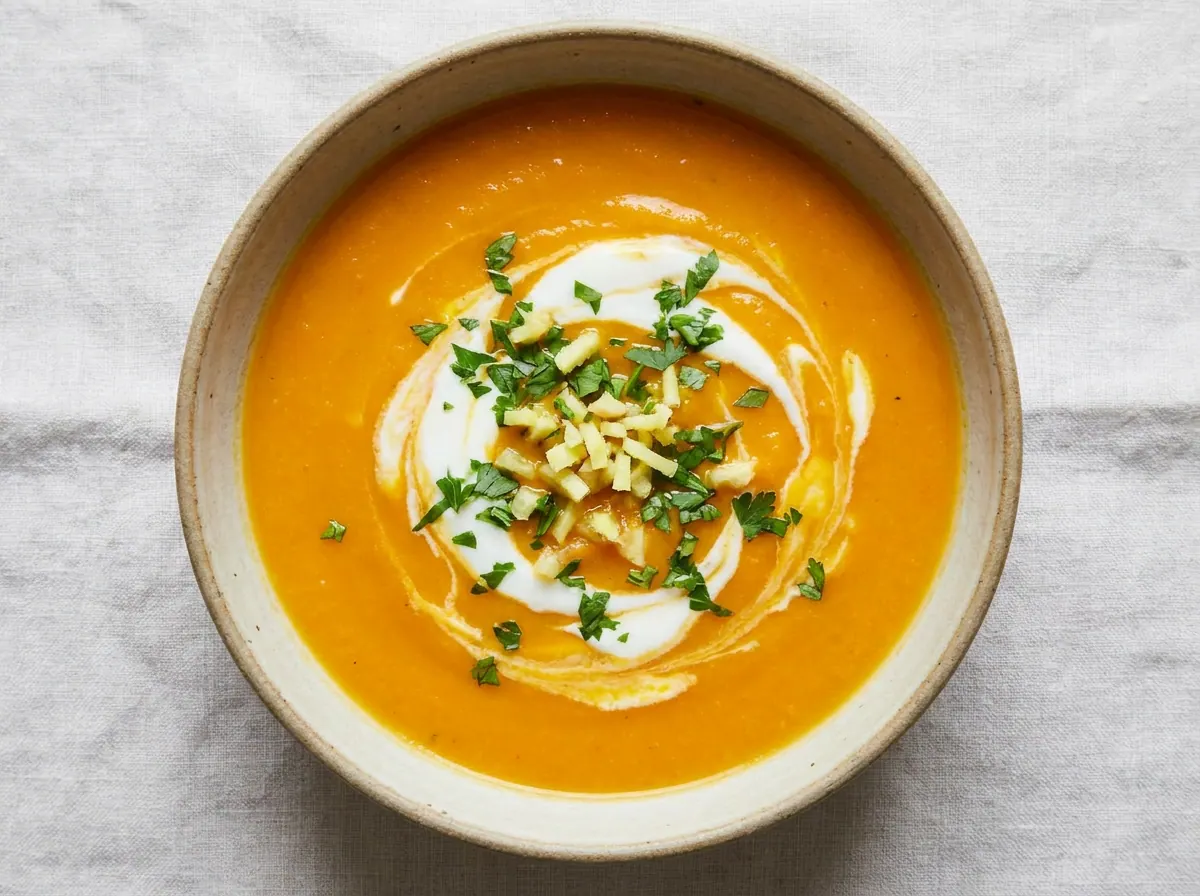
A velvety carrot soup with fresh ginger, low GI of 28, rich in vitamin A and fiber and low in calorie density, ideal for weight management and heart health.
Carrot ginger soup is a simple dish that combines the natural sweetness of carrots with the warmth of fresh ginger, producing a smooth velvety texture without any need for cream or starch. This balance between sweet and warm makes it comforting on winter nights and light at the same time.
Its nutritional value is generous despite its simplicity: a single serving covers your daily need of vitamin A thanks to the abundant beta-carotene in carrots, along with fiber that supports satiety and ginger that research links to improved blood sugar control. All of that at only about 120 calories, so it is a filling dish with low calorie density.
Preparation Steps
Sauté the onion
Heat the olive oil in a pot over medium heat, then add the chopped onion and stir it until it softens and becomes translucent (about 5 minutes) without browning.
Add the aromatics
Add the garlic, grated ginger, and cumin, and stir for one minute until the aroma comes out.
Add the carrots
Add the chopped carrots and stir them with the mixture for two minutes so they absorb the flavors.
Add the broth
Pour in the vegetable broth until it covers the carrots, raise the heat to a boil, then lower it.
Simmer gently
Cover the pot and leave it on low heat for 20 to 25 minutes until the carrots are completely tender (easily mashed with a fork).
Blend
Remove the pot from the heat and blend the soup with an immersion blender until it becomes smooth and velvety, adding a little broth or hot water to adjust the texture.
Season and serve
Season with salt and pepper, and cook for two more minutes. Serve it hot with a splash of lemon juice.
Blood Sugar Impact
The glycemic index (GI) measures how quickly a food raises blood sugar, while the glycemic load (GL) measures how much a full serving raises it. Together they give the complete picture.
Glycemic Index
GI
28Low
Low0–55Medium56–69High70+
A low value (≤55) means a gradual rise in blood sugar — the most suitable range for diabetes and insulin resistance.
Glycemic Load
GL
5Low
Low0–10Medium11–19High20+
Glycemic load reflects the impact of the full serving. To lower it: take half a serving, or pair the recipe with a source of protein and fiber.
Nutritional Information
Per ServingMakes 4 servings · one serving is about 475 g of raw ingredients
Calories134 kcal7%of Daily Value*
Protein3 g6%of Daily Value*
Carbohydrates24 g9%of Daily Value*
Fat4 g5%of Daily Value*
Fiber6 g21%of Daily Value*
Sodium1154 mg50%of Daily Value*
* Percent Daily Values are based on a 2,000-calorie diet per FDA food-label reference values — your daily needs may be higher or lower. Values are derived from the recipe's ingredients via the USDA database.
Troubleshooting
The most common problems when preparing Carrot Ginger Soup, and how to fix them:
The soup is too thin and has no body
There is more broth than needed for the amount of carrots. Quick fix: return the pot to low heat without a lid and let it evaporate for ten minutes until it thickens. For the next batch: pour the broth until it barely covers the carrots and no more, and keep the rest only to thin the texture at blending if needed.
The soup is heavy like dough after blending
The carrots absorbed most of the liquid during long cooking. Add hot broth or boiling water a tablespoon at a time, and stir until you reach the desired velvety texture. Add it hot, not cold, so the soup's temperature does not drop.
The ginger taste is hot and overpowering
The amount of ginger is too much, or it was added raw at the end. Ginger needs to be cooked with the aromatics for at least a minute so its sharpness mellows. To fix: add a little more broth and a splash of lemon juice to balance the sharpness. Start next time with half the amount and taste before adding more.
The soup is flavorless and flat
Not enough salt, or the onion and garlic were not sautéed. Sautéing the aromatic vegetables in the oil builds the flavor base, so do not rush this step. Add the salt gradually and taste, and add a splash of lemon juice at serving, as acid wakes up dull flavors.
The soup is too salty
Commercial vegetable broth is often high in sodium. Always use the low-sodium type and add your salt yourself. To fix: add a peeled potato piece and cook it for ten minutes then remove it (it absorbs some saltiness), or thin with a little hot water.
The soup's color is pale, not a vivid orange
The carrots used are old or pale to begin with. Choose dark orange, firm carrots, as their color is proof of their richness in beta-carotene. Very excessive cooking also fades the color, so cook only until the carrots are tender enough to mash with a fork.
Storage and Make-Ahead
Refrigerator (4°)
The blended soup: three to four days in an airtight container after it cools completely. Stir it when reheating as it may thicken a little. Let it cool in under two hours before putting it in the fridge, per the USDA rule to avoid the temperature danger zone [4].
Freezer (-18°)
Perfectly suited for freezing up to three months. Dairy-free blended soups freeze and thaw with excellent texture. Portion it into individual containers, and leave room for expansion.
Make ahead
Cutting the carrots: a day before, keep them chopped in an airtight container in the fridge. Full cooking: prepare it complete and keep it chilled, as its flavor deepens the next day. Ginger: grate it fresh at cooking time for the best flavor.
Reheating
Reheat it on low heat with constant stirring until it reaches a gentle boil, or in the microwave stirring every half minute. Add a splash of water if it thickens. Do not reheat it more than once.
Tested Ingredient Substitutions
Original Ingredient
Tested Substitute
Ratio
Flavor Difference
Fresh ginger
Dry ground ginger
a quarter tsp per tablespoon of fresh
Milder and less sharp flavor, added with the cumin
Vegetable broth
Water and a low-sodium broth cube
same amount
Simpler; watch for added sodium
Carrots alone
Carrots and a piece of sweet potato
four-fifths carrots and one-fifth sweet potato
Sweeter and thicker, the glycemic load rises slightly
Olive oil
Avocado oil
same amount
Neutral flavor, tolerates higher heat
Cumin
Turmeric and a pinch of cinnamon
same total amount
A different warmth and a deeper color
How Much Does It Make? Scaling Guide
Number of servings
Carrots
Broth
Ginger
Olive oil
2 (individual × 2)
350 g
0.5 liter
0.5 tbsp
0.5 tbsp
4 (base)
700 g
1 liter
1 tbsp
1 tbsp
6 (family)
1 kg
1.5 liters
1.5 tbsp
1.5 tbsp
8 (large batch for freezing)
1.4 kg
2 liters
2 tbsp
2 tbsp
EEINA Nutrition Tip
Acid balances sweetness: a splash of lemon juice at serving is not a garnish, it opens up the sweet carrot flavor and brings out the warmth of the ginger. Add it in the bowl, not in the pot, so it stays fresh; the fresh acidity makes the low-calorie dish seem richer and more complete.
Add This Recipe to Your Plan
The EEINA app saves your favorite recipes, calculates them from their real ingredients, and shows your daily numbers toward your goal. Try it free now.
Yes, it is low in glycemic load (GL 6) and rich in fiber, which makes the blood sugar rise after it gradual. One serving works as a meal starter or a light dish.
Do I need an immersion blender?
The immersion blender is easier and cleaner, but you can transfer the soup in batches to a regular blender after it cools a little. Beware of hot steam and leave an opening to vent the lid.
How do I make it creamy without cream?
Good blending alone gives it a velvety texture. For a richer body, add a piece of sweet potato or a spoon of red lentils with the carrots, or a splash of plant milk at serving.
Can it be made fully vegetarian?
The recipe is already fully plant-based as long as the broth is vegetable. It contains no animal product and suits a strict vegan diet.
Sources: USDA · University of Sydney · Gulf GSO · Our methodology · Updated on