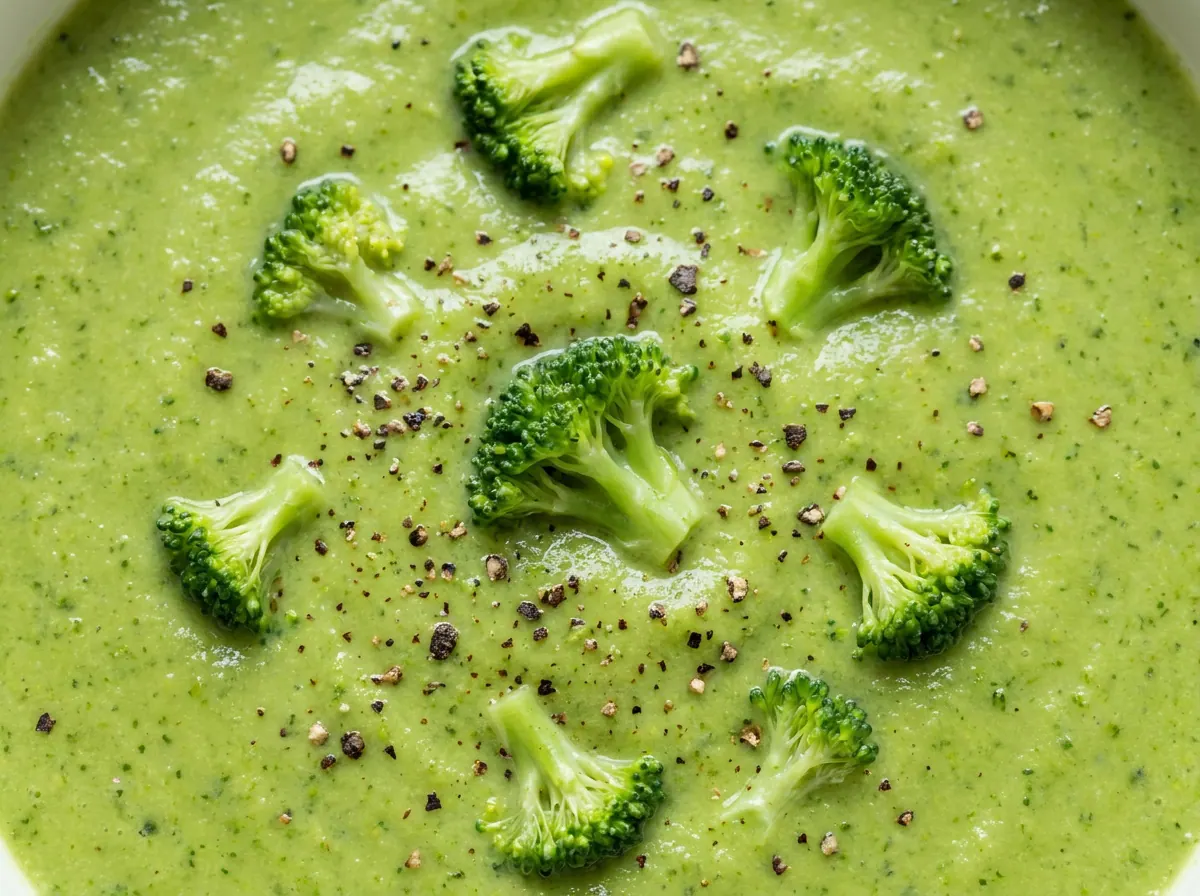
A healthy pureed broccoli soup — no cream, no cheese. The body comes from the broccoli and onion cooked in vegetable broth. GI 10, rich in vitamin C, vitamin K, and fiber.
Pureed broccoli soup is a classic European and American dish, traditionally made by sautéing onion, simmering broccoli in vegetable broth, and blending it until creamy. The classic version relies on cream and cheese, but this healthy version does away with both entirely.
The secret is that the velvety texture comes from the broccoli itself after blending — no added fat required. The result is a low-calorie soup rich in vitamin C, vitamin K, and fiber, built on nothing but onion and vegetable broth.
Preparation Steps
Sauté the onion
Heat the olive oil in a pot over medium heat. Sauté the chopped onion until soft and translucent, about five minutes.
Add the garlic
Add the crushed garlic and stir for one minute until fragrant — do not let it brown.
Add the broccoli
Add the chopped broccoli and stir with the onion for two minutes until it turns a vibrant green.
Simmer in broth
Pour in the vegetable broth to cover the ingredients, bring to a boil, then reduce the heat and simmer for 12 to 15 minutes until the broccoli is completely tender.
Blend
Turn off the heat and blend the soup with an immersion blender (or in batches in a countertop blender) until smooth and creamy.
Season and adjust consistency
Return to the heat, season with salt and pepper, and adjust the consistency with a little more broth if needed.
Serve
Serve hot with an optional squeeze of lemon juice to brighten the flavor.
Blood Sugar Impact
The glycemic index (GI) measures how quickly a food raises blood sugar, while the glycemic load (GL) measures how much a full serving raises it. Together they give the complete picture.
Glycemic Index
GI
10Low
Low0–55Medium56–69High70+
A low value (≤55) means a gradual rise in blood sugar — the most suitable range for diabetes and insulin resistance.
Glycemic Load
GL
1Low
Low0–10Medium11–19High20+
Glycemic load reflects the impact of the full serving. To lower it: take half a serving, or pair the recipe with a source of protein and fiber.
Nutritional Information
Per ServingMakes 4 servings · one serving is about 400 g of raw ingredients
Calories99 kcal5%of Daily Value*
Protein5 g10%of Daily Value*
Carbohydrates14 g5%of Daily Value*
Fat4 g5%of Daily Value*
Fiber4 g14%of Daily Value*
Sodium1044 mg45%of Daily Value*
* Percent Daily Values are based on a 2,000-calorie diet per FDA food-label reference values — your daily needs may be higher or lower. Values are derived from the recipe's ingredients via the USDA database.
Troubleshooting
The most common problems when preparing Creamy Pureed Broccoli Soup, and how to fix them:
The soup turned a dull, olive color instead of bright green
The broccoli was overcooked and its color oxidized. Add the broccoli after the onion, stir for just two minutes before the broth, and simmer on low heat for no more than 15 minutes. The faster you blend and serve after it is tender, the greener it stays.
Thin and watery rather than creamy
Too much broth relative to the broccoli. Start with just enough broth to cover the ingredients, keeping the rest on the side to adjust consistency after blending. If it comes out too thin, return it to a gentle heat for a few minutes to let some liquid evaporate.
Grainy or lumpy after blending
The broccoli was not fully cooked, or it was not blended long enough. Make sure the broccoli is completely soft and yields easily to a spoon before blending. Blend with the immersion blender for a full minute, or process in batches in a countertop blender, then strain if you want an even silkier texture.
Slightly bitter
Overcooked broccoli or burnt garlic adds bitterness. Stir the garlic for just one minute over medium heat without letting it color. To soften bitterness, add a squeeze of lemon juice at serving — the acidity balances the flavor and lifts the whole bowl.
Saltier than expected
Store-bought broth — even low-sodium types — can be high in salt. Taste before adding any salt, as the broth alone may be enough. If it is too salty, dilute with a little hot water or stir in some unsalted boiled and blended broccoli to restore balance.
Bland with no depth
The flavor base was not built properly. Sautéing the onion until translucent creates natural sweetness; garlic adds depth; a squeeze of lemon refreshes the dish. Add an extra quarter teaspoon of black pepper and serve the soup hot — heat brings out the flavors far better than a lukewarm bowl.
Storage and Make-Ahead
Refrigerator (4°C)
Pureed soup keeps three to four days in an airtight container. Stir when reheating as the texture may separate slightly, then come back together.
Freezer (-18°C)
Freezes well for up to three months. Portion into individual containers, leaving room for expansion. Because there is no cream, the texture holds up better after thawing than cream-based soups.
Meal prep
Chop the broccoli and onion up to a day ahead and refrigerate. The soup can also be cooked in full, refrigerated, and reheated at serving time — the flavor is not affected.
Reheating
Reheat gently over low heat, stirring until it comes to a light boil, or microwave for two minutes, stirring halfway through. Do not leave it out of the refrigerator for more than two hours.
Tested Ingredient Substitutions
Original Ingredient
Tested Substitute
Ratio
Flavor Difference
Broccoli
White cauliflower
same weight
Milder flavor and lighter color, with a similarly creamy texture when blended
Vegetable broth
Low-sodium chicken broth
same amount
Deeper, richer flavor — no longer vegetarian
Onion
Leek (white part)
approximately same weight
Gentler, more delicate sweetness than onion
Olive oil
One small boiled potato, mashed, for body
1 small potato
Thicker texture with no oil — raises carbohydrates slightly
Lemon juice
A splash of apple cider vinegar
1/2 teaspoon
A sharper acidity with a slightly different note
How Much Does It Make? Scaling Guide
Number of servings
Broccoli
Onion
Vegetable broth
Olive oil
2 (individual × 2)
250 g
0.5
2 cups
0.5 tbsp
4 (base)
500 g
1
4 cups
1 tbsp
8 (large family)
1 kg
2
8 cups
2 tbsp
12 (entertaining)
1.5 kg
3
12 cups
3 tbsp
EEINA Nutrition Tip
Broccoli stalks are a hidden treasure — do not discard them. They are just as fiber-rich as the florets. Peel off the tough outer layer, chop them small, and cook alongside the florets. They melt completely into the puree and give a richer body without any added fat.
Add This Recipe to Your Plan
The EEINA app saves your favorite recipes, calculates them from their real ingredients, and shows your daily numbers toward your goal. Try it free now.
Yes — frozen broccoli works well in pureed soups. Add it directly to the broth without thawing; it may need a few extra minutes to become completely tender.
Is this suitable for people with diabetes?
Ideal. Broccoli is a non-starchy vegetable low in carbohydrates, and the soup has a GI of 10 with a very low glycemic load — a safe choice at any time.
How do I make it richer without cream?
Add one small boiled potato or a tablespoon of cooked red lentils when blending. Both thicken the texture naturally with no added fat.
How long does it keep in the refrigerator?
Three to four days in an airtight container, and it freezes for up to three months. Stir when reheating to restore the smooth texture.