A traditional drink documented since ancient Greece, recommended by Hippocrates and popularized with lemon. A light, low-calorie hydrator with a GI of 30, an elegant alternative to sugary drinks in summer.
Sources: USDA · SFDA · Sydney University · our methodology · Updated on
The Story Behind This Drink
Barley water is an ancient drink, as old as medicine itself. The Greeks knew it as "ptisane", which is boiled hulled barley, and Hippocrates recommended it for both the healthy and the sick. The name traveled through Latin "tisana" into English, becoming known in its modern version with lemon as "Lemon Barley Water".
In the Arab world, it's simply known as "Barley Water" and is drunk cold in summer for hydration and its light calorie count. It's a calm and refreshing alternative to carbonated drinks and sugary juices, especially when prepared without sugar or with very little.
Preparation Steps
Rinse the Barley
Rinse the barley thoroughly under running water until the water runs clear, to remove dust and excess starch.
3 minutes
Bring to a Boil
Combine the rinsed barley, water, and a pinch of salt in a pot. Bring to a boil over high heat.
5 minutes
Simmer
Reduce the heat and let it simmer uncovered for 30 to 40 minutes, until the barley is tender and the water is slightly cloudy.
40 minutes
Strain
Remove the pot from the heat and strain the liquid into a pitcher through a fine-mesh sieve. Reserve the barley for other uses if desired.
3 minutes
Infuse Lemon Zest
Add the grated lemon zest to the hot water and let it steep until slightly cooled, then remove the zest.
10 minutes
Add Lemon and Sweetener
Stir in the fresh lemon juice and honey or sugar, if using, until fully dissolved.
2 minutes
Chill and Serve
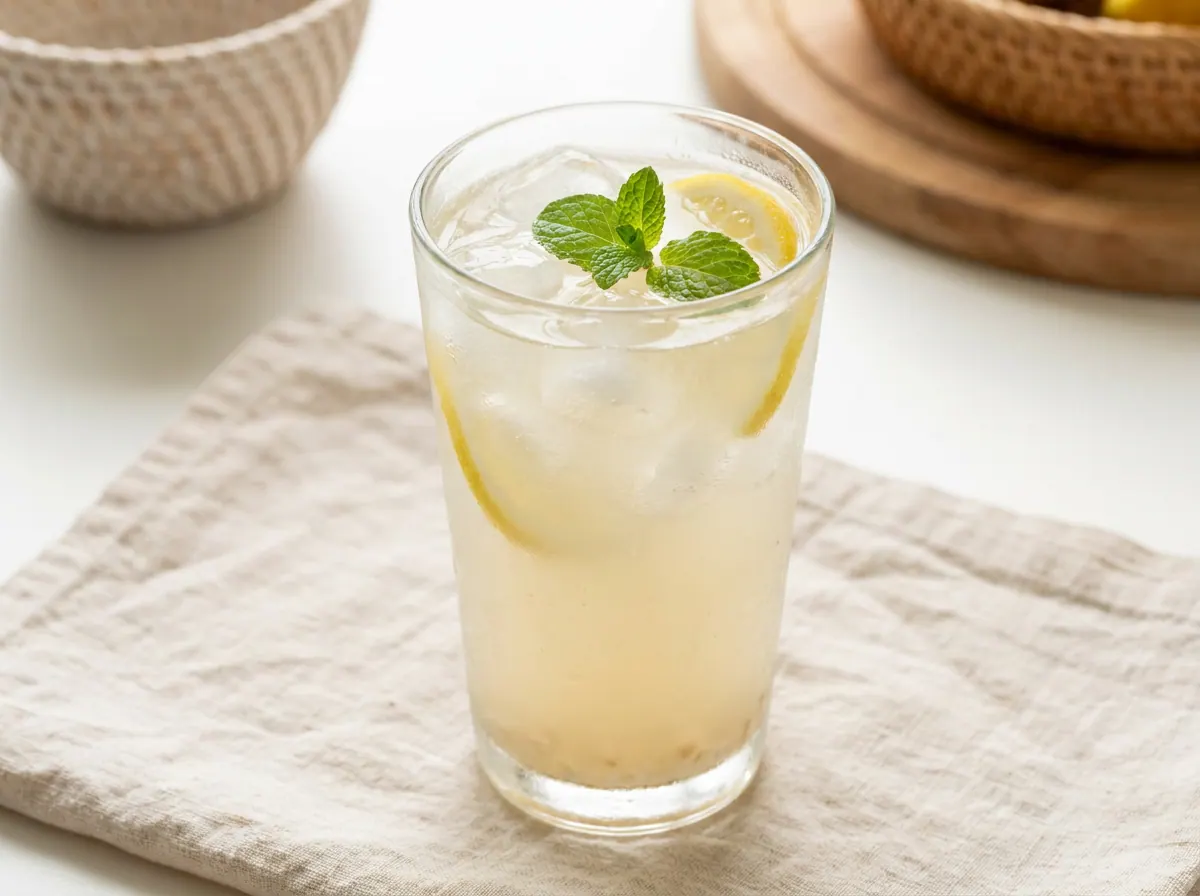
Chill the drink in the refrigerator and serve cold with ice cubes and mint leaves.
1 hour chilling
Blood Sugar Impact
The Glycemic Index (GI) measures how quickly blood sugar rises after consumption, and the Glycemic Load (GL) measures the amount of the rise per serving. Both readings together provide a complete picture.
Glycemic Index
GI
30Low
Low0–55Medium56–69High70+
A low value (≤55) indicates a gradual rise in blood sugar, making it ideal for individuals with diabetes or insulin resistance. Calculated based on boiled barley as the source; the unsweetened version has less impact.
Glycemic Load
GL
2Low
Low0–10Medium11–19High20+
The glycemic load per serving of strained, unsweetened barley water is very low, as most of the starch remains in the barley grain after straining. Adding honey or sugar will increase this value according to the amount of sweetener used.
Nutritional Information
Per CupUnsweetened · Estimated from barley databases
Calories35 kcal
Carbohydrates8 g
Estimated values per cup of strained, unsweetened drink, depending on the amount of starch dissolved in water and boiling intensity. Each tablespoon of honey adds about 60 calories, and each tablespoon of sugar adds about 48 calories. Lemon juice adds Vitamin C and a refreshing flavor with negligible calories.
Troubleshooting
Here are the most common issues encountered when preparing barley water for the first time, with simple solutions based on common kitchen experience with boiled beverages.
The water turned out too cloudy
Over-boiling or too much barley dissolved excess starch. A slight cloudiness is normal and desirable in barley water, but a thick consistency comes from boiling for longer than forty minutes. For your next batch: stick to half a cup of barley per 1.5 liters of water, and stop boiling once the barley is tender, no longer. For immediate fix: dilute with a little pre-boiled cold water.
The taste is bland and flavorless
Too little lemon, or the lemon zest was omitted. Barley water on its own has a very mild taste; lemon is what gives it vibrancy. The recommended ratio from experience: 1/4 cup fresh lemon juice per 1.5 liters, with the zest of one lemon steeped in hot water. A small pinch of salt enhances other flavors without making it salty.
The drink is too sweet
Honey or sugar was added all at once. Sweetener should be added gradually while the drink is still warm, tasting after each spoonful. To fix: dilute with cold water and add a splash of lemon juice to balance the sweetness. The healthiest version is unsweetened or with minimal sweetener, as barley water doesn't need sugar to be refreshing.
The barley remained hard after boiling
Boiling time was too short or the heat was too low. Pearled barley needs thirty to forty minutes of simmering to become tender. It's cooked when the grain splits open and is soft to the touch. If it remains hard: return it to the heat with a little water for an additional ten minutes before straining.
A foam layer formed on the surface during boiling
This foam comes from barley starch and proteins and is natural. Skim it off with a spoon during boiling for a clearer drink, or leave it as it's harmless and most of it disappears upon straining. Rinsing the barley well before boiling significantly reduces it.
Storage and Make-Ahead
Refrigerator (4°C / 40°F)
Strained Drink: Up to 3 days in an airtight glass pitcher. Shake well before each serving, as the starch settles at the bottom.
Unsweetened: Keeps slightly longer than sweetened versions, as sugar can accelerate fermentation.
Freezer (-18°C / 0°F)
Can be frozen in ice cube trays and used as cubes to chill the drink without dilution. Freezing the entire pitcher may slightly alter the texture after thawing.
Make-Ahead
Strained Base: Boil and strain the base 2 days in advance and refrigerate without lemon.
Lemon and Sweetener: Add just before serving to maintain fresh flavor.
Serving
Serve chilled with ice cubes, mint leaves, and a lemon slice. Do not leave the strained drink outside the refrigerator for more than two hours in warm weather.
Tested Ingredient Substitutions
Note: Barley water is naturally simple, so the barley itself is not substituted. The substitutions below are tested methods for adjusting flavor and sweetness while preserving the drink's essence and lightness.
Original Ingredient
Tested Substitution
Ratio
Flavor Difference
Pearled Barley
Whole Unhulled Barley
Same amount
Slightly longer boiling time, richer water with beta-glucans if consumed unstrained
Lemon Juice
Lime Juice
Same amount
More pronounced acidity and sharper aroma, tropical flavor
Honey
Sugar or Unsweetened
To taste
Unsweetened remains the lowest calorie option and most suitable for diabetics
Lemon Zest
Mint leaves steeped in hot water
Small handful
Cooler refreshment, loses the citrus aroma of the zest
How Much Does It Make? Scaling Guide
Barley water is suitable for anything from a single serving pitcher to a large family gathering. The constant ratio when scaling is: half a cup of barley per 1.5 liters of water, and a quarter cup of lemon juice per 1.5 liters, regardless of the total quantity.
Number of Cups
Barley
Water
Lemon Juice
2 (Small Pitcher)
1/4 cup
3 cups
2 tablespoons
4 (Standard)
1/2 cup
6 cups
1/4 cup
8 (Large Family)
1 cup
12 cups
1/2 cup
12 (Entertaining)
1.5 cups
18 cups
3/4 cup
For large gatherings: prepare the strained base in advance and keep it chilled. Add lemon and ice just before guests arrive, as the citrus flavor fades if added too early.
EEINA Nutrition Tip
Drink it unsweetened for maximum benefit: Barley water is naturally refreshing. Adding sugar turns it from a light drink into an extra source of calories. For summer hydration and for diabetics, leave it unsweetened or with a little honey, and let the lemon provide the flavor.
Add This Drink to Your Plan
The EEINA app saves your favorite recipes, builds a smart shopping list, and tailors your plan to your goals. Start free, no credit card.
The unsweetened version is suitable, as it is low in calories and has a low glycemic index. Avoid adding sugar or honey; let the lemon provide the flavor.
Should I use pearled or whole barley?
Both are suitable. Pearled barley cooks faster and has a smoother texture. Whole barley requires longer boiling and yields water richer in soluble fiber if consumed unstrained.
How long does it keep in the refrigerator?
Up to three days in an airtight pitcher. Shake well before each serving as the starch settles. Add lemon when serving for fresh flavor.
Should I discard the barley grains after straining?
No need. The cooked barley can be added to soups, salads, or served with yogurt; it is rich in fiber.