What Vitamin C Does in Your Body
Vitamin C, or ascorbic acid, is a water-soluble vitamin that the body doesn't store, requiring daily replenishment from food. It has four primary roles: synthesizing collagen, which builds body tissues; protecting cells as a potent antioxidant; supporting immune cells; and improving the absorption of iron from plant-based sources.
Practically, this means Vitamin C isn't just for cold season; it's a constant need. When your plate features a variety of fruits and vegetables, these four roles are met collectively without you needing to track a single number. The foundation is dietary, not a pill you remember only when feeling weak.
Vitamin C and Immunity — Support, Not Invincibility
Vitamin C concentrates in immune cells, contributing to their normal function and protecting them from oxidative stress. Therefore, adequate intake is part of a healthy immune system, just like sleep and balanced nutrition.
However, note the difference between "support" and "invincibility." Sufficiency supports immunity, but exceeding sufficiency with high doses doesn't grant super-immunity or prevent infection. Benefits arise from correcting deficiency, not stockpiling doses. Fix your plate first, and don't expect a pill to do what a holistic lifestyle achieves.
Collagen and Wound Healing
Vitamin C's most prominent and well-established role is in collagen synthesis, the fibrous protein that builds skin, blood vessels, bones, gums, and tendons. Without Vitamin C, this structure weakens, delaying wound healing and causing bleeding gums – early signs of severe deficiency.
Practically: If skin health and faster healing are your concerns, daily sufficiency from fruits and vegetables is more important than any high dose. The body constantly uses Vitamin C for tissue repair, so consistent daily intake from food is more beneficial than sporadic large doses.
Vitamin C Enhances Iron Absorption
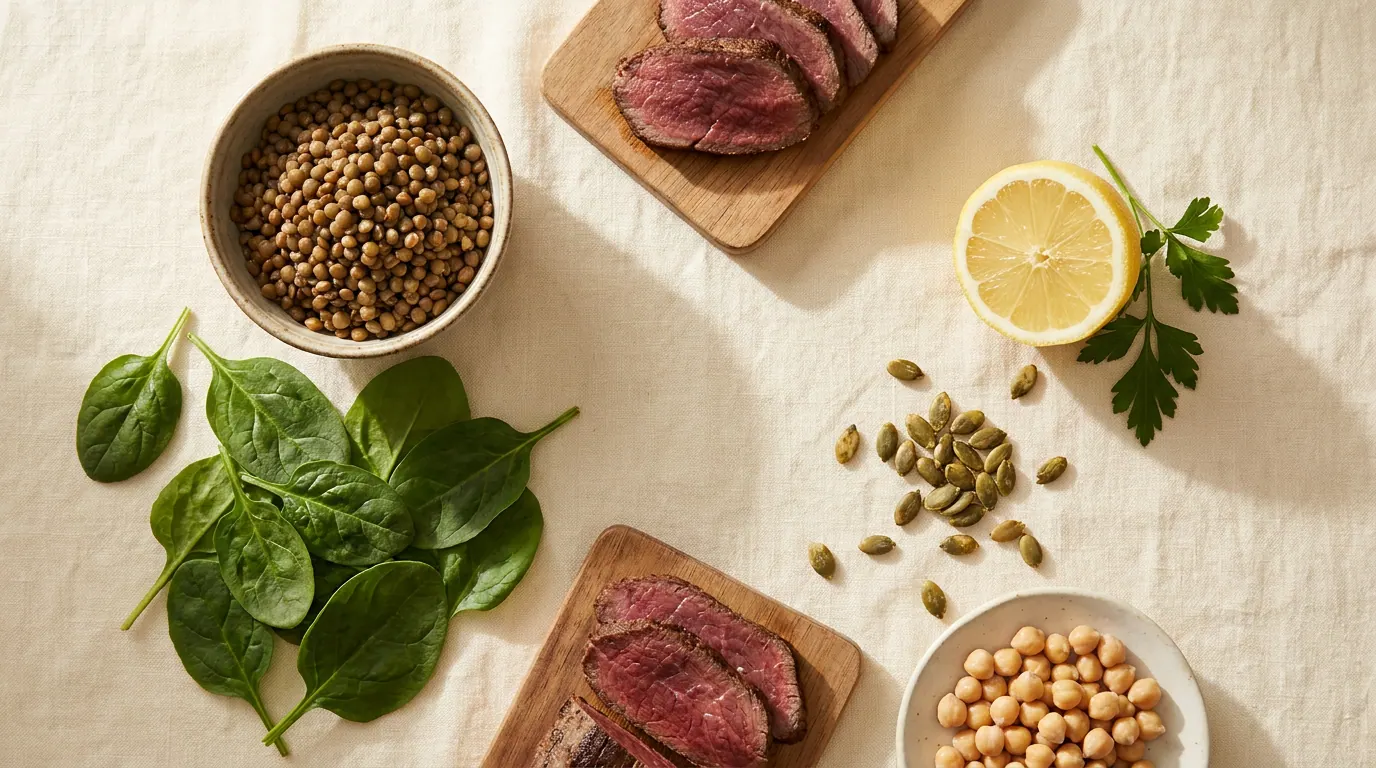
One of Vitamin C's most practical benefits is improving the absorption of non-heme iron, the iron found in plant-based sources like lentils, spinach, and beans, which is harder to absorb than iron from meat.
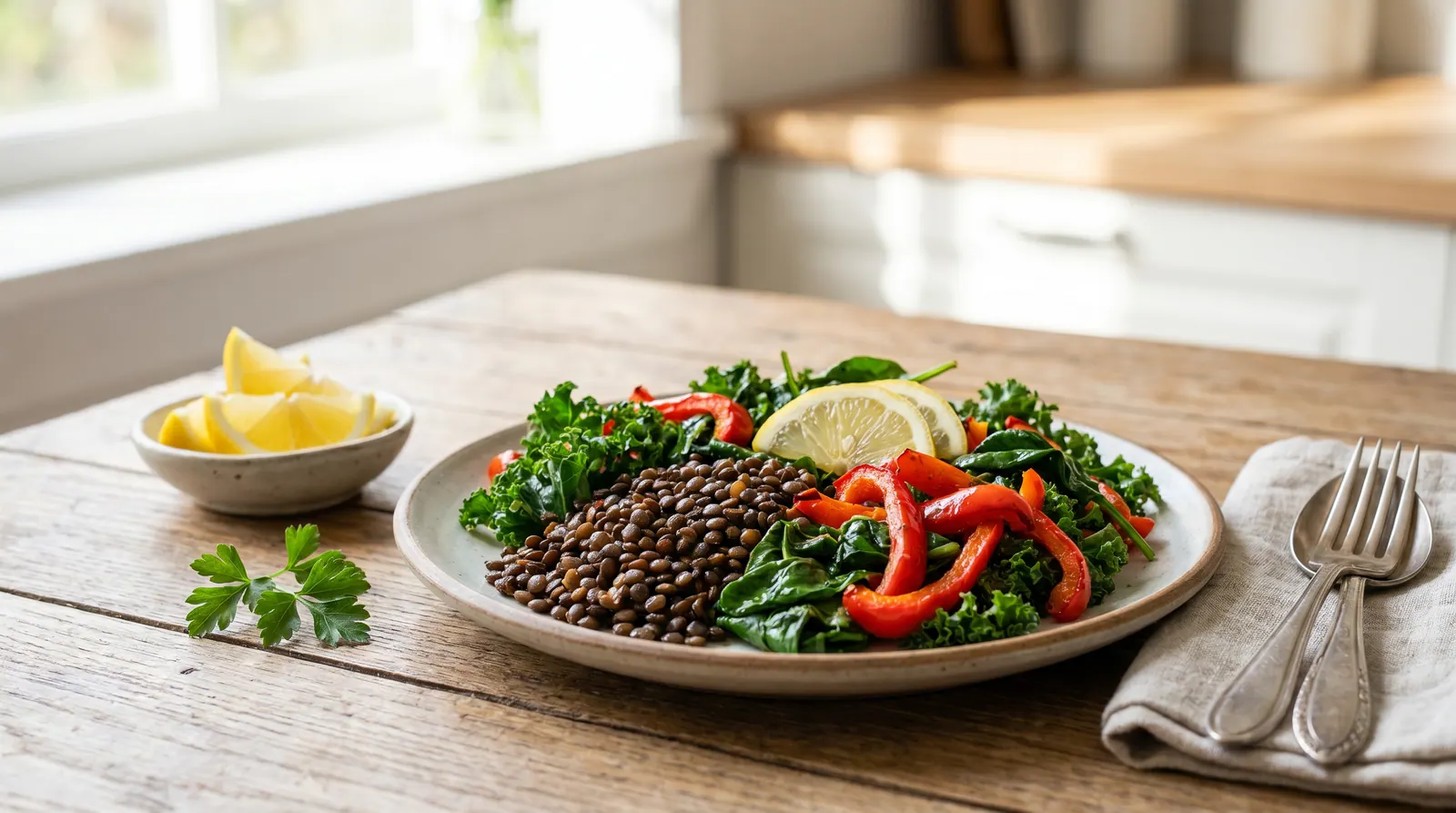
Practically, this creates a direct link between two meals: include a Vitamin C source in the same meal as your plant-based iron. A squeeze of lemon on lentil soup, a salad with peppers and tomatoes alongside beans, or an orange after a plant-based meal. This simple trick doubles the benefit from your meal's iron, especially helpful for those reducing meat intake. More details are in our article on iron and anemia.
The Truth About Cold Doses — What Science Actually Says
Here's the core of the article. A major systematic review, pooling dozens of trials, reached a clear conclusion: regular Vitamin C supplementation does not reduce the incidence of colds in the general population, with a relative risk of 0.97, indicating no meaningful protective effect.
And what about duration? Regular supplementation before illness slightly shortened cold duration: by about 8% in adults and 14% in children. Most importantly, practically: when Vitamin C was taken after symptoms began, i.e., as a treatment rather than prevention, it showed no consistent effect on cold duration or severity.
The only notable exception: individuals undergoing severe physical stress, like marathon runners and soldiers in intense training, where Vitamin C halved the risk of colds. The practical takeaway for most people: don't buy a pill when you sneeze expecting a miracle; get your daily needs from food year-round.
Is Your Vitamin C Intake Sufficient? — A Self-Check
This is a guiding self-assessment tool combining indicators of low intake and non-specific symptoms. It does not replace a doctor's evaluation. Select what applies to you:
How Much Do You Need Daily?
The recommended daily adequate intake for adults is about 90 mg for men and 75 mg for women. Smokers need an additional 35 mg daily because smoking increases oxidative stress and depletes Vitamin C.
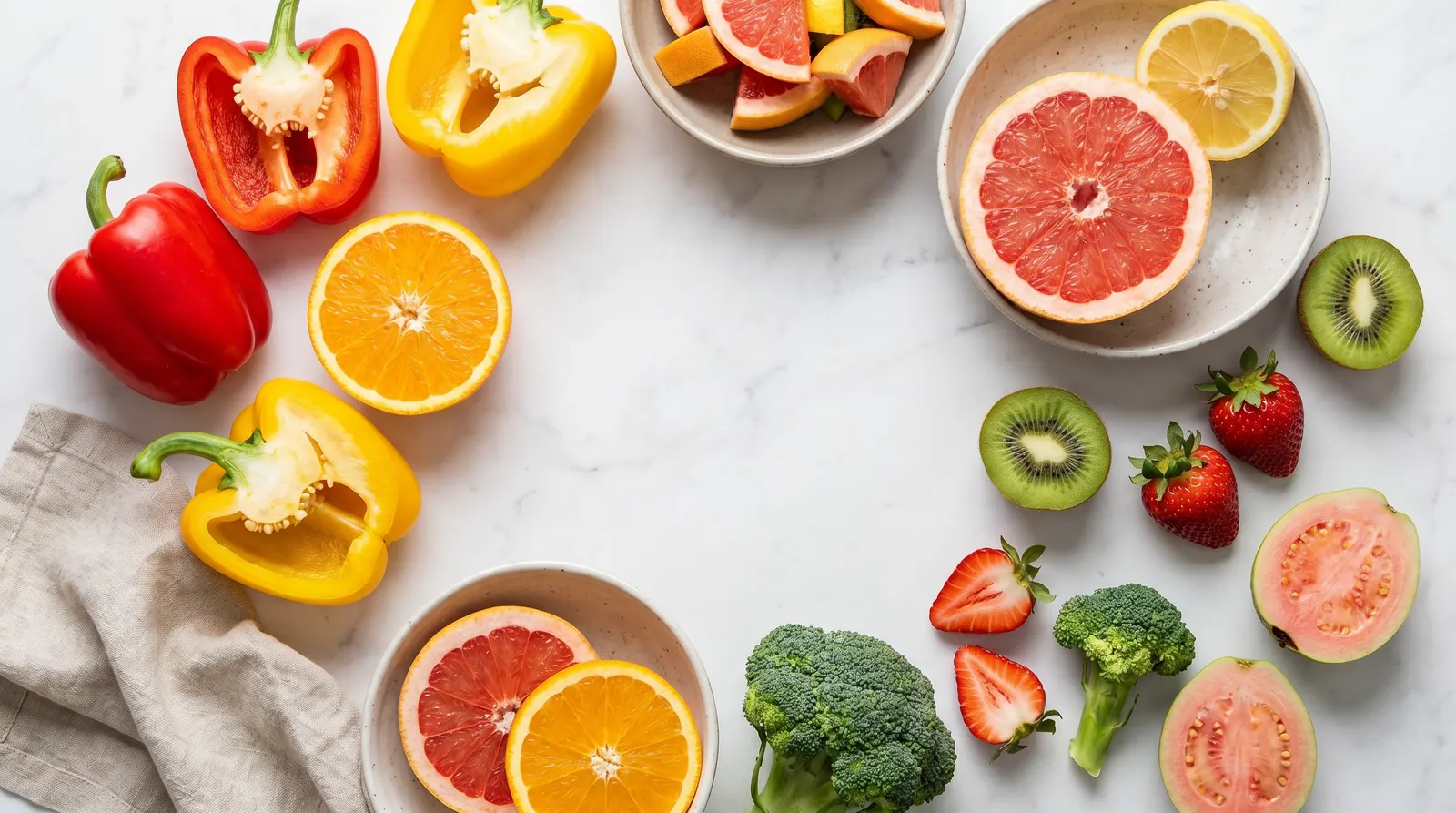
These numbers are surprisingly easy to meet: a medium orange (about 70 mg) nearly covers the daily need, half a red bell pepper (about 95 mg) exceeds it, and a guava (about 125 mg) clearly surpasses it. The practical rule: don't chase numbers with supplements; aim for one or two colorful fruits and a serving of vegetables daily, and you'll meet and exceed your needs effortlessly.
Where to Find It in Your Food — Top Sources
The richest sources are guava and colorful bell peppers, followed by citrus fruits, kiwi, strawberries, and cruciferous vegetables. Here are approximate values per serving:
Approximate values per serving based on published data, varying by quantity, variety, and preparation.
| Source | Serving | Vitamin C |
|---|---|---|
| Guava | 1 fruit | Approx. 125 mg |
| Sweet Red Bell Pepper | ½ cup raw | 95 mg |
| Orange Juice | ¾ cup | 93 mg |
| Orange | 1 medium fruit | 70 mg |
| Kiwi | 1 medium fruit | 64 mg |
| Sweet Green Bell Pepper | ½ cup raw | 60 mg |
| Broccoli (cooked) | ½ cup | 51 mg |
| Strawberries | ½ cup | 49 mg |
| Brussels Sprouts (cooked) | ½ cup | 48 mg |
| Grapefruit | ½ fruit | 39 mg |
| Baked Potato | 1 medium | 17 mg |
| Tomato | 1 medium fruit | 17 mg |
Practically: Add a colorful fruit after a meal, or include peppers and tomatoes in your salad. Simple variety ensures you meet your needs and more.
Why the Saudi Plate Helps Here
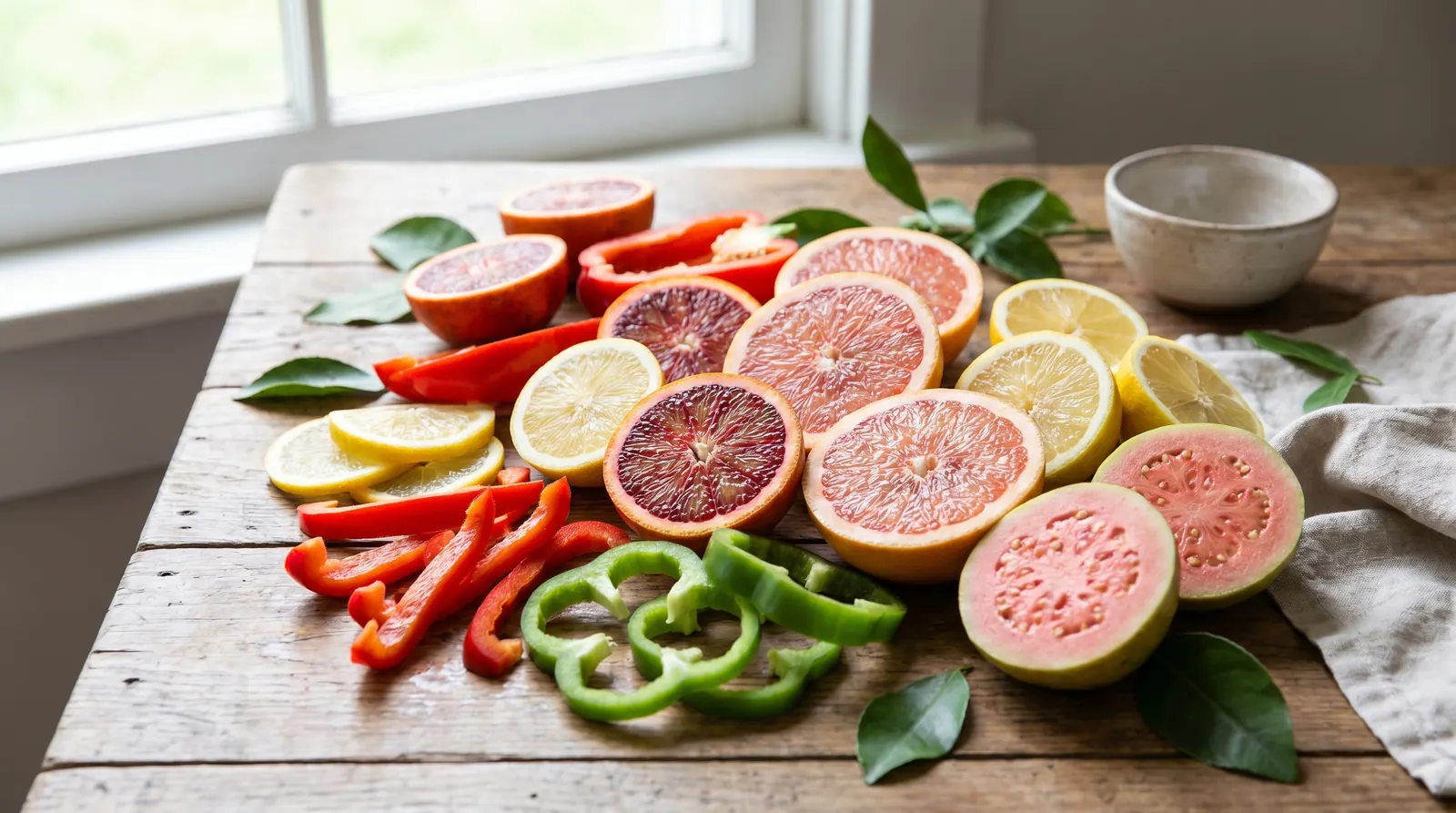
Our cuisine and markets are rich in Vitamin C sources without effort: oranges and tangerines in season, guava, colorful peppers, and tomatoes in salads, and lemon present at every table. Strawberries are available seasonally. This abundance is a blessing, as one fruit can meet the day's needs.
However, market abundance doesn't guarantee plate sufficiency if fast food and processed items dominate your diet. The practical message is simple: include a colorful fresh fruit or vegetable in every meal, and squeeze lemon on your bean dishes. This is simpler, cheaper, and more beneficial than any supplement.
Scurvy and Vitamin C Deficiency
Severe, prolonged deficiency over weeks, when intake drops below about 10 mg daily, causes scurvy. Symptoms include fatigue, inflamed and bleeding gums, small red or purple spots on the skin, joint pain, slow wound healing, and coiled, corkscrew-shaped hair.
Scurvy is rare today in societies that consume fruits and vegetables but can occur with extremely poor diets or nutritional isolation. The reassuring message: daily sufficiency from food completely prevents it. You don't need a supplement to avoid it, just a piece of fruit in your day. If you experience gum bleeding or slow healing with a poor diet, consult a doctor for evaluation.
Upper Limit and Kidney Stones — When Doses Exceed the Limit
The safe upper intake level for adults from both food and supplements is 2,000 mg per day. Exceeding this is common with high-dose supplements and can cause gastrointestinal upset, diarrhea, and nausea.
More importantly: very high doses, above approximately 3,000 mg daily, may increase the risk of kidney stone formation, especially in those with pre-existing kidney disease. The body also absorbs Vitamin C less efficiently as doses increase above 1,000 mg, leading to excess being excreted without benefit. The practical rule: these doses are unnecessary. Food won't lead you to the danger zone, and high-dose supplements are an empty promise at a potential cost.
Five Common Vitamin C Myths
Half-truths promising more than they deliver often circulate around Vitamin C. Here are the most common ones, and what the evidence says:
"High doses of Vitamin C prevent colds."
"If a cold starts, a high dose will shorten or cure it."
"The more Vitamin C, the stronger the immunity."
"I need a Vitamin C supplement to ensure I get enough."
"Only citrus fruits are sources of Vitamin C."
Practical Tips to Implement Today
Before diving into the full protocol, here are small guidelines from the core message, boosting Vitamin C in your plate without disrupting your life:
- Include a fresh color in every meal. A colorful fruit or a serving of vegetables in each meal ensures you meet and exceed your needs without tracking numbers or taking supplements.
- Pair Vitamin C with plant-based iron. Squeeze lemon on lentil dishes or add peppers and tomatoes to beans to double iron absorption from your meal.
- Expand your sources beyond citrus. Guava, red bell peppers, kiwi, strawberries, and broccoli are rich sources; don't limit yourself to oranges.
- Eat whole fruits, not always juice. Whole fruits provide fiber along with Vitamin C. Natural juice is a quick option but should be consumed in moderation.
- Minimize prolonged cooking of vegetables. Vitamin C is sensitive to heat and water. Light steaming or eating raw preserves more Vitamin C than long boiling.
- If you smoke, increase your intake. Smokers need an additional 35 mg daily, easily covered by an extra piece of fruit.
- Don't buy high doses to prevent colds. Evidence doesn't support this for the general population. Save your money and spend it on fresh fruits and vegetables.
- Save supplements for confirmed deficiency. If deficiency or very low intake is confirmed, supplements are considered under supervision, without exceeding the upper limit.
EEINA's Protocol for a Vitamin C-Rich Plate and Supported Immunity
A practical plan combining the above into three progressive layers. Start layer by layer, and note your response to understand what works best for you.
The protocol is based on recommended intakes, food source values, and evidence on colds.
Meet Your Needs from Your Plate
Four habits every day.
Double the Benefit
Steps to connect your meals.
Evaluate Under Supervision
Before any supplement.
Golden Rule: The goal isn't a high-dose pill swallowed when you sneeze, but a colorful plate that meets your needs year-round. Supplements are a last resort under supervision, not a first step.
Frequently Asked Questions
Do high doses of Vitamin C prevent colds?
How much Vitamin C do I need daily?
What does Vitamin C do in the body?
What is the upper limit for Vitamin C?
Do I need a Vitamin C supplement?
When to Consult a Doctor — Red Flags
Vitamin C is typically covered by a balanced diet, but certain symptoms warrant prompt medical evaluation:
- Persistent gum bleeding or swelling, or unexplained bruising, requires evaluation.
- Slow wound and bruise healing that doesn't improve with a better diet.
- Ongoing fatigue and general weakness with a very low fruit and vegetable intake.
- Small red or purple spots on the skin or joint pain with a poor diet may indicate severe deficiency.
- Pre-existing kidney disease, history of kidney stones, or chronic medications before starting any Vitamin C supplement.
- Symptoms of supplement overdose: severe diarrhea, nausea, or abdominal pain with high doses.
Start Your Next Step with EEINA
Vitamin C-Rich Meal Plan
Saudi recipes combining colorful fruits and vegetables into your day, and pairing Vitamin C with plant-based iron.
Get Your Plan →Colorful Fruit & Vegetable Recipes
Easy ideas to incorporate peppers, citrus, and strawberries into your plate without tracking numbers.
Try Them →EEINA App
Tracks Vitamin C sources in your day, reminding you to vary fruits and vegetables and preserve them with light cooking.
Download →