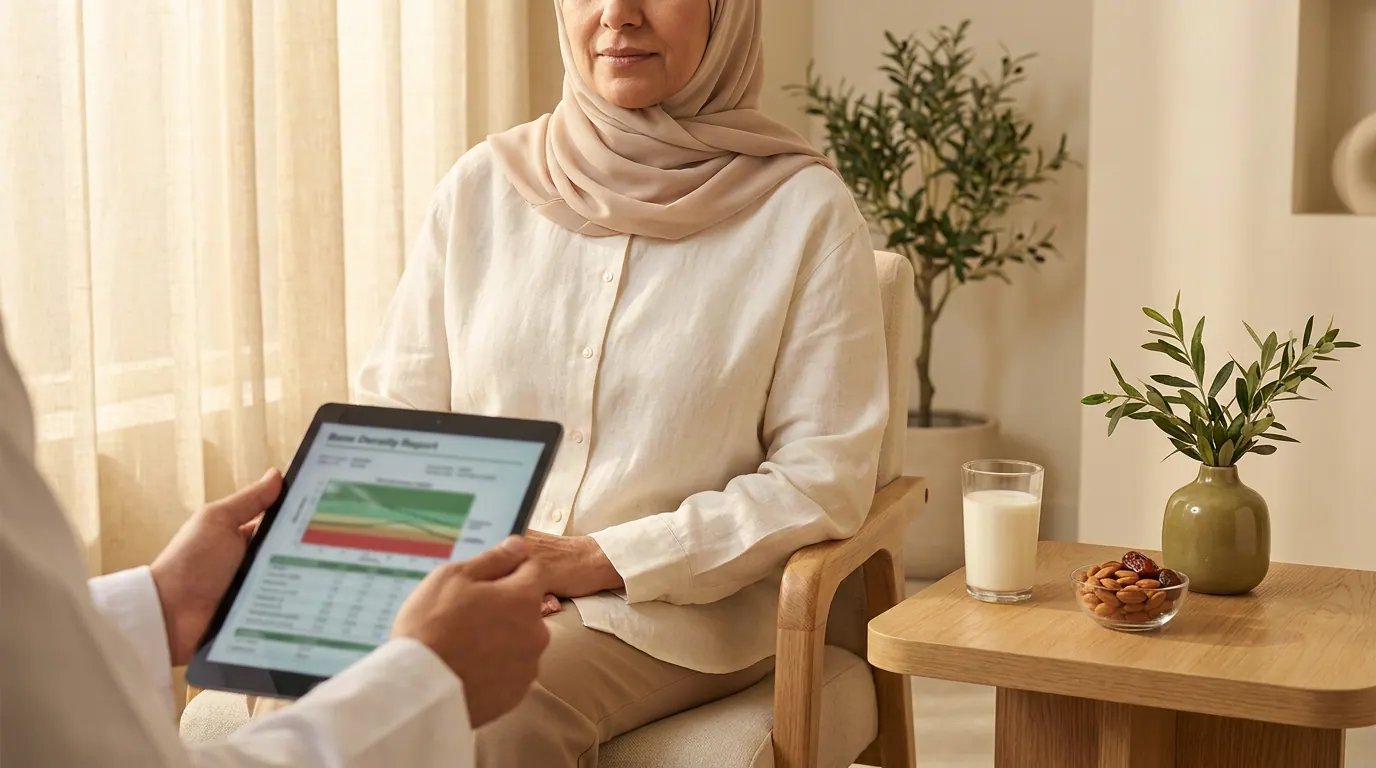
Why Your Body Changes During Menopause: A Quick Understanding Before the Plate
As menopause approaches, estrogen levels gradually decline. This drop is the primary driver of the changes you notice: a shift in fat storage towards the abdominal area instead of the hips, accelerated bone density loss, and a greater tendency to lose muscle mass. Longitudinal studies show that visceral fat surrounding abdominal organs increases from about 5-8% of total body fat before menopause to 15-20% after, with a decrease in energy expenditure.
This doesn't mean you have to accept it; it means your dietary plan needs to change with you: higher protein, resistance exercise, and greater attention to energy quality, not just quantity. Understanding this transition shifts you from chasing weight loss through deprivation to building a plate that suits your new phase.
The Mediterranean Diet: The Most Supportive Framework for This Stage
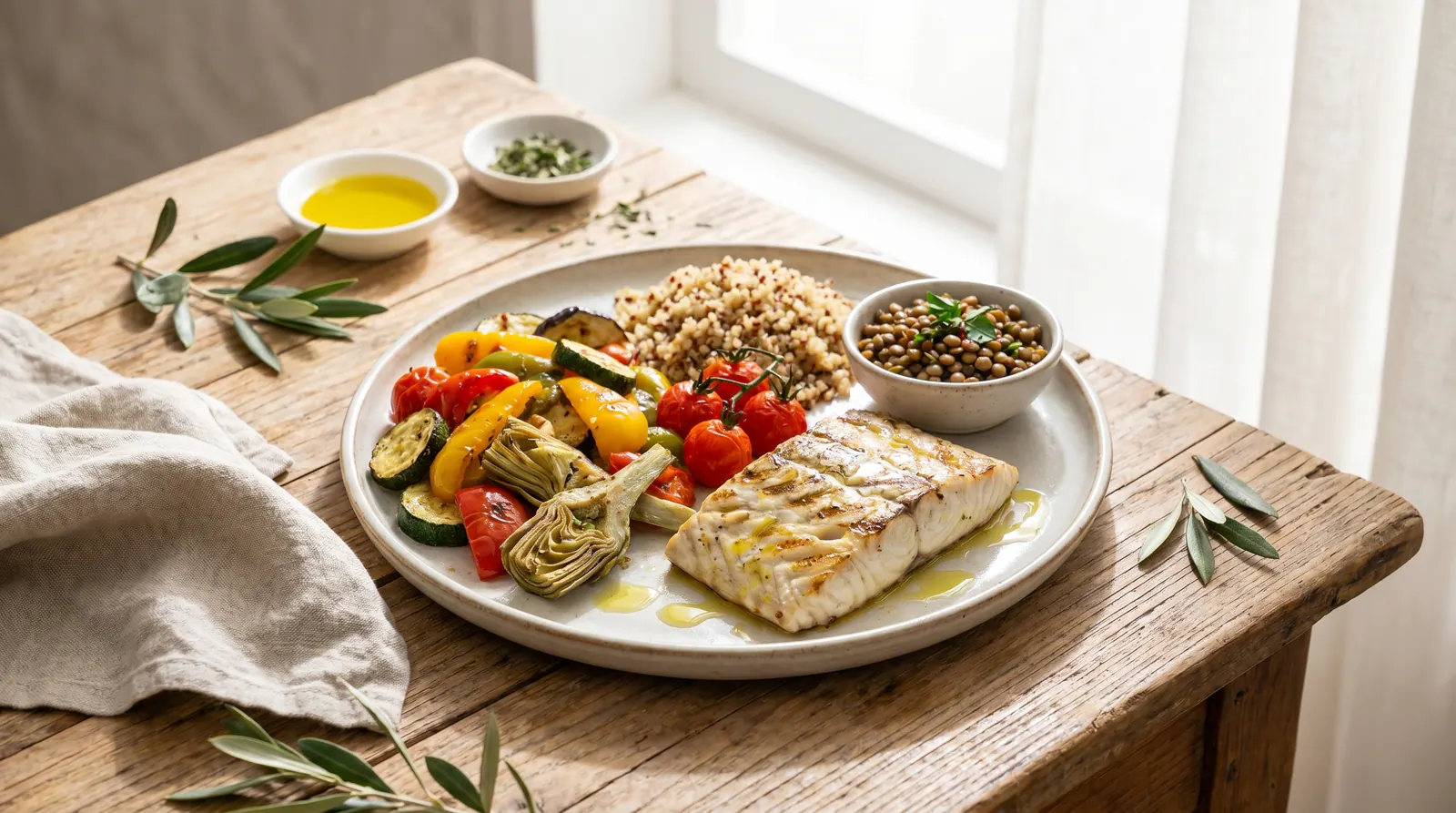
If you're looking for a single 'diet' that encompasses most of your needs, the Mediterranean diet has the strongest evidence. Its foundation: abundant vegetables and fruits, whole grains, legumes, fish, olive oil, and moderate dairy products. A systematic review found that for menopausal women, it improves blood lipids by lowering LDL cholesterol and triglycerides, reduces blood pressure, and enhances insulin resistance, along with moderate fat mass loss.
Practically: Make half your plate vegetables, add a portion of legumes or fish daily, and replace butter with olive oil. Serve fruit as a dessert alternative. This framework supports heart, bone, and weight simultaneously without deprivation, and it's the basis from which the rest of this guide branches out.
Do Your Symptoms Suggest You're Entering Menopause? — A Self-Check
This is a guiding checklist to help you notice changes; it does not replace your doctor's evaluation. Select what applies to you:
Protein First: A Portion in Every Meal to Protect Muscle
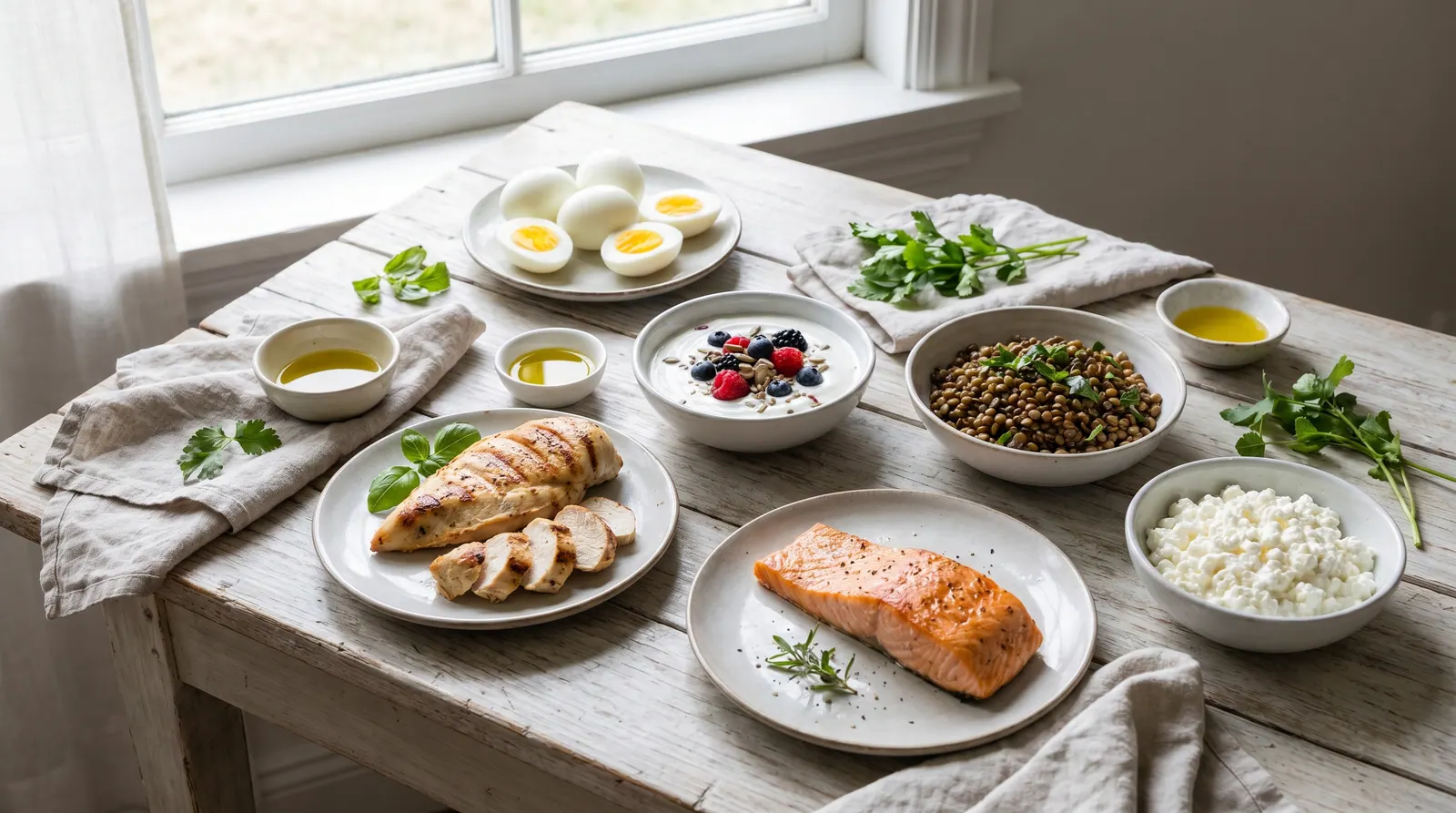
Muscle loss accelerates after menopause, and protein is the first line of defense. European guidelines for older adults recommend about 1.0 to 1.2 grams of protein per kilogram of body weight daily, which is higher than for younger adults, and distributed across meals rather than concentrated in one.
Practically: Aim for a clear protein portion in each meal, such as eggs, yogurt, or low-salt cheese in the morning, and chicken, fish, or legumes for lunch and dinner. Legumes, lentils, and chickpeas are excellent daily Saudi options that combine protein and fiber. Distribute your protein intake; don't just have a protein-rich dinner while breakfast is devoid of it. You can find more details on this topic in our article on protein after 40.
Calcium & Vitamin D: The Indivisible Bone Duo
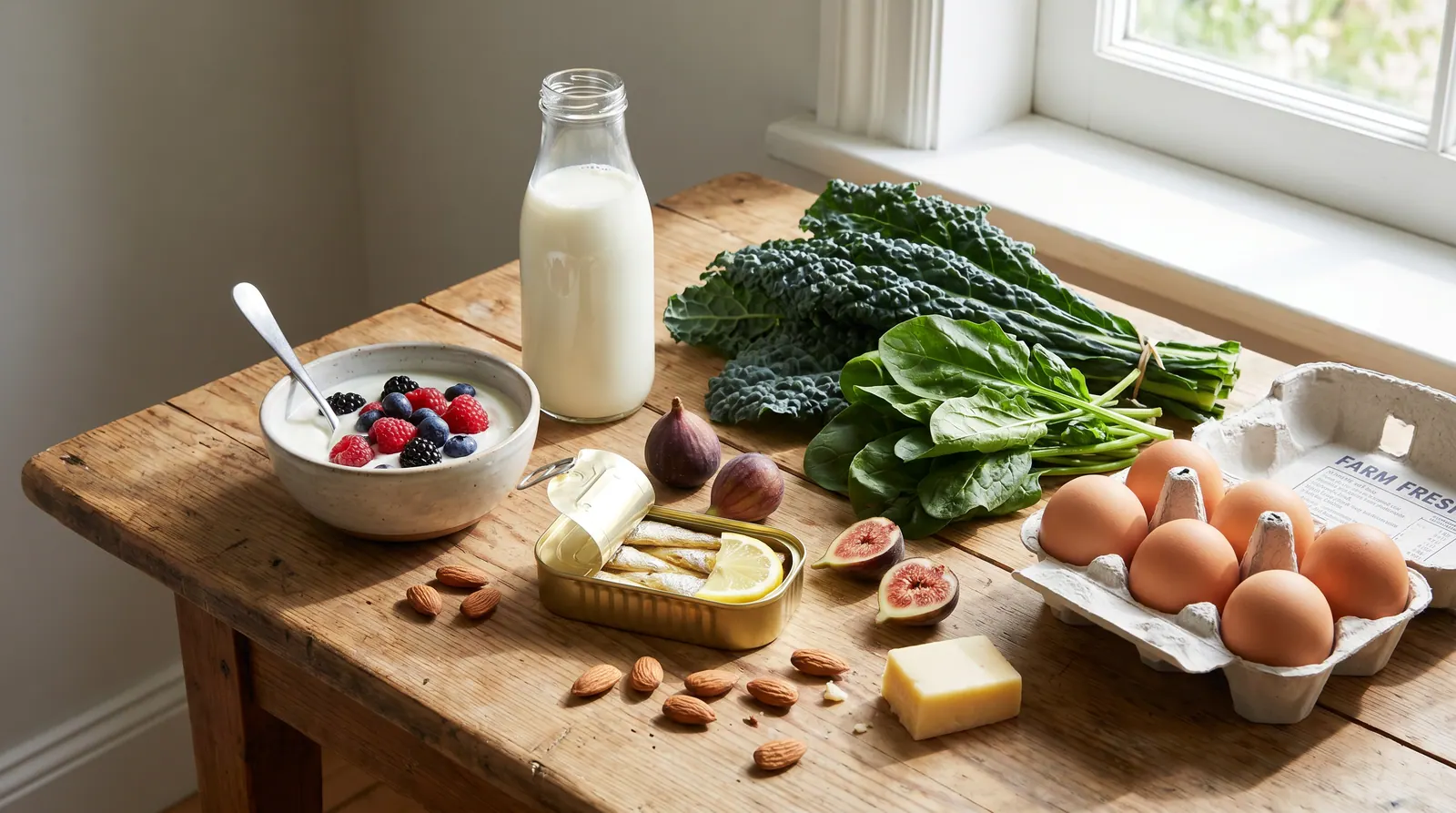
Estrogen decline accelerates bone loss, making calcium and vitamin D a priority. European guidelines recommend at least 1000 mg of calcium and 800 IU of vitamin D daily to maintain bone and muscle health.
Practically for calcium: two to three servings of low-fat dairy, dark leafy greens, sardines with bones, tahini, and sesame seeds. Vitamin D's dietary sources are limited, such as fatty fish, eggs, and fortified products; sunshine is its most important source. Do not start a high-dose supplement on your own; discuss a vitamin D level test with your doctor first, especially in the Saudi context where deficiency is common.
The Silent Deficiency of Vitamin D in Saudi Arabia: A Context That Concerns You
Despite abundant sunshine, vitamin D deficiency is remarkably prevalent among Saudi women. A study of 300 postmenopausal women at a university hospital in Jeddah found deficiency in about 80%, and a Saudi study of over 1,500 women in Riyadh found high rates of vitamin D deficiency. The reasons are practical and familiar: limited direct sun exposure, covering clothing, indoor lifestyles, and obesity, which sequesters the vitamin.
What should you do? Don't assume the sun in Riyadh or Jeddah is automatically sufficient. Request a vitamin D level test as part of your regular check-ups, ensure you consume fortified food sources, and let your doctor determine your need for a supplement and its dosage. This is not a diagnosis, but an invitation to informed screening.
Phytoestrogens: Soy, Legumes, and What the Evidence Actually Says
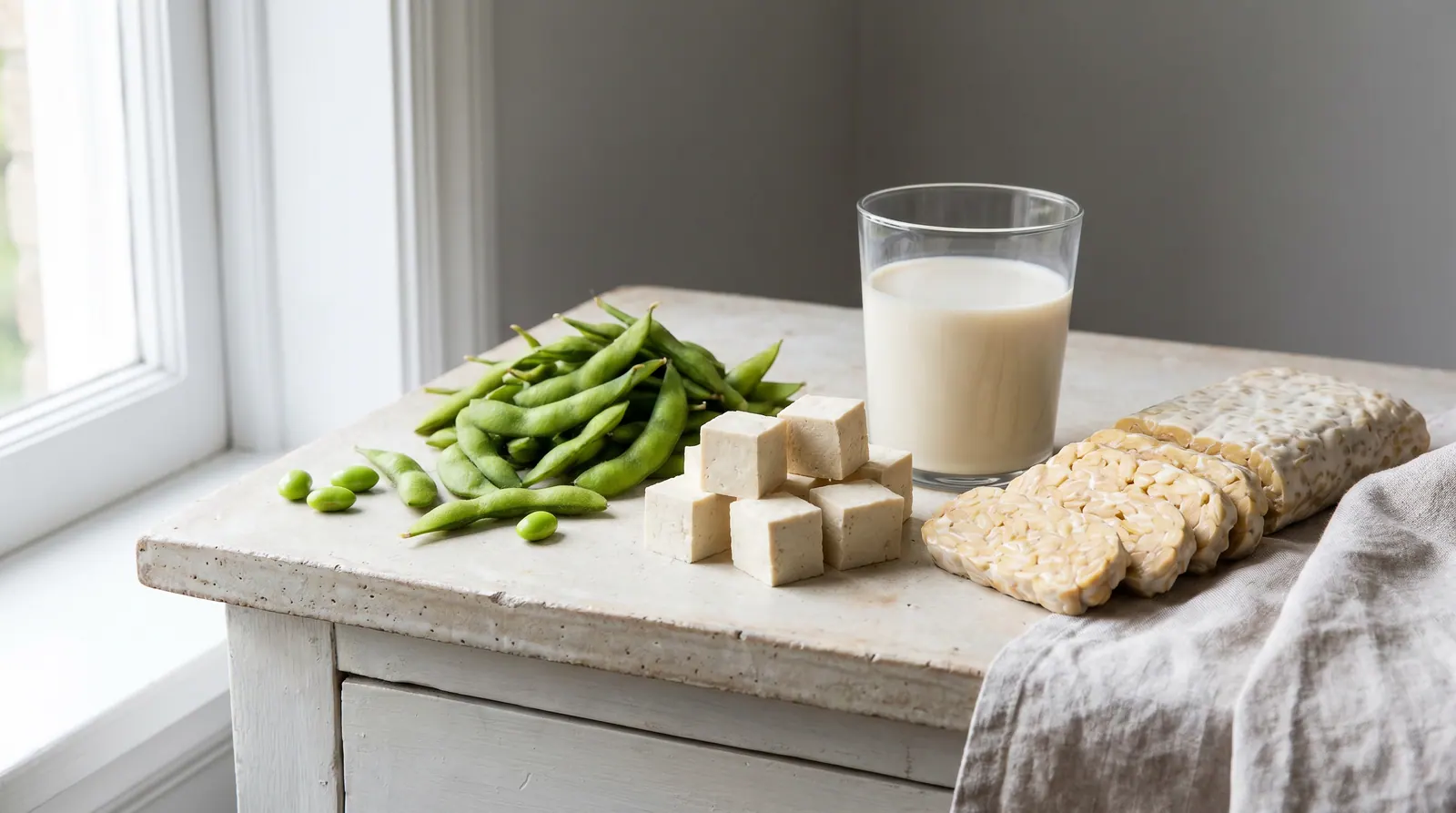
Phytoestrogens are plant compounds that weakly mimic estrogen. The most prominent are isoflavones in soy. A systematic review of randomized trials found that soy isoflavones reduce the frequency of hot flashes by about 20.6% and their severity by about 26.2% compared to placebo, with a moderate dose of around 54 mg daily over six weeks to a year. The effect is real but slow and moderate, not a substitute for hormone therapy.
Practically: Incorporate whole food sources like soybeans (edamame), tofu, soy milk, and legumes instead of concentrated supplements. If you have a specific health history, such as hormone-sensitive tumors, consult your doctor before focusing on soy. Whole foods are safer and simpler than high-dose pills.
Calming Hot Flashes: Reduce Caffeine and Triggers
If hot flashes and night sweats are bothering you, some items in your cup might be exacerbating them. A Mayo Clinic study of 1,806 women found a link between caffeine intake and more bothersome hot flashes and night sweats in postmenopausal women. Alcohol, spicy foods, and hot beverages are also known common triggers for many.
Practically: Monitor your personal triggers for a week with a simple journal, then reduce what provokes your hot flashes. Try gradually reducing coffee, move your last cup to before noon to protect your sleep, and replace heavy hot drinks with lukewarm ones when the weather is hot. Not every woman reacts the same way, so personal experience is your guide.
Managing Belly Fat Nutritionally: Quality Over Quantity
Abdominal fat accumulation after menopause is linked to estrogen decline and reduced energy expenditure, not just laziness. Therefore, the solution isn't starvation but rebuilding your plate: sufficient protein to maintain muscle that boosts energy expenditure, abundant fiber from vegetables and legumes for prolonged satiety, and reduced intake of added sugars and refined carbohydrates that trigger insulin.
Practically: Aim for a moderate and sustainable calorie deficit, not drastic diets, as severity leads to muscle loss. Combine nutrition with resistance training twice to three times a week, as it's the strongest tool for protecting both muscle and bone. Refer to our guide on calorie deficits for quantity control without compromising quality.
Illustrative prioritization of plate components for this stage, not absolute numerical values. Exact quantities are individual and adjusted with a nutritionist.
Fiber & Whole Grains: Your Ally for Satiety, Heart, and Blood Sugar
With a slowing metabolism and a tendency for blood sugar to rise, fiber becomes a practical daily tool. The fiber-rich Mediterranean diet improves insulin resistance and blood lipids, and fiber prolongs satiety, helping to automatically manage portion sizes.
Practically: Replace white rice with brown rice, bulgur, or freekeh in some meals, include legumes like lentils, chickpeas, and fava beans, add raw vegetables before meals, and don't always peel your fruit. Increase fiber gradually with adequate water to avoid bloating. This simple step benefits weight, heart, and blood sugar regulation simultaneously, complementing protein for a satisfying and balanced plate.
Sleep & Mood: Nutrition is Part of the Solution, Not the Whole Solution
Sleep disturbances and mood swings are common during this phase, and nutrition impacts them in practical ways. Reducing caffeine in the afternoon protects your sleep, reducing alcohol can lessen night sweats, and a moderate, light evening meal can aid digestion.
Practically: Make dinner lighter and earlier, avoid heavy sweets at night, and maintain regular meal times, as dietary chaos can increase sleep chaos. Stable blood sugar through protein and fiber in every meal reduces energy and mood fluctuations throughout the day. Remember that nutrition is an important supporting factor, but chronic sleep disturbances or depression warrant professional consultation, not just plate adjustments.
When to Go Beyond the Plate to Your Doctor
This is an educational nutritional guide with clear boundaries that must be respected. Nutrition can soothe symptoms and support bones and muscles, but it does not diagnose or treat. These are signs that warrant immediate consultation with your doctor:
- Vaginal bleeding after menopause (a full year without a period) requires immediate medical attention and is unrelated to diet.
- A bone fracture from a minor injury or noticeable loss of height may indicate osteoporosis requiring evaluation and bone density scans.
- Severe and persistent hot flashes that disrupt sleep and daily life despite dietary adjustments warrant a discussion of treatment options.
- Persistent symptoms of depression or anxiety that are not alleviated by dietary changes require assessment by a mental health professional.
- Starting high-dose supplements (vitamin D or calcium) without testing or medical supervision, especially with kidney or heart disease.
The presence of any of these signs does not necessarily indicate a serious illness, but it means the issue goes beyond nutrition and requires your doctor's evaluation. The decision for hormone therapy for menopause is strictly a medical one, balancing its benefits and risks according to your condition, and is not a nutritional matter.
Five Common Myths About Menopause Nutrition
Around this phase, half-truths spread, increasing anxiety or leading to incorrect plans. Here are the most common ones and what the guide says:
"Weight gain during menopause is inevitable."
"Soy is dangerous and causes cancer."
"Saudi sunshine is automatically sufficient for vitamin D."
"Supplements replace food for bone health."
"Severely restricting food is the fastest way to lose belly fat."
Practical Tips to Implement Starting Today
Before you get to the full protocol, here are small guidelines from the core of the above, supporting your daily life without turning it upside down:
- Include protein in every meal. A clear portion of eggs, yogurt, chicken, fish, or legumes in each meal, rather than concentrating it in dinner only, aiming for about 1.0 to 1.2 grams per kilogram daily.
- Structure your plate with a simple base. Fill half the plate with vegetables, a quarter with protein, and a quarter with whole grains or legumes, following the Mediterranean pattern.
- Olive oil instead of butter. Replace butter with olive oil for cooking and salads as a healthy fat source that supports the heart.
- Calcium every day. Incorporate calcium sources daily: low-fat dairy, dark leafy greens, sardines with bones, tahini, and sesame seeds.
- Whole soy, not supplements. Try whole soy sources like edamame, tofu, and soy milk, and legumes, instead of concentrated isoflavone supplements.
- Adjust coffee and monitor your triggers. Move your last cup of coffee to before noon, and monitor hot flash triggers like caffeine and spicy foods with a weekly journal.
- Test your vitamin D. Request a vitamin D level test as part of your regular check-ups before assuming sunshine is sufficient, and let your doctor decide on the supplement and its dosage.
- Combine nutrition with resistance training. Add resistance exercises two to three times a week to protect muscle and bone together, and aim for a moderate, not drastic, calorie deficit.
EEINA's Menopause Nutrition Protocol
An actionable plan combining the above into three progressive layers. Start layer by layer, and note your symptoms to understand what works for you.
The protocol is based on the Mediterranean diet and European guidelines for protein and vitamin D, with evidence on soy and caffeine.
A Plate to Protect Bones and Muscles
Four habits every day.
Managing Symptoms and Weight
Steps to soothe your phase.
What Goes Beyond the Plate
Decisions with your doctor.
Golden Rule: Nutrition is your daily foundation, and your doctor is your reference for severe symptoms or medical decisions. Integration between them is the correct approach, not relying on one alone.
Frequently Asked Questions
How much protein do I need daily after menopause?
Does soy really help reduce hot flashes?
Why is a vitamin D test recommended despite Saudi sunshine?
Should I stop coffee completely because of hot flashes?
What is the best comprehensive diet for this stage?
Start Your Next Step with EEINA
Menopause Meal Plan
Saudi recipes on the Mediterranean diet, rich in protein and calcium to protect bones and manage belly fat.
Get Your Plan →Transform Your Favorite Recipes
Modify your Saudi dishes into higher-protein, higher-fiber versions that are lighter on belly fat.
Try It →The EEINA App
A trigger and food journal to reveal what sparks your hot flashes, with reminders for protein and calcium, and a report for your doctor.
Download →