Why Breakfast Makes a Difference in Your Child's Focus
After a long night's sleep, a child's energy stores are low. Breakfast is the brain's first fuel. A systematic review of breakfast and cognition studies concluded that eating breakfast compared to fasting has a positive short-term effect on the same day on tasks requiring attention, memory, and executive functions, and this effect is more pronounced in children with deficient nutrition.
Practically, you don't need a fancy breakfast, but a consistent meal every morning to break the fast before school. Even if time is tight, a small, balanced bite is better than nothing. Make it a daily routine with no exceptions; regularity is more important than quantity. The Saudi Ministry of Health indicates that breakfast enhances a child's concentration and comprehension and improves academic performance.
Saudi Arabia's Numbers
Skipping breakfast is more common than we think among our children. In a study of 1,051 students in Riyadh, over 79% skipped home breakfast daily. In Jeddah, it was around 80% among 1,149 children aged 6 to 12, with no significant difference between genders.
The Saudi Ministry of Health notes that students spend more than a third of their day at school and should receive about a third of their daily nutritional needs through breakfast and a snack. The Ministry of Education has launched a program to distribute milk and dates for free to instill healthy habits, an example of integration between home and school.
The Balanced Breakfast Equation: Protein, Whole Grains, and Fruit
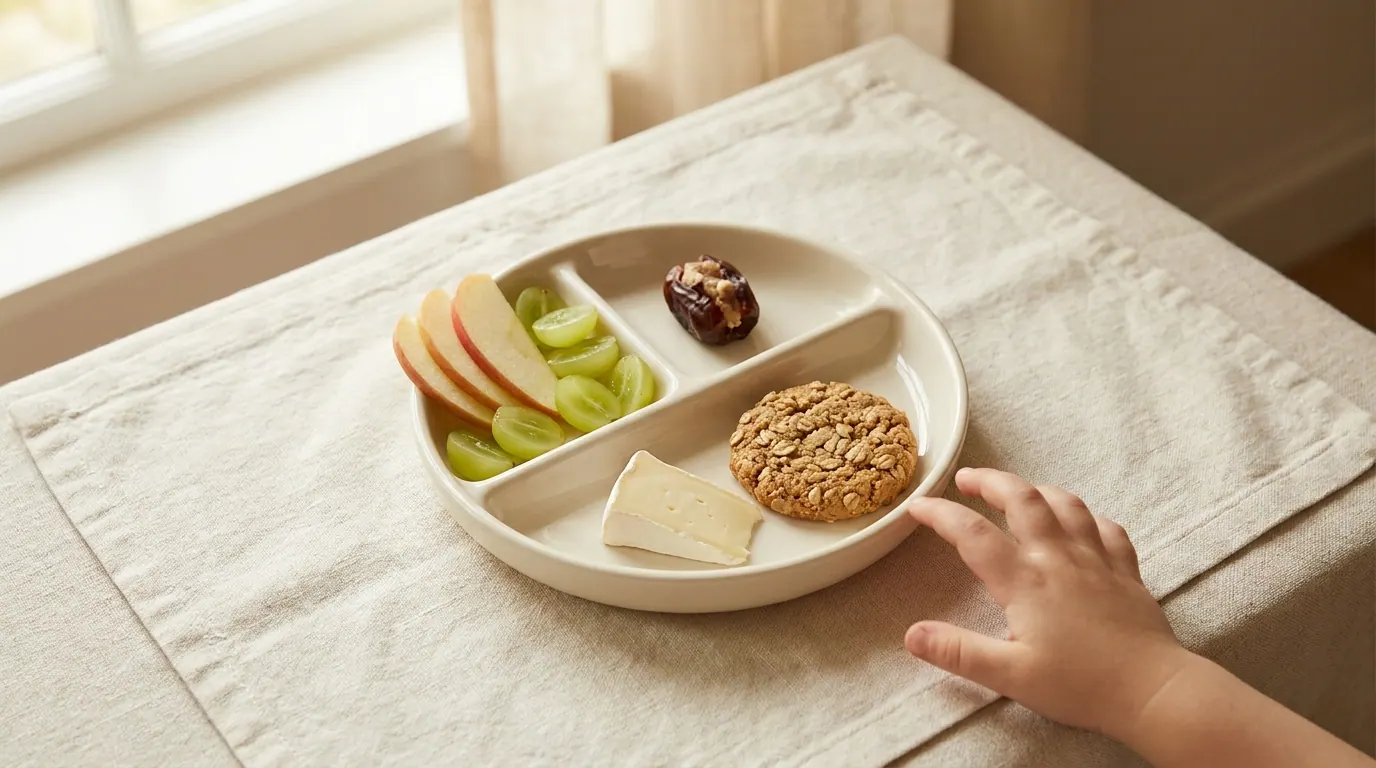
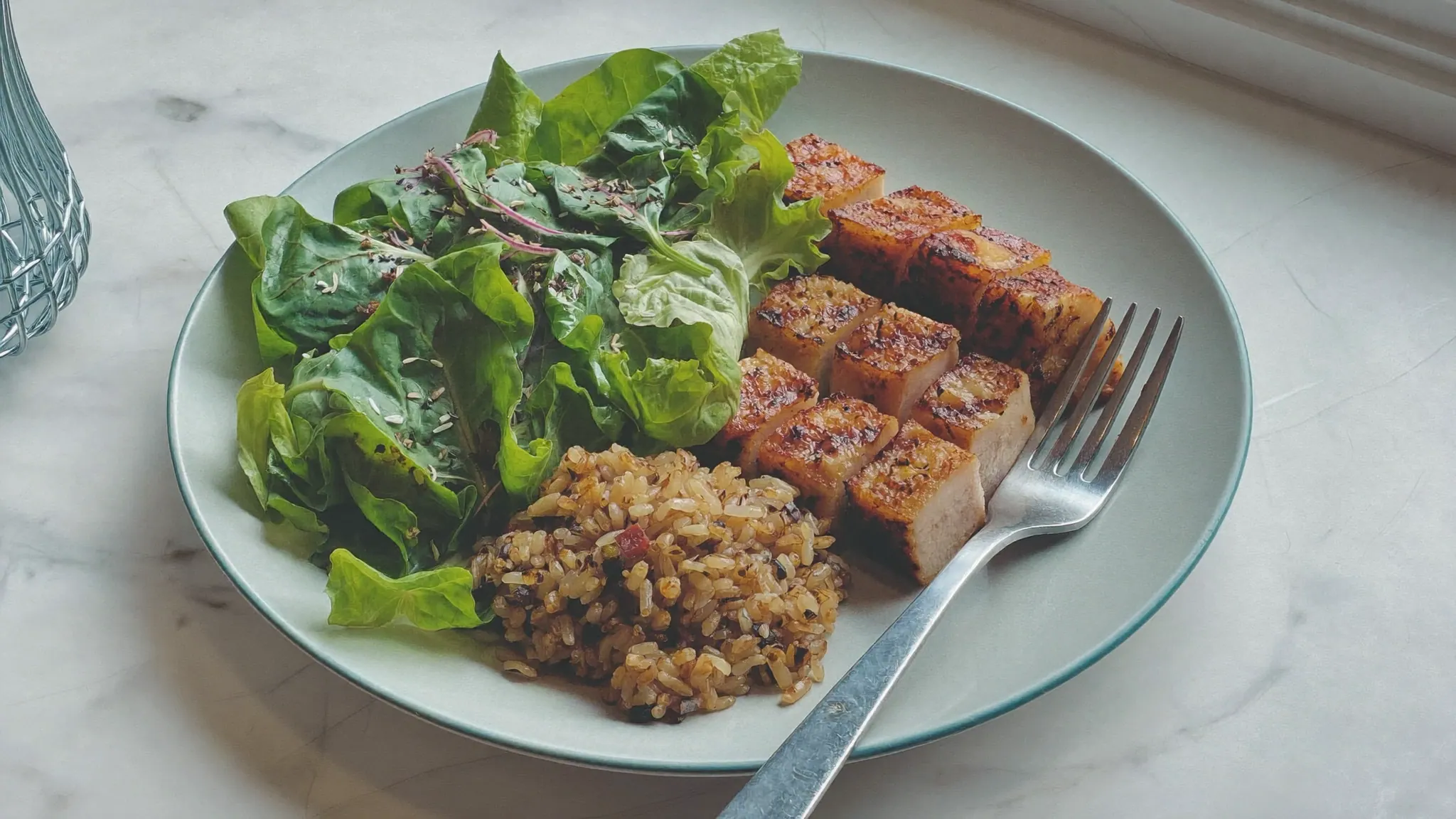
The formula recommended by nutrition sources is simple and easy to apply: half the plate fruit or vegetables (two to three types), a quarter whole grains, and a quarter healthy protein. Whole grains like whole wheat bread and oats release energy slowly, delaying hunger. Protein sources like eggs, labneh, and hummus, and peanut butter, prolong satiety. Fruit adds fiber, vitamins, and natural sweetness.
A balanced morning example: a whole-wheat bread sandwich with labneh and a piece of fruit. Avoid breakfasts consisting only of refined carbohydrates and sugar, such as cake and sweetened cereals, as they cause a rapid energy spike followed by a crash before the second class. Connect this to EEINA's guide, "The Blood Sugar Balance Plate."
Why Protein Specifically Satiates and Reduces Snacking
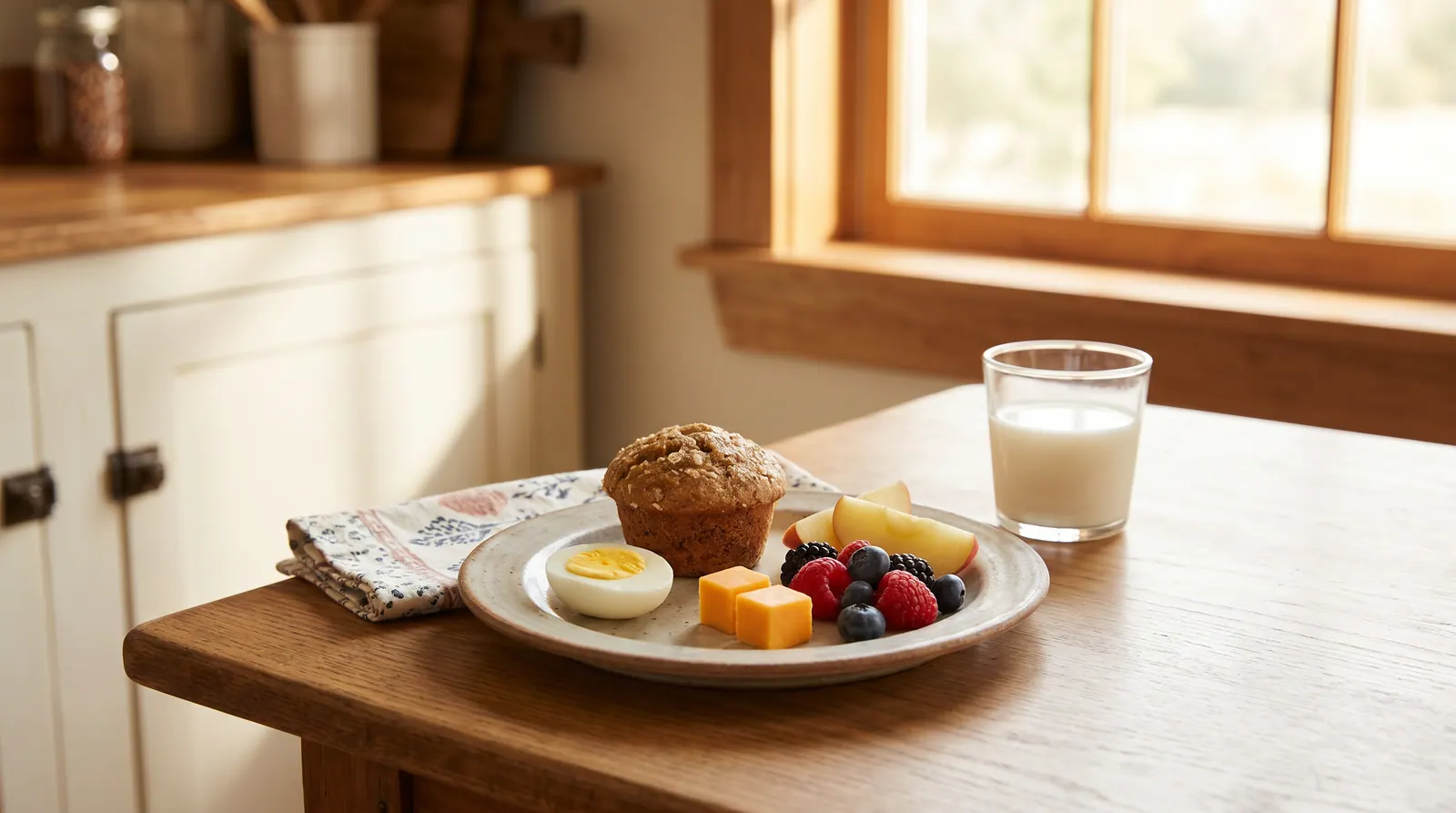
Protein is the most satiating macronutrient. A meta-analysis of randomized controlled trials on children and adolescents aged 7 to 19 found that a protein-rich breakfast reduced subsequent energy intake by about 111 calories, increased feelings of fullness, and reduced hunger before lunch compared to a standard protein breakfast. Practically, this means a child less insistent on biscuits and chips mid-day.
Vary protein sources readily available in Saudi Arabia: a boiled egg, labneh, cheese, hummus, fava beans, peanut butter, or plain yogurt. A word of caution: the researchers themselves noted that the results should be interpreted with caution due to the low quality of the studies, so consider protein a useful satiety tool, not a magic recipe.
Illustrative relative ranking based on protein and whole grains providing longer satiety than quick sugar; not absolute numerical values.
Is Your Child's Breakfast Balanced? — A Self-Check
This is a guiding checklist to help you assess your child's mornings; it does not replace pediatric consultation. Select what applies to you:
Realistic Saudi School Lunchbox Ideas
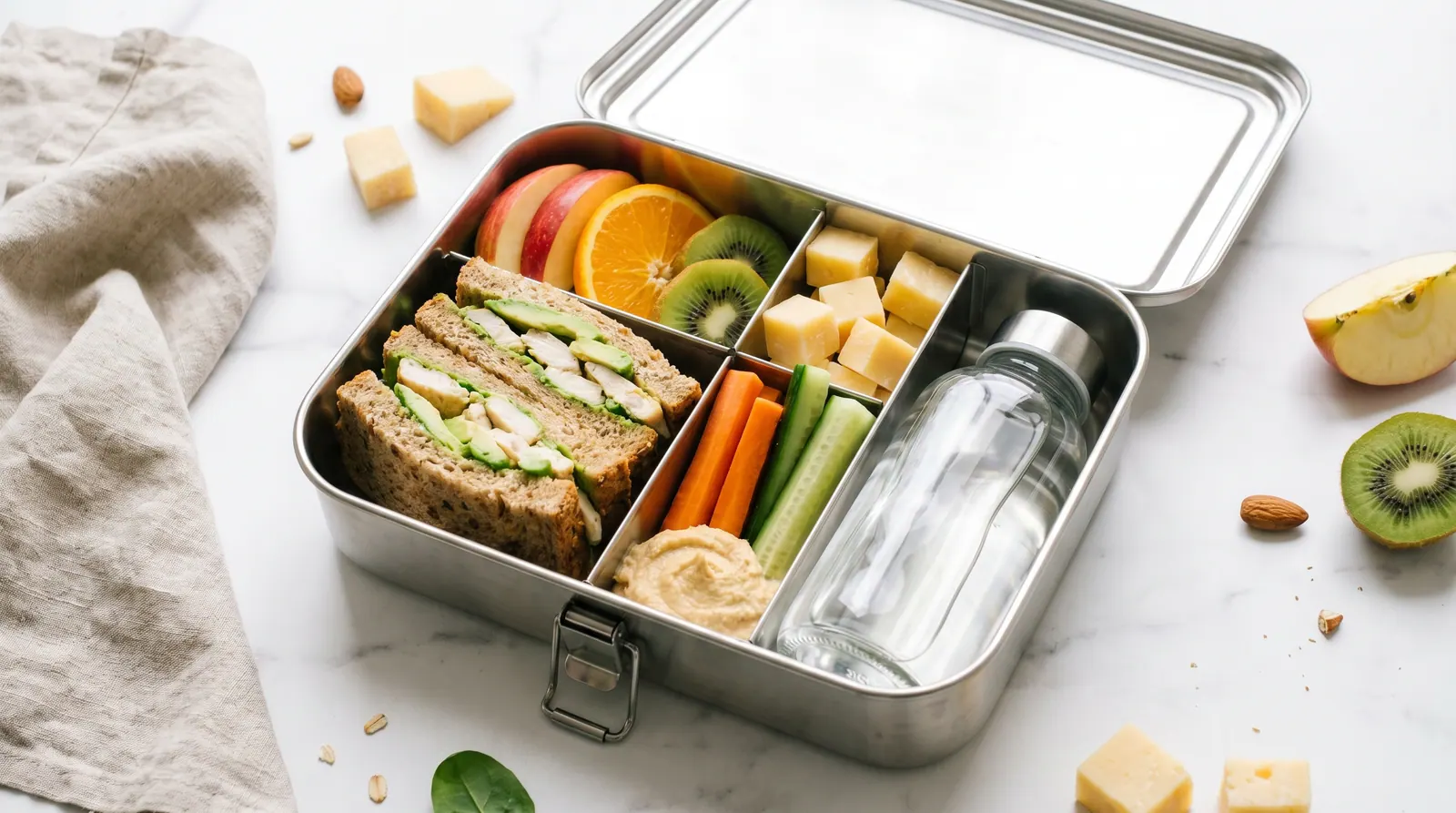
Build the lunchbox on the same principle: protein, whole grain, fruit or vegetable, and water. Realistic examples from our kitchens:
- Whole-wheat bread rolls with cheese or grilled chicken, served with cucumber and carrots.
- Labneh sandwich with mint on whole wheat or bran bread.
- Small container of hummus with vegetable sticks and whole-wheat crackers.
- A boiled egg with dates and a handful of almonds for schools that allow nuts.
- Plain yogurt with chopped fruit.
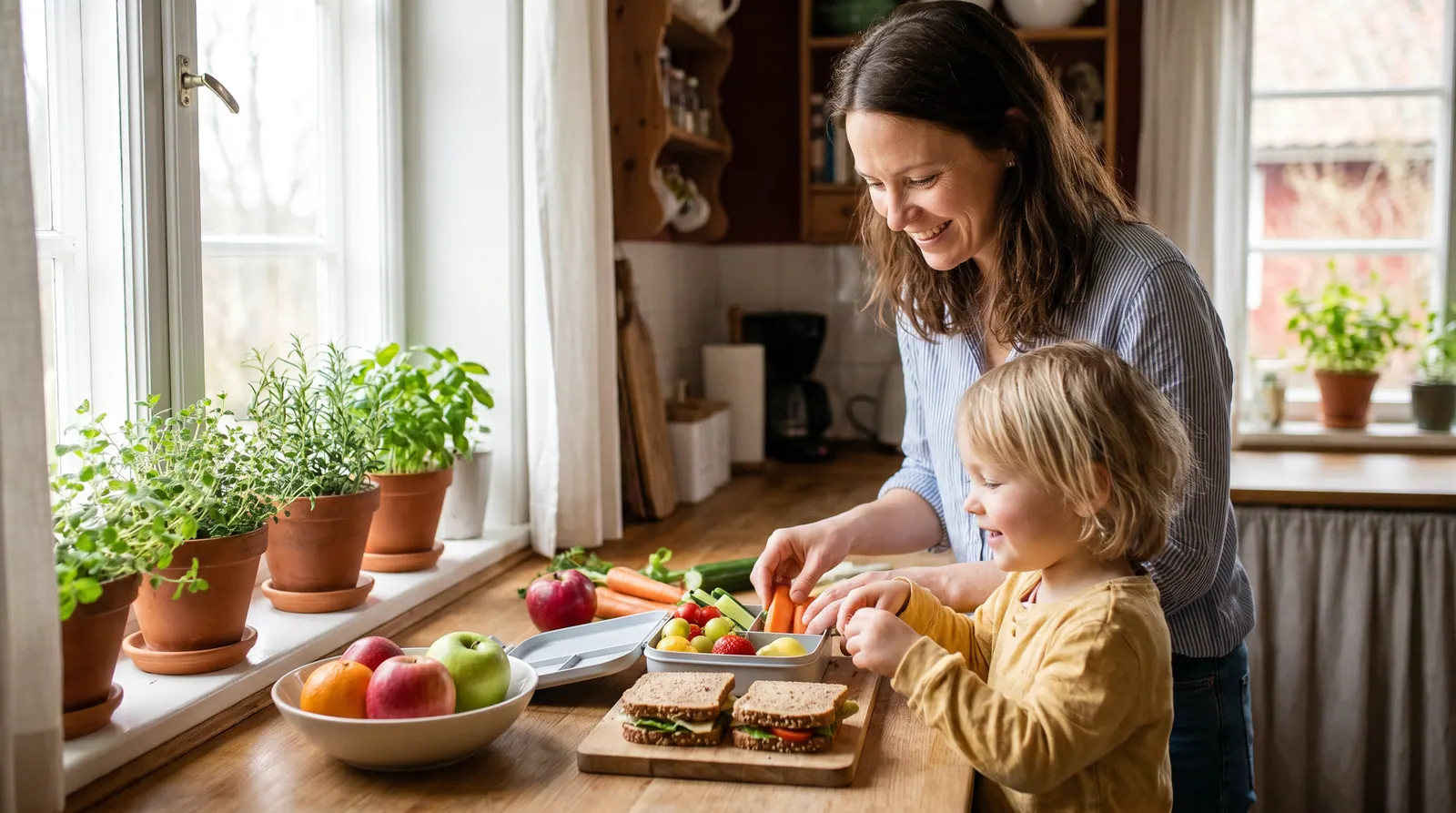
Add a colorful item the child likes to increase the chances of them eating it. Prepare as much as possible the night before to save morning time. Refer to EEINA's "Kids' Recipes" guide for actionable ideas. The Saudi Ministry of Health suggests a labneh, cheese, hummus, or peanut butter sandwich on whole wheat or bran bread with fruit and vegetables.
Alternatives to Juices, Chips, and Sugary Drinks
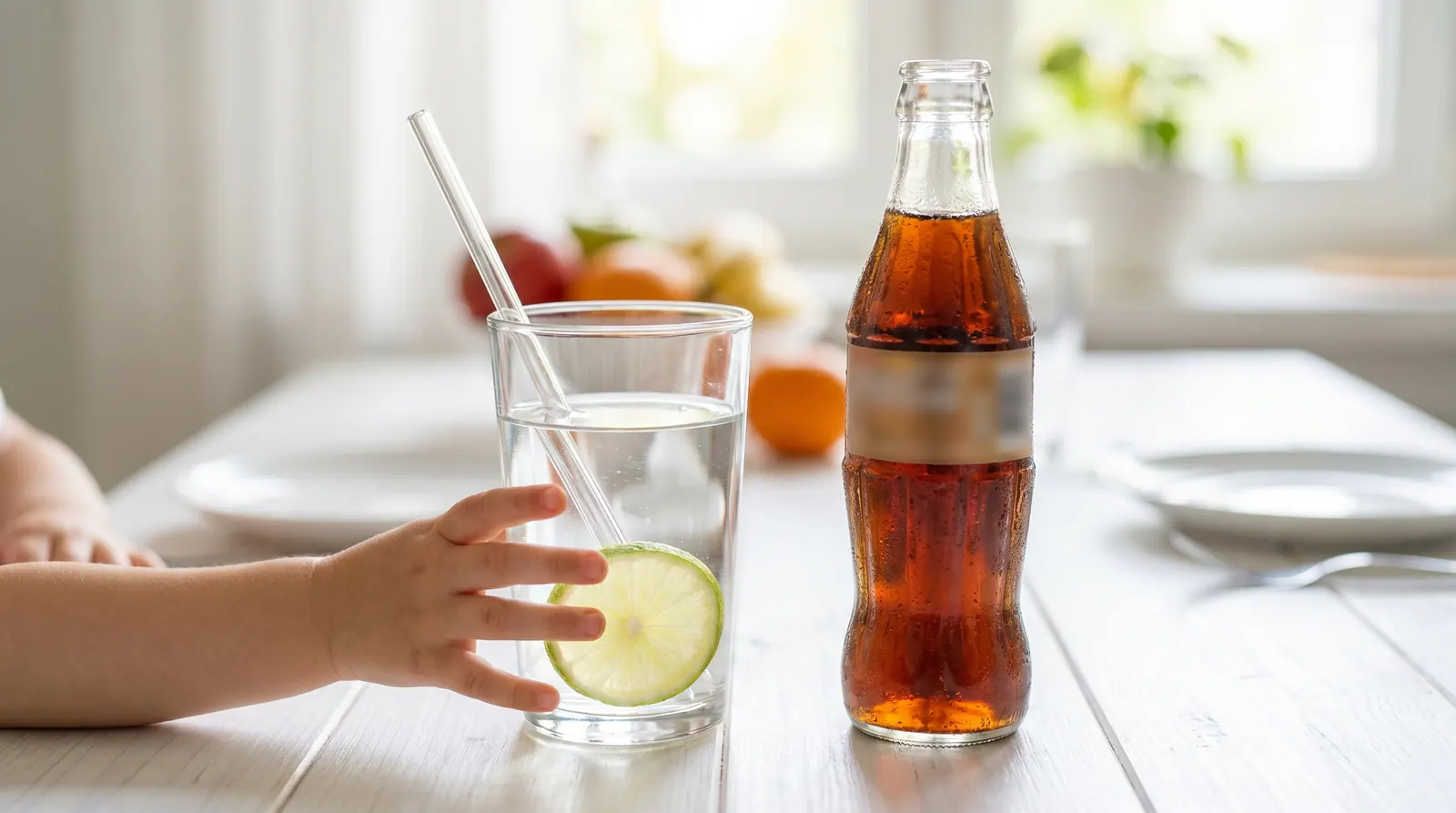
Water is the best choice for the lunchbox: zero calories, zero sugar. The American Academy of Pediatrics recommends no fruit juice for children under one year old, with a maximum of 118 ml for ages 1-3, 118-177 ml for ages 4-6, and 237 ml for ages 7-14, and avoiding carbonated drinks, sports drinks, and sweetened teas.
Chip alternatives: fresh fruit, vegetable sticks with hummus, or dried fruit in moderation, or a handful of nuts. Replace packaged juice with water and a slice of fruit, and flavored yogurt with plain yogurt and chopped fruit. Connect this to EEINA's "Hidden Sugar" guide to learn where sugar hides in children's products.
How Much Sugar is Actually Allowed, and Where It Hides
The American Academy of Pediatrics recommends less than 25 grams (about 6 teaspoons) of added sugar per day for those aged 2 and older, and avoiding added sugar entirely for those under two. The World Health Organization recommends reducing free sugars to less than 10% of daily energy intake, preferably below 5%.
Sugar hides in unexpected places: flavored yogurt, breakfast cereals, ketchup, dried berries, salad dressings, and flavored drinks. Practically, read product labels and look for "added sugar" and names like corn syrup and dextrose. This section is for educational purposes to make smarter choices, not to deprive children of all sweetness.
How to Handle a Child Who Refuses Breakfast
Refusal is a common phase, not a battle. The American Academy of Pediatrics recommends avoiding food battles and not forcing the child, while calmly continuing to offer healthy options. A new food may need 15 to 20 exposures before a child accepts it. Try practical alternatives:
- A healthy smoothie made with milk and fruit for those who don't like solid food in the morning.
- Involve the child in choosing their breakfast and packing their lunchbox to increase acceptance.
- Make breakfast a calm family time without screens to be a good role model.
- Start with a very small amount for a child who doesn't eat in the morning; a bite or two is better than nothing, and gradually increase.
Food Safety: Keep the Lunchbox Cool
The lunchbox stays for hours in potentially high temperatures, and bacteria multiply rapidly between 40°F and 140°F (4°C and 60°C). The rule from the US Food Safety Authority: perishable foods should not be left out of refrigeration for more than two hours, and only one hour if the temperature exceeds 90°F (32°C), which is very common in our climate.
Use an insulated lunch bag with at least two cooling sources, such as two gel ice packs, or an ice pack with a frozen water bottle, and keep cold foods cold. This is a safety issue, not a luxury, especially for foods containing dairy, chicken, or eggs.
To simplify safety, opt for items that don't require refrigeration when cooling is difficult: whole fruits and vegetables, hard cheese, bread and crackers, peanut butter, and dried fruit. Wash fruits and vegetables thoroughly before packing, and clean the lunchbox and its containers daily with soap and water, as food residue can harbor bacteria.
When to See a Doctor — Red Flags Requiring Attention
A school child's nutrition is usually a simple daily matter, but some signs go beyond general advice and warrant a visit to the pediatrician:
- Persistent loss of appetite or food refusal accompanied by weight loss, growth stagnation, or constant fatigue.
- Recurrent symptoms of food poisoning (cramps, diarrhea, or vomiting) after lunchbox meals. Review cooling and hygiene practices and consult a doctor.
- Near-complete reliance on sugary drinks or complete refusal of water with recurrent tooth decay.
- Known food allergies (nuts, eggs, dairy, gluten). Follow the doctor's instructions and school policy strictly, and do not rely on general advice.
- Any recommendation for a restrictive diet or supplements for a child must come from a nutritionist or doctor, not from general educational content.
Five Common Myths About Children's Breakfast
Half-truths and misconceptions about children's breakfast abound, causing stress for mothers or missed opportunities. Here are the most common ones, and what the guide says:
"A large, fancy breakfast is essential for a child's intelligence."
"A cup of natural juice is exactly the same as a piece of fruit."
"As long as the biscuit fills the child's hunger, it's fine."
"Forcing a child to finish their breakfast teaches them a healthy habit."
"The lunchbox is safe all day as long as it's closed."
Practical Tips to Implement Starting Today
Before you get to the full protocol, here are small tips from the core of the above, organizing your mornings without turning your life upside down:
- Make breakfast a consistent daily routine; regularity is more important than quantity. Even a small, balanced bite is better than fasting before school.
- Build every lunchbox on the principle: protein (egg, labneh, hummus), whole grain, fruit or vegetable, and water.
- Prepare lunchbox items the night before (chop vegetables, boil eggs) to save time during the busy morning.
- Make water the default lunchbox drink, and replace packaged juice with water and a slice of fruit.
- Read product labels and look for "added sugar" in flavored yogurts and breakfast cereals before buying.
- Use an insulated lunch bag with at least two cooling sources, and adhere to the one-hour rule when temperatures exceed 90°F (32°C).
- Clean the lunchbox and containers daily with soap and water, and wash fruits and vegetables before packing.
- Involve the child in choosing their breakfast and packing their lunchbox to increase acceptance, and be a role model at a screen-free family breakfast.
EEINA's Protocol for Consistent School Breakfast
A practical plan combining the above into three progressive layers. Start layer by layer until mornings become a calm routine, not a daily battle.
The protocol is based on recommendations from the American Academy of Pediatrics, the US Food Safety Authority, and the Saudi Ministry of Health.
Consistent Balanced Morning
One rule every day.
Safe and Balanced Lunchbox
An extension of the breakfast plate.
A Habit That Sticks Over Time
Regularity, not perfection.
The Golden Rule: The goal isn't a perfect morning, but a consistent morning. The simple, repeated rule every day builds a habit, and habit is what solidifies a child's focus.
Frequently Asked Questions
My child has absolutely no appetite in the morning, what should I do?
How much juice is allowed for a child in their lunchbox?
How can I keep the lunchbox cool in the heat of school?
What is the quickest balanced breakfast when time is tight?
Does protein in breakfast actually reduce a child's craving for sweets later?
Start Your Next Step with EEINA
Family Meal Plans
Balanced breakfast and lunchbox ideas with Saudi ingredients, protein, whole grains, and fruit, ready for every morning.
Get Your Plan →Quick Kids' Recipes
Lunchbox ideas, rolls, and sandwiches that can be made in busy morning minutes.
Browse Now →EEINA App
Plan your week's breakfast and school lunchbox, scan for hidden sugar in products, and get water reminders.
Download Now →