When to Start? Around 6 Months with Readiness Signs
The World Health Organization and the American Academy of Pediatrics recommend exclusive breastfeeding for about six months, then introducing solid foods. Never start before 4 months. However, age alone is not enough; developmental readiness signs are more important: your baby can sit with minimal support and has good head and neck control, opens their mouth when food is offered, and swallows food instead of pushing it out with their tongue.
The presence of these signs around 6 months is a better indicator than the calendar date. Prematurity and health conditions may alter the timing, so ask your pediatrician before starting to confirm your baby is truly ready.
Why Iron is the Star of This Stage
Your baby's iron stores, present from birth, begin to deplete around 6 months, and breast milk alone cannot meet the increasing demand. In the first half of infancy, about 0.27 mg of iron per day is sufficient, but the baby's requirement jumps to 11 mg per day between 7 and 12 months—a significant increase. Therefore, first foods must include regular iron sources: pureed meat, chicken, egg yolk, legumes like lentils and chickpeas, and iron-fortified infant cereals.
Practical tip: Offer iron sources with foods rich in Vitamin C, such as fruits and vegetables, to enhance absorption. For exclusively breastfed infants, the doctor may recommend iron drops from the 4th month until iron-rich foods are regularly consumed.
Texture Progression: From Puree to Finger Foods
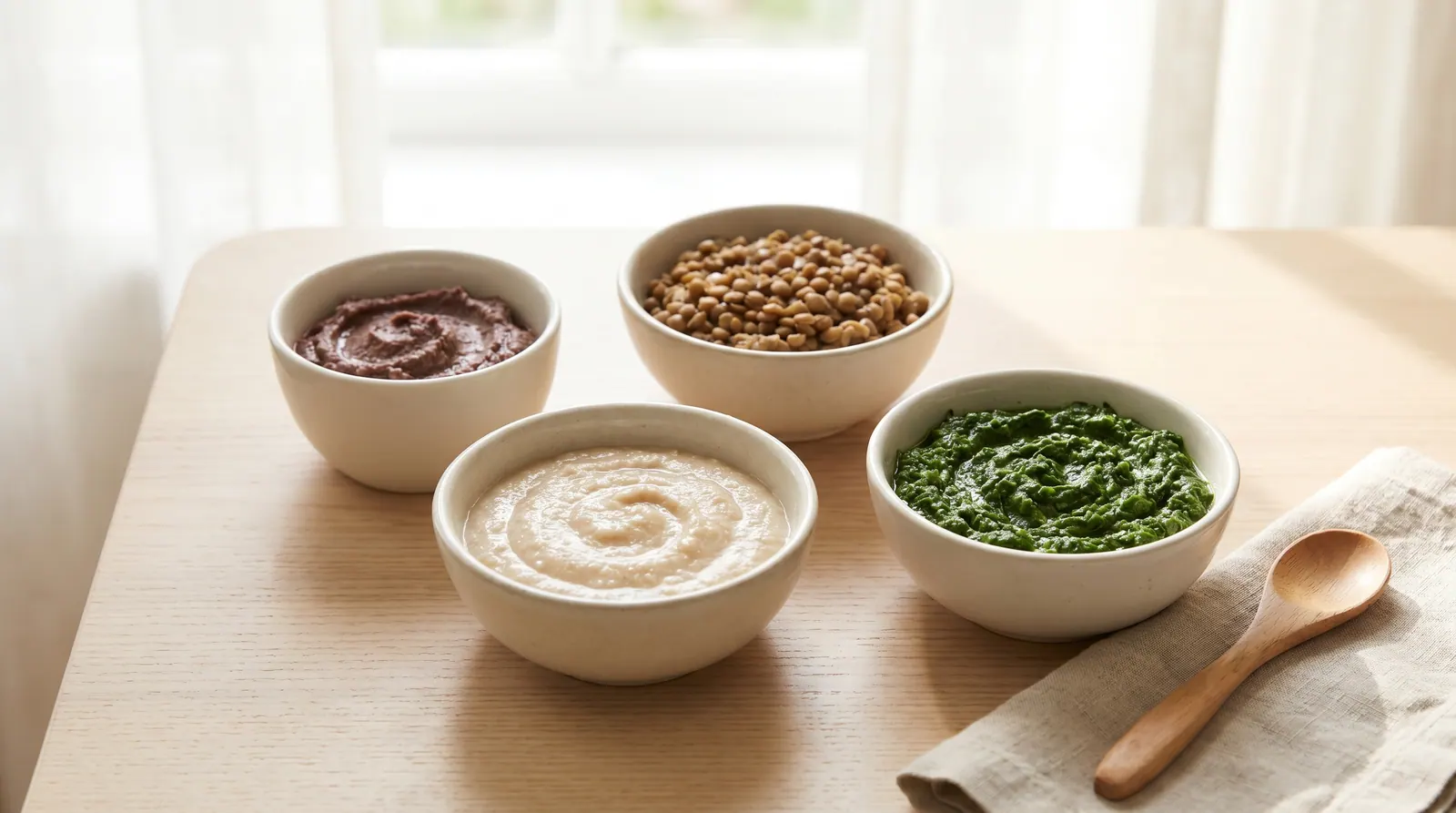
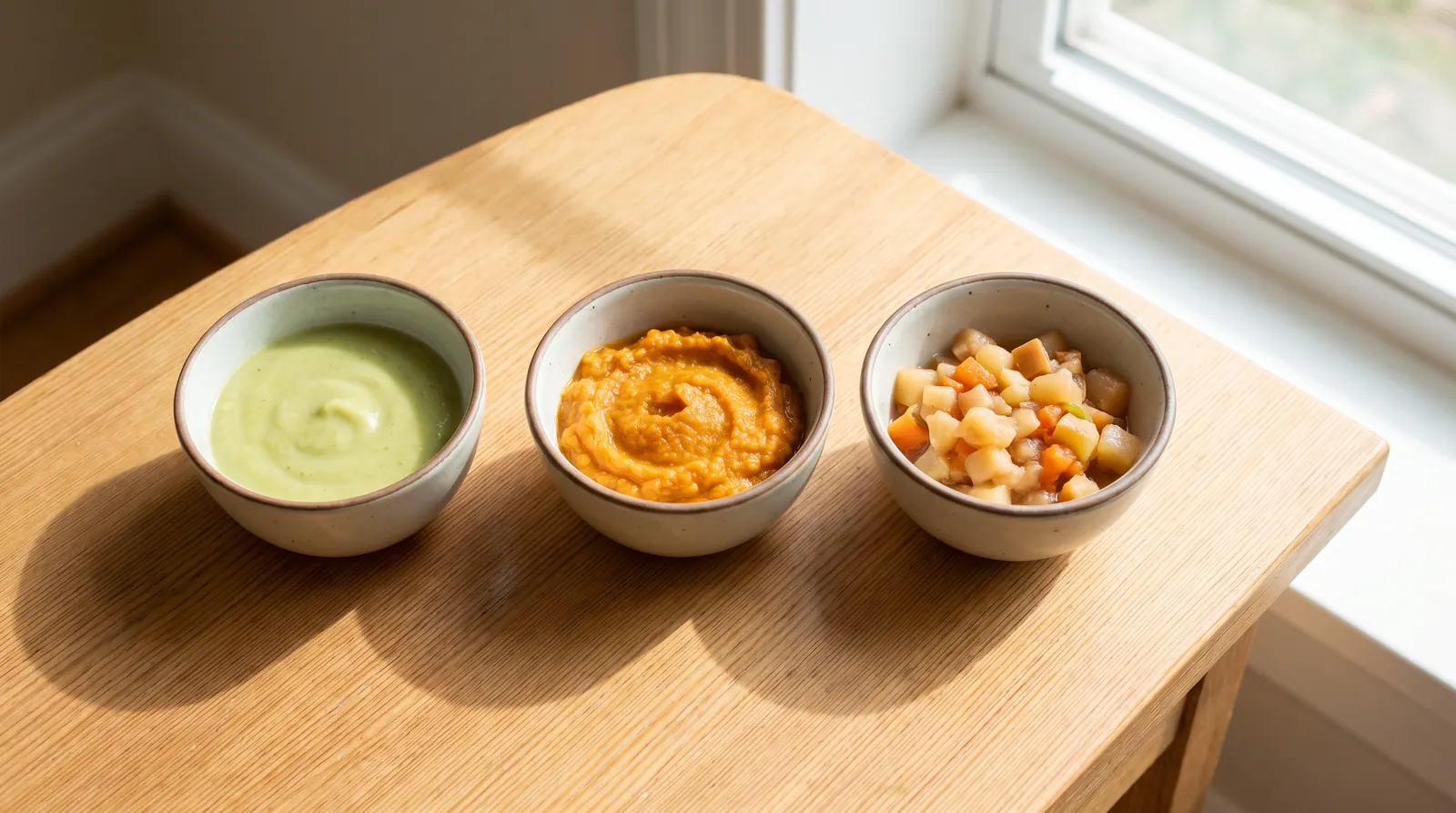
Start with very smooth purees or strained foods, then gradually move to thicker, lumpier textures as your baby's chewing and swallowing abilities develop. As the months progress, around 7 to 8 months and beyond, you can offer soft finger foods that they can grasp, like well-cooked vegetable pieces that mash easily between fingers.
The idea is for the texture to match the motor skill, not the other way around. Delaying the transition to lumpier textures for too long can make it harder for your baby to accept them later. Offer a variety of foods: vegetables, fruits, meats and proteins, full-fat dairy products without added sugar like yogurt and cheese, and whole grains.
Is Your Baby Ready for Solids? — Self-Check
This is a guide based on developmental readiness signs and does not replace your pediatrician's advice. Check what applies to your baby:
Foods to Delay: Honey Before One Full Year
Do not give honey to a baby under twelve months of age under any circumstances, whether alone or added to water, food, or milk. The reason is that honey is a potential source of heat-resistant botulism spores, which can cause infant botulism, and a baby's immature intestines cannot handle them. Importantly, these spores are heat-resistant, so baking or cooking does not make them safe; therefore, cakes or sweets containing honey are also prohibited.
Honey is completely safe after the age of one. This is a consistent Saudi and global rule adopted by the American Academy of Pediatrics, the CDC, and food education authorities.
Added Salt and Sugar: Both Should Be Delayed
A baby's kidneys are immature and cannot handle high sodium levels. Therefore, infant feeding guidelines recommend not adding salt to baby food before twelve months of age; your baby's sodium needs are met by the natural content in foods and milk. As for added sugar, dietary guidelines recommend avoiding it entirely for children under two years old. Your baby does not need added sugar, and the natural sweetness of fruits is sufficient.
Pay attention to canned and ready-made foods, as many contain hidden salt or sugar. Read the product label. Accustoming your baby to natural, unsalted, and unsweetened flavors builds healthy preferences that will last for years.
Whole Nuts and Choking Hazards
Whole or chopped nuts are a real choking hazard, as are whole grapes, berries, and cherries, raw carrot pieces, large meat chunks, and chewy cheese. The practical rule: change the round, solid shape. Cut grapes into lengthwise quarters, mash or cut solid foods, and offer smooth nut butter thinly spread, not by the spoonful.
This rule does not contradict early allergen introduction: peanut butter is permissible and recommended, but in a choking-safe texture. Ensure your baby sits upright while eating and never let them eat while lying down, crawling, or playing.

Early and Cautious Introduction of Allergens
The old understanding has been turned upside down: delaying allergens does not prevent them; early introduction does. The landmark LEAP study showed an over 80% reduction in peanut allergy when introduced early, between 4 and 6 months, for high-risk infants. The current recommendation: introduce peanuts, eggs, and other common allergens around 6 months, but not before 4 months, after your baby has successfully accepted some solid foods.
Offer them in a choking-safe texture. An important note: infants with severe eczema or known egg allergy are considered high-risk and should consult a doctor before introducing peanuts.
One Food Every Few Days — And When to Introduce What
The practical method recommended by the American Academy of Pediatrics: introduce one new, single-ingredient food every three to five days, and observe for any reaction. This spacing helps you identify the culprit food if allergic symptoms like rash, vomiting, or diarrhea appear. Start with small amounts, like one or two spoonfuls, then gradually increase. This approach provides a clear record and makes it easier for the doctor to assist you if needed.
An illustrative guideline combining recommendations from trusted sources, not a binding medical schedule. Actual timing should be determined by your child's doctor based on their growth and condition.
Responsive Feeding: Read Your Baby's Cues
One of the World Health Organization's principles for complementary feeding is responsive feeding: feed your baby directly, pay attention to hunger and fullness cues, and respond to them. Do not force your baby to finish their plate; forcing them to eat can damage their relationship with food. A calm environment, eye contact, and patience with rejecting a new food all build healthy eating habits. Your baby may need to be offered a new food multiple times before accepting it.
Sit with them without screens, and observe their stopping cues or turning their head away as a sign of fullness. This calm presence is as important a part of feeding as the food itself.

Water, Juice, and Cow's Milk: What to Delay and What to Limit
Cow's milk should not be given as a primary drink before twelve months of age because its iron content is low, and early introduction is linked to iron deficiency anemia. Juice should not be offered before twelve months unless medically advised, as your baby does not need it. As for water, offer it in limited quantities after 6 months: no more than about 120 ml (4 oz) extra per day, potentially increasing to 240 ml (8 oz) on hot days, which is relevant for Saudi Arabia's hot climate.
Breast milk or formula remains the primary source of fluids at this stage. Solid food is for training and complementary, not a replacement for milk.
| Item | Status Before One Year | Brief Reason |
|---|---|---|
| Honey | Completely Prohibited | Heat-resistant botulism spores |
| Added Salt | Avoid | Baby's kidneys cannot handle excess sodium |
| Added Sugar | Avoid entirely before 2 years | Not needed; fruit sweetness is sufficient |
| Whole Nuts & Whole Grapes | Choking Hazard | Mash or cut into lengthwise quarters |
| Cow's Milk as Primary Drink | After 12 Months | Low in iron, linked to anemia |
| Juice | After 12 Months | Not needed unless medically advised |
| Extra Water | Limited after 6 Months | Approx. 120 ml daily, more in heat |
When to See a Doctor — Red Flags
Most of the feeding journey is smooth, but some signs warrant immediate consultation with a doctor or emergency services:
- Difficulty breathing, wheezing, or swelling of the face, lips, or tongue after a new food: Immediate emergency, could be anaphylaxis.
- Widespread rash, hives, repeated vomiting, or severe diarrhea after a specific food: Stop the food and consult your doctor.
- Persistent refusal of solid food, poor weight gain, or paleness suggesting anemia: Consult your pediatrician.
- Choking signs like severe coughing, sudden silence, or blueness: Immediate first aid intervention. Prior knowledge of choking first aid can save a life.
- Giving honey or cow's milk as a primary drink, or adding salt and sugar before one year of age: Stop immediately.
- Insistence on very smooth textures after 9 months without progressing to soft pieces, which may make texture acceptance difficult later.
Five Common Myths About Infant Feeding
Half-truths about a baby's first foods often confuse mothers. Here are the most common ones and what the guide says:
"Start at 4 months so they get full and sleep better."
"A little honey calms the baby."
"Delay eggs and nuts to protect your baby."
"A pinch of salt or sugar makes them eat more."
"Starting solids means stopping breastfeeding."
Practical Tips to Implement Starting Today
Before you reach the full protocol, here are small tips derived from the above, making the feeding journey easier without burdening your day:
- Start around 6 months only after readiness signs. Sitting with support, head control, opening mouth, and swallowing instead of tongue-thrusting. Do not start before 4 months.
- Make iron a priority from day one. Pureed meat, chicken, lentils, or fortified cereals. Offer with Vitamin C-rich fruits or vegetables to boost absorption.
- Offer one single-ingredient food every 3 to 5 days. Monitor for reactions before adding a new food to identify the source of any symptoms.
- Introduce allergens early. Peanuts and eggs around 6 months in a safe texture, not delayed, as delaying does not prevent allergies.
- Completely eliminate added salt and sugar. Read labels on ready-made products, as salt and sugar hide within them.
- Change the shape of choking hazard foods. Quarter grapes lengthwise, mash carrots and nuts, and spread peanut butter thinly.
- Always have your baby sit upright while eating. Never let them eat while lying down, playing, or moving.
- Continue breastfeeding as the primary source alongside solids. Start with two to three spoonfuls per meal and gradually increase based on your baby's appetite.
EEINA's Protocol for the First Six Weeks of Feeding
A practical plan combining the above into three progressive layers. Start layer by layer, monitor your baby, and make your pediatrician your partner in every step.
This protocol is based on recommendations from the World Health Organization, the American Academy of Pediatrics, the CDC, and the Saudi Ministry of Health.
Before the First Spoonful
Confirm before you start.
First Foods Gently
One ingredient at a time.
Variety & Thicker Textures
As skills grow.
Golden Rule: The goal is not for your baby to get full as quickly as possible, but to learn about food safely. Milk remains the foundation, and solid food is a gentle training that builds a healthy relationship for generations to come.
Frequently Asked Questions
When should I start feeding my baby solid food?
Why is honey prohibited before one year of age?
Should I delay eggs and nuts to avoid allergies?
How can I provide iron for my baby after 6 months?
Should I stop breastfeeding when starting solids?
Start Your Next Step with EEINA
Meal Plan for Your Family
Balanced Saudi meals for breastfeeding mothers, supporting their energy and milk supply during the first feeding journey.
Get Your Plan →Iron-Rich Recipes
Simple dishes with lentils, meat, and vegetables, forming a healthy foundation for the family table and a recovering mother.
Browse Recipes →EEINA App
Meal reminders and family food planning, helping you organize your nutrition during this phase.
Download Now →