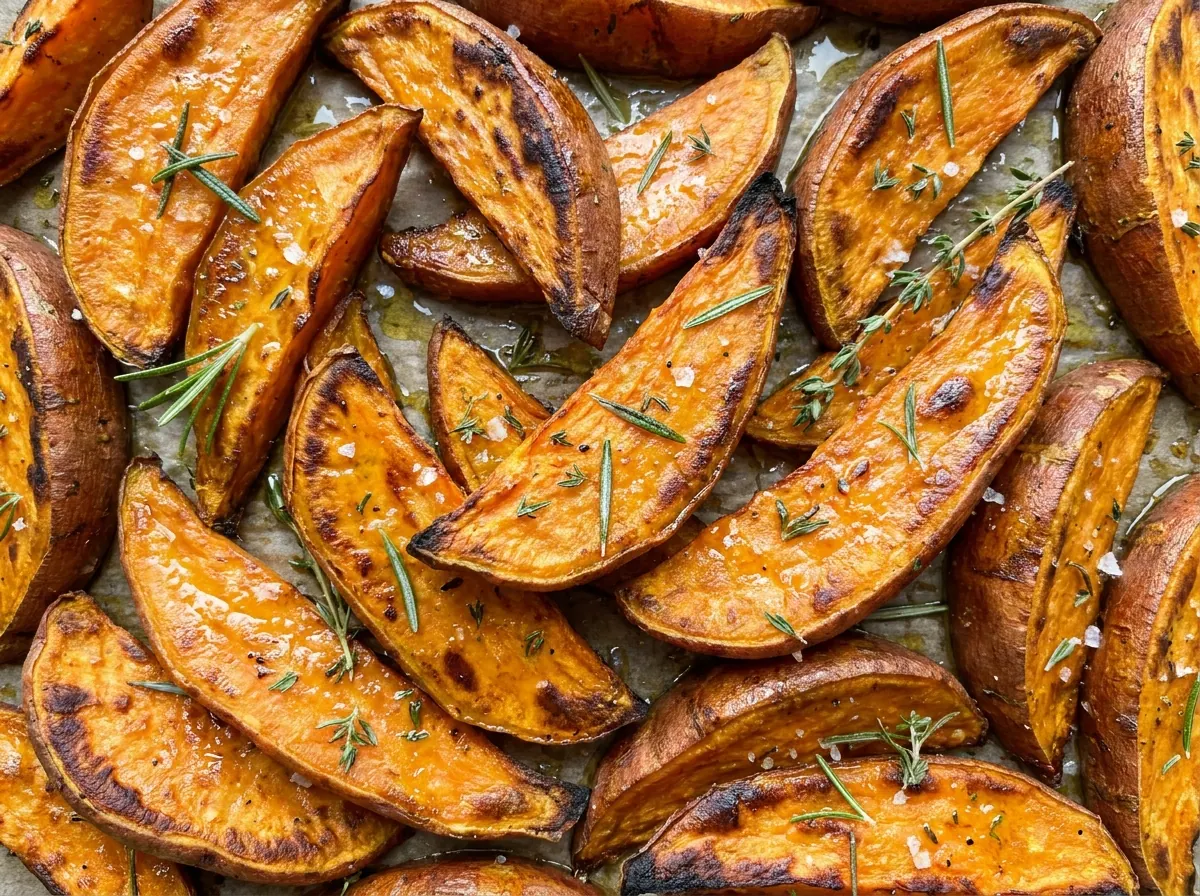
Sweet potatoes roasted in the oven with olive oil and dried herbs — a healthy side rich in vitamin A, fibre and potassium. GI 63 (medium); cooling before eating and keeping the skin on help moderate the glycaemic response.
Oven-roasted sweet potato with herbs is a simple, beloved side that appears in healthy cooking guides the world over. The formula is consistent: skin-on sweet potato cubes, olive oil, dried herbs such as za'atar, rosemary and oregano, roasted at high heat until the edges caramelise and the insides are tender.
Their nutritional profile is impressive: sweet potatoes are one of the richest sources of vitamin A in the form of beta-carotene, alongside fibre and potassium that support satiety and heart health. One important note of honesty: roasting raises the glycaemic index and it does not stay low, as the next section explains.
Preparation Steps
Preheat the oven
Preheat the oven to 200 °C and line a baking tray with parchment paper.
Wash and cut the sweet potatoes
Wash the sweet potatoes thoroughly and leave the skin on, then cut into even cubes or slices about 2.5 cm thick.
Season
In a large bowl toss the cubes with the olive oil, za'atar, rosemary, oregano, garlic, salt and pepper until every piece is evenly coated.
Spread on the tray
Spread the sweet potatoes in a single layer on the tray without crowding — crowding steams them instead of roasting them.
Roast
Roast for 35 to 40 minutes, tossing once halfway through, until tender and golden at the edges.
Cool
Remove from the oven and allow to cool for 5 to 10 minutes before serving. Cooling forms retrograde resistant starch, which slightly moderates the blood-sugar response.
Garnish and serve
Scatter fresh parsley over the top and serve warm as a side dish.
Blood Sugar Impact
The glycemic index (GI) measures how quickly a food raises blood sugar, while the glycemic load (GL) measures how much a full serving raises it. Together they give the complete picture.
Glycemic Index
GI
62Medium
Low0–55Medium56–69High70+
A low value (≤55) means a gradual rise in blood sugar — the most suitable range for diabetes and insulin resistance.
Glycemic Load
GL
22High
Low0–10Medium11–19High20+
Glycemic load reflects the impact of the full serving. To lower it: take half a serving, or pair the recipe with a source of protein and fiber.
Nutritional Information
Per ServingMakes 4 servings · one serving is about 210 g of raw ingredients
Calories238 kcal12%of Daily Value*
Protein4 g8%of Daily Value*
Carbohydrates41 g15%of Daily Value*
Fat7 g9%of Daily Value*
Fiber6 g21%of Daily Value*
Sodium402 mg17%of Daily Value*
Potassium769 mg16%of Daily Value*
Phosphorus91 mg7%of Daily Value*
* Percent Daily Values are based on a 2,000-calorie diet per FDA food-label reference values — your daily needs may be higher or lower. Values are derived from the recipe's ingredients via the USDA database.
Troubleshooting
The most common problems when preparing Oven-Roasted Sweet Potato with Herbs, and how to fix them:
Soft with no golden edges
The tray was crowded. Pieces packed together release steam that boils them instead of roasting them. Spread in a single layer with gaps between each piece and use two trays if needed. High heat (200 °C) and space around each cube are the secret to caramelised edges.
Edges burnt but centre still raw
The pieces are uneven in size — small ones burn before the centre of large ones cooks through. Cut into even 2.5 cm cubes and toss halfway through so every side browns evenly.
Stuck to the tray
Not enough oil, or no parchment paper. Make sure every cube is lightly coated in olive oil and line the tray with parchment. Do not move them too early — a well-roasted piece releases from the surface easily once it is done.
Watery rather than crispy
You washed them just before roasting and did not dry them, or the oven temperature was too low. Pat the pieces dry with a towel after washing, and confirm the oven has reached 200 °C before placing the tray inside. Surface moisture must evaporate before browning can happen.
Herbs burnt and turned bitter
Fine dried herbs can burn at high heat over a long roast. Mixing them in oil beforehand offers some protection, but if you notice them scorching, add half the quantity before roasting and the rest immediately after removing from the oven — or use fresh rosemary sprigs, which withstand heat better.
Flavour bland despite salt and herbs
Salt was added after roasting onto a dry surface and did not adhere, or the dried herbs were old and had lost their essential oils. Season and coat with oil before roasting so the flavour penetrates. Use fresh dried herbs. A squeeze of lemon juice or a pinch of sumac (tart purple spice) after removing from the oven wakes up the entire flavour.
Storage and Make-Ahead
Refrigerator (4 °C)
Roasted sweet potatoes keep for 3 to 4 days in an airtight container. They lose some crispness but remain safe to eat. Cooling before eating forms retrograde resistant starch that slightly moderates the glycaemic response.
Freezer (−18 °C)
Freeze for up to one month in an airtight container. The texture softens slightly after thawing, making them better suited for mashed dishes or soups than as a crispy side.
Prep ahead
Cutting the sweet potatoes: up to one day ahead, store the cubes submerged in cold water in the fridge and pat dry just before roasting. The herb and oil mixture: prepare in advance, keep in a jar, and toss with the sweet potatoes just before roasting.
Reheating
Reheat in the oven or an air fryer at 190 °C for 5 to 7 minutes to restore crispness. A microwave softens them. Do not leave out of the fridge for more than two hours.
Tested Ingredient Substitutions
Original Ingredient
Tested Substitute
Ratio
Flavor Difference
Extra-virgin olive oil
Avocado oil
Same quantity
Higher smoke point — handles the heat better; more neutral in flavour
Za'atar, rosemary and oregano
Ready-made Italian herb blend
2 tsp
A balanced, convenient option — check it contains no added fillers
Garlic powder
Fresh garlic, crushed
2 cloves per 1/2 tsp powder
Fresher, more vivid flavour — add in the last 15 minutes to prevent burning
Orange sweet potatoes
White or Japanese sweet potatoes
Same weight
Less sweet, denser texture, lower in vitamin A
Parsley for garnish
Fresh coriander or mint
Same quantity
A refreshing flavour variation — add cold after removing from the oven
How Much Does It Make? Scaling Guide
Number of servings
Sweet potato
Olive oil
Herb mix
Trays
2 (individual × 2)
400 g
1 tbsp
1.5 tsp
tray 1
4 (base)
800 g
2 tbsp
3 tsp
tray 1
8 (large family)
1.6 kg
4 tbsp
6 tsp
2 trays
12 (entertaining)
2.4 kg
6 tbsp
9 tsp
3 trays
EEINA Nutrition Tip
Vitamin A (beta-carotene): Sweet potatoes are one of the richest sources, providing about 961 micrograms per 100 g according to USDA, supporting vision and immunity while acting as an antioxidant.
Add This Recipe to Your Plan
The EEINA app saves your favorite recipes, calculates them from their real ingredients, and shows your daily numbers toward your goal. Try it free now.
Are oven-roasted sweet potatoes suitable for people with diabetes?
With caution and in moderate portions. The glycaemic index is medium (63) and the glycaemic load is high, so they are not a low-GI choice. Keep the skin on, allow them to cool before eating, pair with a protein and non-starchy vegetables, and limit to a half portion when needed.
Why keep the skin on?
The skin adds fibre that slows sugar absorption and supports satiety. Wash the sweet potatoes well and leave the skin intact after drying.
What is the ideal oven temperature?
200 °C. Lower heat makes them soft without browning; significantly higher heat risks burning the edges before the inside cooks through.
Can I use an air fryer?
Yes. At 190 °C for about 15 to 20 minutes with one shake, in a single layer without crowding.
Sources: USDA · University of Sydney · Gulf GSO · Our methodology · Updated on