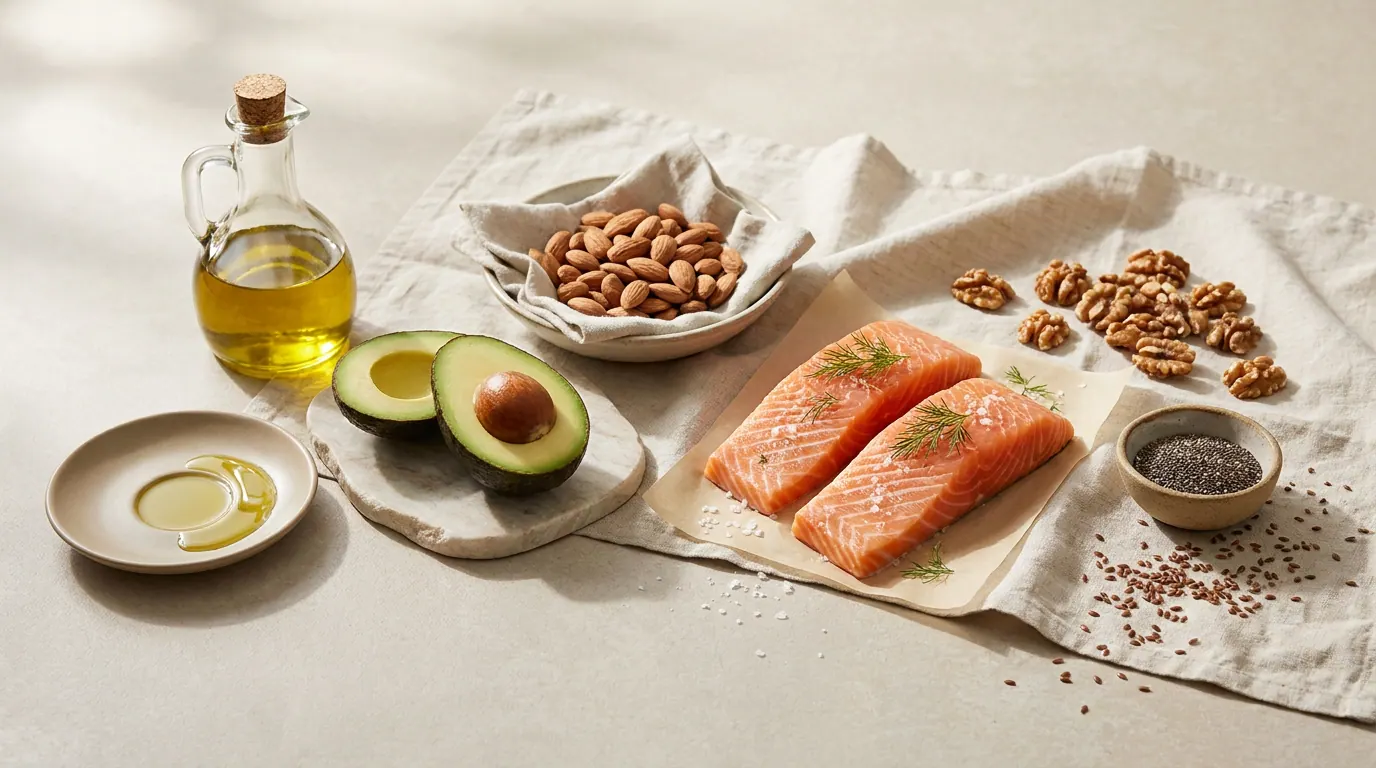
The ketogenic diet is a regimen based on reducing carbohydrates to 20–50 grams daily, raising healthy fats to 70–75% of calories, and protein to 20–25%. The goal is to force the body to transition from burning glucose to burning fat.
What is Keto — and Its Types
Keto mimics prolonged fasting without hunger. When carbohydrates are depleted, the body uses up glycogen stores within 24–48 hours, then breaks down fats to produce ketones: an alternative fuel for the brain and muscles. Its primary types include:
- Standard Ketogenic Diet (SKD): The most common, with 5–10% carbohydrates.
- Cyclical Ketogenic Diet (CKD): Five keto days followed by two high-carb days, popular among athletes.
- Targeted Ketogenic Diet (TKD): Carbohydrates allowed around workouts only.
- High-Protein Ketogenic Diet: 60% fat, 35% protein, and 5% carbohydrates.
The Science of Ketosis
When insulin drops, the body releases fat from its cells, which the liver transports and converts into ketones (mainly beta-hydroxybutyrate)[2]. These cross the blood-brain barrier and fuel the brain with an efficiency that sometimes surpasses glucose.
The brain consumes about one-fifth of the body's energy. On keto, most of its demand is met by ketones instead of glucose.
Reaching ketosis takes 2 to 7 days for most people, and is measured by a home blood test (beta-hydroxybutyrate above 0.5 mmol/L) or urine strips.
Calculate Your Keto Macros
Keto flips macro distribution: fats are the foundation, protein is moderate, and carbohydrates are extremely low. Here is a typical distribution:
Approximate percentages for standard keto. They vary slightly among keto types.
Guide estimation (net carbs around 25g, moderate protein, and the rest fat). Keto requires medical supervision, especially for patients taking medications.
Scientifically Proven Benefits
| Benefit | Strength of Evidence |
|---|---|
| Rapid weight loss in the first months[3] | Strong |
| HbA1c improvement for type 2 diabetics | Strong |
| Triglyceride reduction | Strong |
| Treatment of drug-resistant epilepsy | Very Strong |
| Early cognitive/memory improvement | Preliminary |
Risks & Side Effects
Short-term (First Week)
- Keto Flu: Headaches, fatigue, muscle cramps, and difficulty concentrating, lasting 3 to 7 days.
- Constipation (fiber deficiency), acetone breath odor, and temporary sleep disturbances.
Long-term (Potential)
- Increase in LDL (bad) cholesterol in 25% to 33% of people[4].
- Kidney stones, calcium/B-vitamin deficiency, and lack of dietary fiber.
Allowed & Forbidden Foods
| Allowed | Forbidden or Restricted |
|---|---|
| Meat, chicken, fish, and eggs | Rice, bread, and pasta |
| Cheese, butter, and heavy cream | Sugar, honey, and molasses |
| Olive oil, avocado, and raw nuts | Fruits except berries in small portions |
| Leafy greens, broccoli, cauliflower, zucchini | Legumes (beans, lentils, chickpeas) |
| Unsweetened tea, coffee, and water | Sodas, juices, and potatoes |
A Sample Saudi Keto Day
Breakfast: Two eggs cooked in butter with grilled halloumi cheese, half an avocado, olives, and unsweetened Saudi coffee.
Lunch: Grilled chicken with fattoush salad (no bread), zucchini stuffed with minced meat (no rice), and two tablespoons of olive oil.
Dinner: Grilled salmon with buttered broccoli, and an arugula salad dressed with olive oil and lemon.
Approximate Total: 1,350 calories · Net carbs around 25g · Protein 100g · Fat 100g.
Keto & Diabetics — A Special Case
Seven Tips for Keto Success
- Drink 3 to 4 liters of water daily; keto flushes out fluids.
- Add salt generously, as the body excretes sodium quickly.
- Monitor your electrolytes: sodium, potassium, and magnesium.
- Focus on macro ratios before counting calories.
- Monitor your ketones weekly with a home test.
- Add fiber from flaxseeds, chia seeds, and psyllium husk.
- Check blood lipids and kidney function every three months.
FAQ
- The first week shows rapid drop, but most of it is water rather than fat (since glycogen holds water). Real fat loss comes gradually with a caloric deficit. Do not be deceived by initial scale numbers.
- Temporary symptoms (headaches, fatigue) in the first few days, caused by fluid and salt loss, not the ketones themselves. They are greatly alleviated by hydration, salt, magnesium, potassium, and by easing in gradually rather than abruptly.
- Some weight (water) returns quickly when carbohydrates are reintroduced, which is normal. To sustain real fat loss, transition gradually to a balanced, sustainable pattern that you can maintain long-term—sustainability matters more than the system itself.
- In the long run, studies show that diets yield similar results, and the decisive factor is compliance. Keto stands out for satiety and appetite suppression, but its social challenges cause many to drop out. The best diet is the one you can stick to.
- Yes, but explosive, high-intensity exercise performance may decline during adaptation weeks. Cardio is less affected. Heavy weightlifters might benefit from a targeted ketogenic diet (TKD) with carbs around workouts.
Six Takeaways to Keep
- A tool, not a magic fix. It benefits those it suits under supervision.
- Net carbs under 50 grams. And fats around 70% to 75%.
- First-week weight drop is water. Fat loss comes gradually thereafter.
- Electrolytes prevent keto flu. Hydration, salt, and minerals.
- Contraindicated for many. Type 1 diabetes, pregnancy, and kidney disease.
- Sustainability is key. The best diet is the one you can sustain.
Is Keto Right for You?
Our 90-second quiz determines whether keto, a lighter lifestyle plan, or another system is best suited for your body and goals.